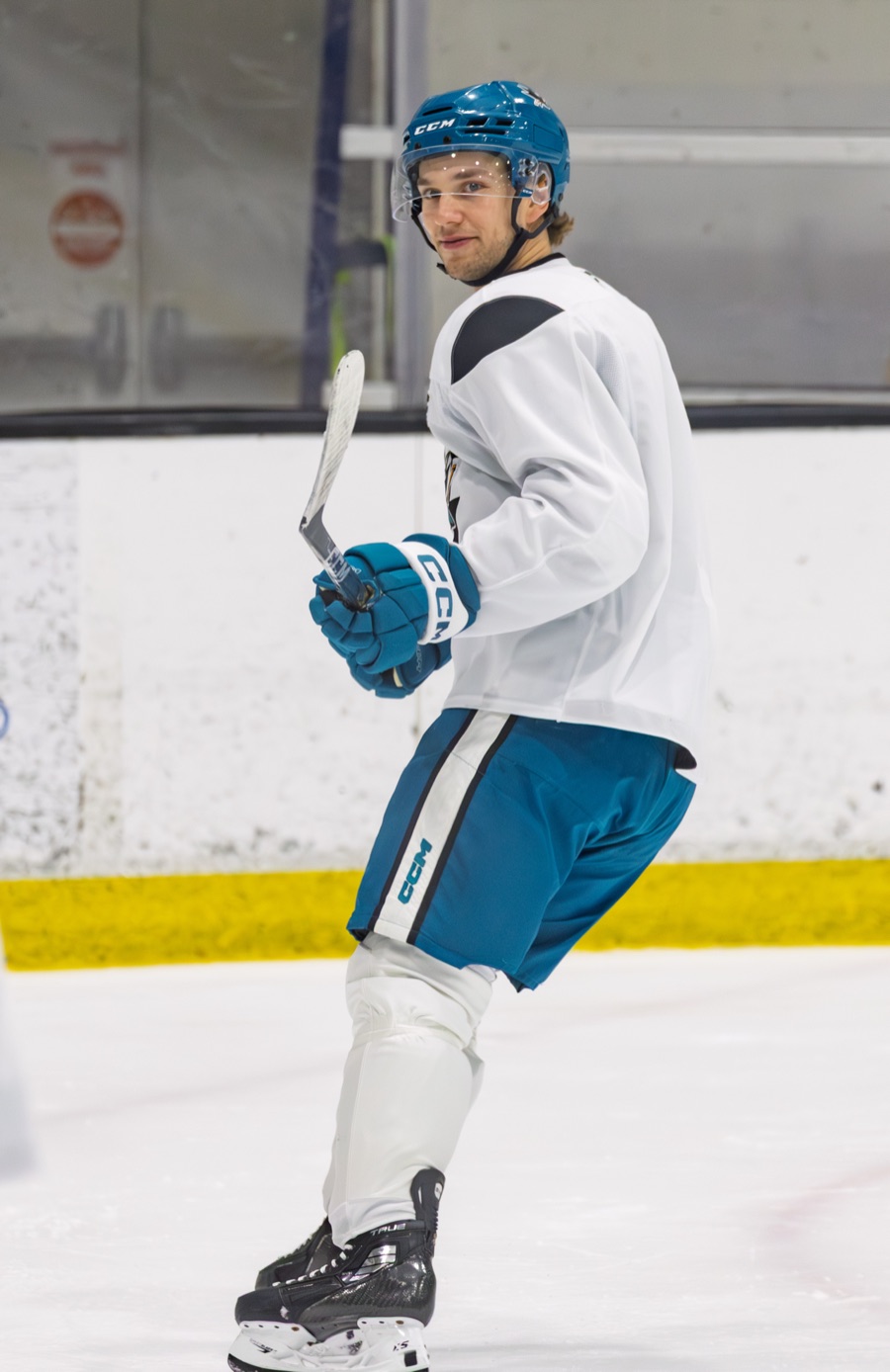
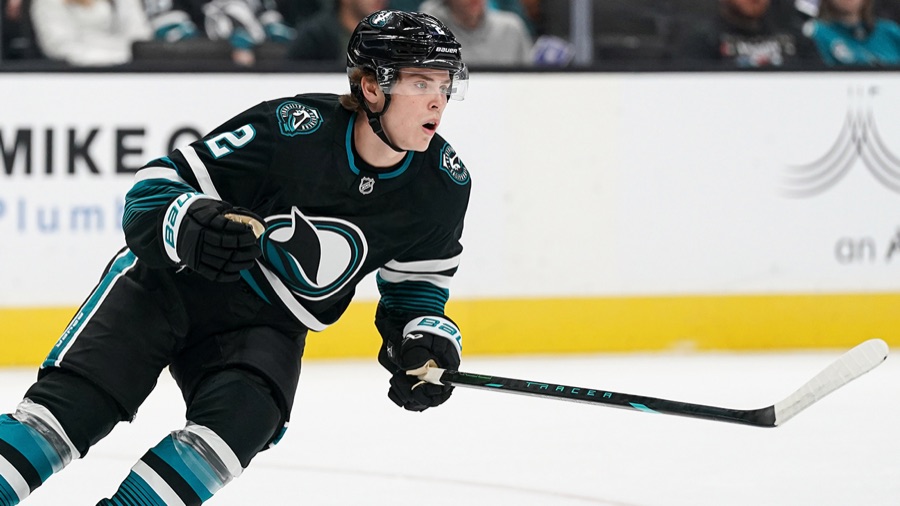
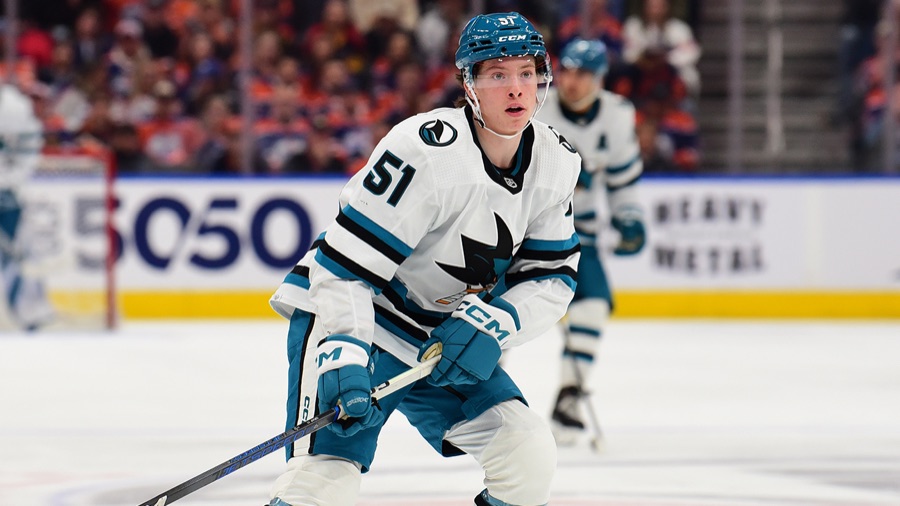
Pricing the Celebrini extension: the number, the deadline nobody is talking about, and what every dollar costs the core
The offseason outline calls this "the single most important signing of the summer" and pencils in eight years at $13.5M, and we have never once stress-tested that number. So here is the full case: the platform, the comps in the only currency that matters, the bridge question, a deadline hiding in the CBA, and the cascade math that explains why every dollar of this negotiation is really three dollars. He became extension-eligible on July 1. This is happening soon, so let us know what we think before it does.
1. The platform: there is no leverage argument against him#
Celebrini's agent walks in with the following: 115 points at age 19, a franchise record that broke Joe Thornton's mark, fourth in NHL scoring behind three Hart-trophy-aged superstars, a top-five MVP finish, the first teenager in franchise history to crack 100, and the Cup Checklist's Franchise Forward slot filled at the exact target number (18.1 net rating). There is no "prove it" argument available. The only questions are the percentage, the term, and the timing. The good news is that all three have right answers.
2. The comps, in percentage of cap, because dollars lie on a rising cap#
Every famous second contract looks different in raw dollars and identical in cap share. That is the table that matters:
| Second contract | Deal | Share of cap at signing | Celebrini-equivalent on a $113.5M cap |
|---|---|---|---|
| McDavid (the ceiling) | 8 x $12.5M | about 16.7% | about $19M |
| Matthews | 5 x $11.63M | about 14.3% | about $16M |
| Draisaitl | 8 x $8.5M | about 11.3% | about $13M |
| Jack Hughes (signed early) | 8 x $8M | about 9.8% | about $11M |
| MacKinnon (the gift) | 7 x $6.3M | about 8.6% | about $10M |
Read the repo's two penciled numbers against that column. $13.5M is 11.9% of the projected 2027-28 cap, the Draisaitl tier. $15M is 13.2%, still below the Matthews tier. Professor Hockey's "$15M-plus imminent" is, in percentage terms, asking Celebrini to take meaningfully less than McDavid took off a comparable platform. The McDavid-share ask ($19M) is the agent's opening anchor and nobody expects it to land there, but it frames the honest range: fair market is $15M-to-$16M, and anything at $14M or under is a hometown win the franchise should sprint to the printer for. One more thing the Sharks' side gets to say, and it is true: on a cap headed toward $125M-plus by the back half of the deal, a $13.5M hit that starts at 11.9% finishes around 10%. A flat number on a rising cap is a built-in annual discount. That is the pitch.
3. The bridge question, asked and executed#
The bridge case (two or three years at $8M-to-$9M, keep powder dry for the 2027-28 crunch) dies on contact with arithmetic. A bridge on a franchise center is a bet that he gets worse. If he repeats 115, or grows, you re-price him in 2029 at his absolute peak, off an even bigger platform, on a $125M cap, as a player two years from unrestricted free agency. Tampa bridging Point worked because Point was a second-rounder with something to prove; Celebrini is a first-overall pick who already proved it at 19. The bridge saves roughly $5M a year for two years and then costs $3M-to-$4M a year for the six after, plus it moves his UFA date toward the heart of the window. Max term is the whole game here: eight years signed at 19 buys his age-21-through-28 seasons, every single one of them prime, and delays unrestricted free agency to 2035. No team in hockey has ever regretted maxing the term on a generational center's second contract. Several have regretted not doing it.
4. The deadline nobody is talking about: September#
The new CBA that takes effect this September trims the maximum contract length from eight years to seven for a team re-signing its own player. Which means the eighth year of a Celebrini extension exists only in the window between July 1 and the new agreement kicking in. Sign in that window and you can buy eight years. Wait until midseason and the best you can do is seven, with his price rising every game he plays. The eighth year, at any sane AAV, is the cheapest year of prime Celebrini anyone will ever purchase. The deadline does the negotiating urgency for you, on both sides, which is probably why the reporting says this gets done on or near July 1. It should.
5. The cascade: every Celebrini dollar is three dollars#
Here is why the difference between $13.5M and $15M is bigger than $1.5M. Celebrini's number becomes the ceiling of the internal pay scale, the reference point every agent behind him negotiates against. Smith's extension (penciled at $7.5M) prices off it. Misa's and Dickinson's deals in 2028 price off Smith's. Chernyshov and Askarov follow. The young-core total is already projected to land anywhere from $50M to $70M-plus, and that entire band stretches or compresses around the top number. The direct arithmetic: $1.5M a year for eight years is $12M of cap space, roughly a full Desharnais contract every season of the deal, or, in 2028-29 terms, the difference between absorbing a deadline rental's full freight and asking the kids to win round one alone. And the indirect arithmetic is bigger: a Celebrini who signs at 11.9% gives every teammate's agent a discount precedent, the MacKinnon effect, which is the actual mechanism by which Colorado kept a contender together. A Celebrini who extracts 14% resets everyone's ask upward. The first domino decides the angle of all of them.
The verdict#
The number here: eight years, and sign anything from $13.5M to $15M, before the September CBA window closes. The term and the timing matter more than the last million.
Open at $13.5M (the Draisaitl share, defensible off the rising-cap pitch), expect to land near $14M-to-$14.5M, and do not blink at $15M, because 13.2% of cap for the fourth-best scorer in hockey entering his age-20 season is still below the Matthews line. The only actual mistakes available are the bridge (re-pricing a rising asset at his peak), shaving the term (donating prime years to 2034 free agency), or dithering past September (losing the eighth year to the CBA). The repo already said this is the most important signing of the summer. The honest addendum is that it is also the easiest: the player is not the negotiation. The calendar is.
Platform stats per docs/Sharks_2025-26_Season_Summary.md (115 points, franchise record, 4th in NHL scoring) and the Cup Checklist (18.1 Franchise Forward, filled). Cap projections ($104M to $113.5M to $125M-plus) and the $13.5M pencil per docs/offseason-outline.md; the $15M-plus read per Professor Hockey (May 31 clipping). Comparable second contracts cited at their cap share at signing (approximate). The CBA max-term change (eight years to seven for own-team re-signings, effective September 2026) per the new collective agreement's published terms. Eligibility: extension-signable as of July 1, 2026; an extension does not touch the 2026-27 cap (final ELC year, $975K, per state/cap.md).