Mike Grier Bought The House
The Sharks needed a blue line. Either the Trouba signing or the Nurse trade would have gotten them one. Doing both, at the top of the market and on double the term anyone else was paying, is a mortgage that comes due in 2029, which is precisely when this team is supposed to be good.
Start with the part that is not in dispute.
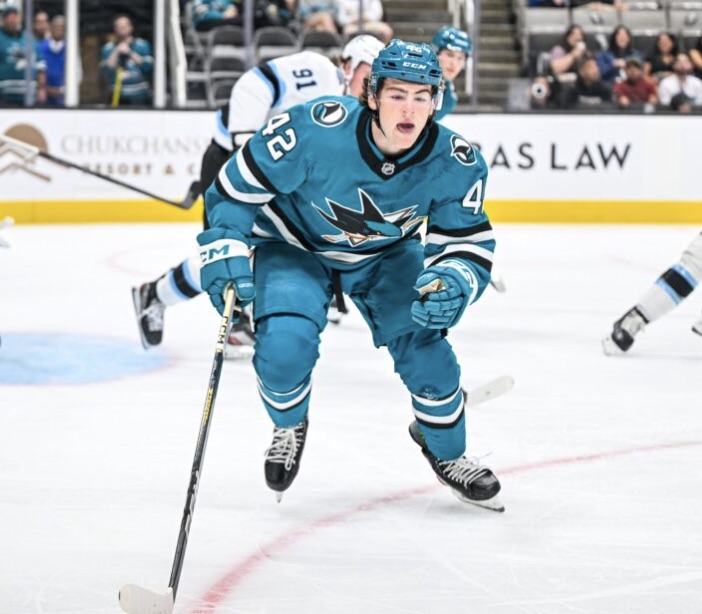
The San Jose Sharks had to fix their defense. Not "should have looked at." Had to. They spent last season running out a group that graded among the worst in the league by essentially any method you prefer, and they did it in front of a 19-year-old franchise center who was, at the time, producing the third-best teenage season in the history of the sport. You do not get many of those years. Wasting one is a genuine sin.
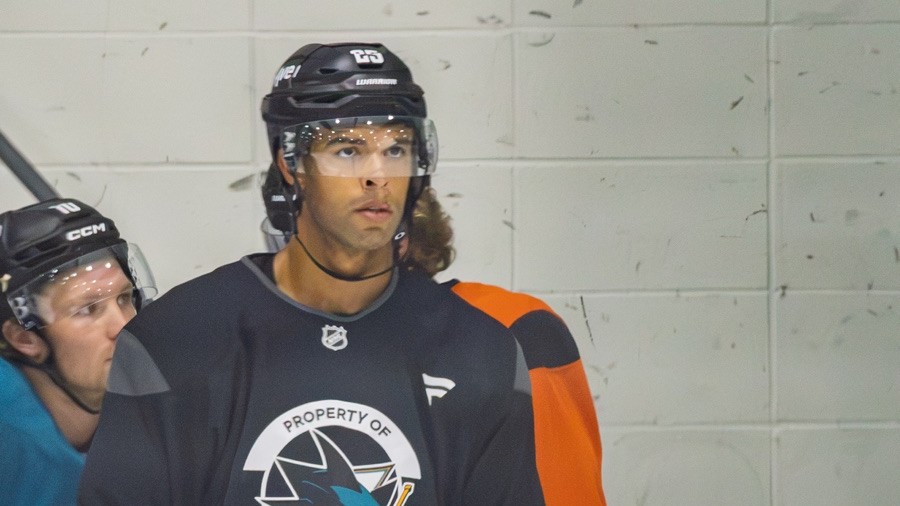
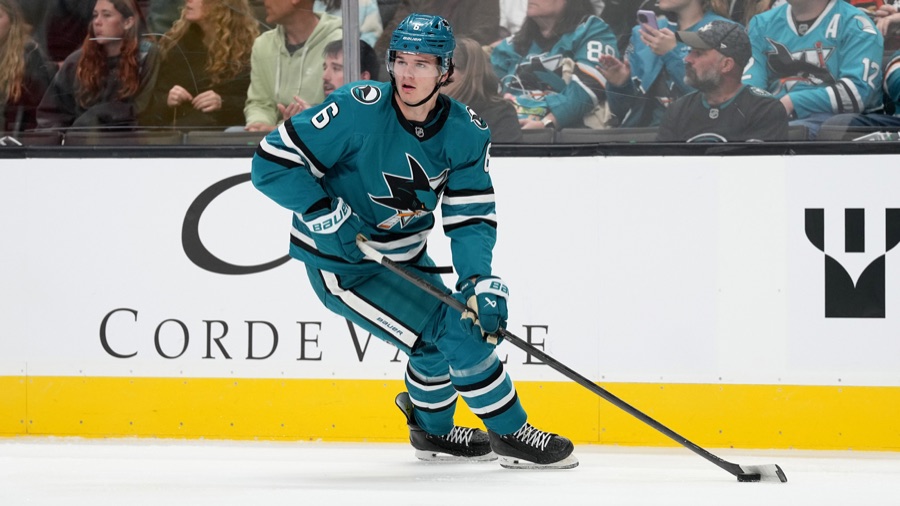
So Mike Grier fixed it. Jacob Trouba on a four-year deal at $8.25 million per. Darnell Nurse acquired at $9.25 million. Mason Marchment on five years. Michael Kesselring in the mix. Eric Stephens of The Athletic totaled the four commitments at nearly $110 million.

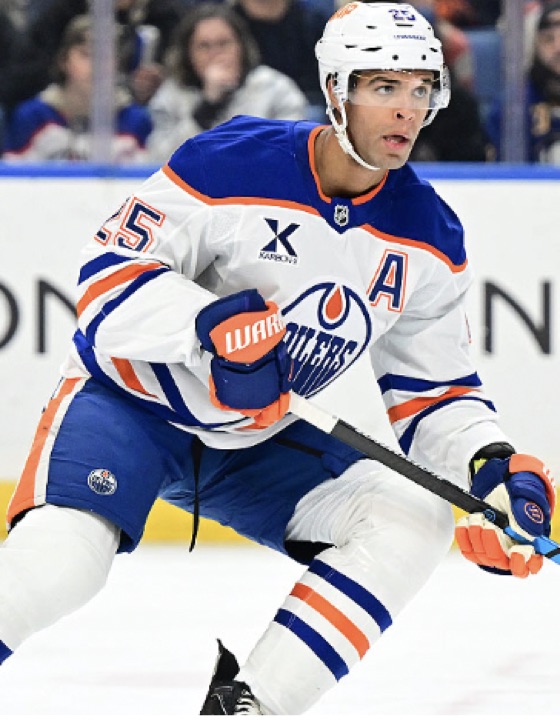
Two defensemen, both in their thirties, both arriving with a reputation that outruns the underlying numbers. That is the whole offseason in one row.
The blue line got better. Sheng Peng polled four NHL scouts for San Jose Hockey Now and got two on-record verdicts, both positive, both landing in the same neighborhood: "a big improvement," and "significantly improved."
Fine. Good. The floor came up.
Now here is the argument, and it is not the one you are expecting: the problem is not that Grier overpaid. The problem is that he did it twice.
The plan I wanted was never real, and that is the point#
Every Sharks fan with a spreadsheet had a June version of this offseason. Mine went: qualify and re-sign the restricted free agents, keep Vincent Desharnais as cheap right-shot depth, and spend real money on exactly one premium addition, John Carlson on a short deal, deployed as a sheltered power-play quarterback. Right player, right need, right term, right dollars.
It was hopeium. Both legs of it were.
Desharnais was not cheap. He signed in Washington on July 1 for four years and $16.8 million, a $4.2 million cap hit running through 2029-30, roughly double what the plan assumed and on term that reaches into the exact crunch window this piece is about.
And Carlson was never coming to San Jose. He signed with Tampa Bay for two years and $17 million, and the whole time the reporting said the same thing: he wanted to be back east, near family. That is not a bidding war the Sharks lost. It is a bidding war they were never in. A team can offer the most money in the league and still finish second to a zip code.
So there is no clever alternative roster to hold up here, and I am not going to pretend otherwise. That is the honest version.
But notice what Carlson's actual contract does to the argument, because it is more damning than my fantasy was.
The one genuinely premium right-shot defenseman who changed teams that week got $8.5 million for two years. San Jose gave Jacob Trouba $8.25 million for four. Nearly identical annual money, for a lesser player, on double the term.
That is the whole case in one comparison, and it does not require me to have been right about anything. The market will tell you what a defenseman costs. It will also tell you how long anyone was willing to be wrong about one.
The market agreed the price was wrong#
The strongest evidence against the Trouba deal is not an opinion. It is what other teams paid for the same profile in the same week.
Mario Ferraro, younger, with a similar shot-blocking, non-puck-moving game, signed with Winnipeg for three years at $4 million per. Jamie Oleksiak went to Vancouver for two years at $5 million, on a term that expires before the crunch even starts. And Desharnais, the man San Jose let walk, went to Washington at $4.2 million.
Three defensemen of broadly that build, in the same week, at $4.0 million, $4.2 million and $5.0 million. San Jose paid $8.25 million.
The ceiling is just as unkind. Carlson, a genuine power-play quarterback and the most accomplished defenseman on the market, cost Tampa Bay $8.5 million. So the entire price range for a defenseman that week ran from about $4 million to about $8.5 million, and San Jose bought at the very top of it. For a player nobody, including the Sharks, describes as a true number one.
What a defenseman cost, July 1, 2026
Cap hit and term for every comparable blue-liner signed on the open market that week. San Jose paid the second-highest price and the longest term.
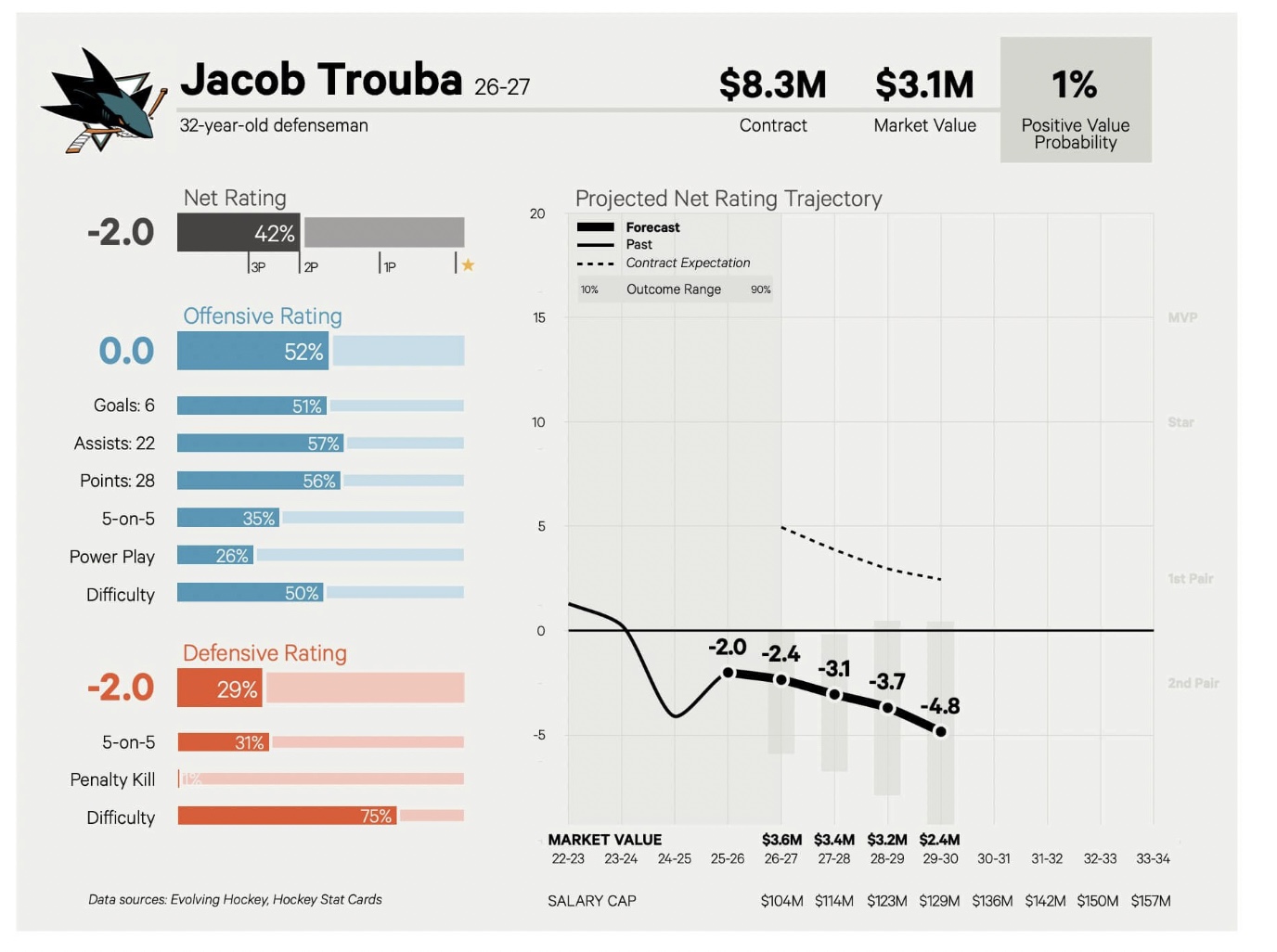
Then the models showed up. Dom Luszczyszyn's annual worst-contracts piece for The Athletic ranked the Trouba deal the fifth-worst contract in the NHL: a projected surplus value of negative $21 million, a 1 percent probability of ever being positive-value, and a modeled market value of $3.1 million against the $8.3 million cap hit.
The supporting detail is uglier than the headline. Look at the card underneath it.
A penalty kill in the first percentile and a defensive rating in the 29th. The "defensive veteran" framing that justified this signing is not actually in the numbers. And the projected net rating gets worse every single year of the deal, from minus 2.0 down to minus 4.8, bottoming out in 2029-30.
You will notice that is the same year everything else comes due.
What 2029 looks like#
This is the part of the piece where a cap projection normally arrives and everyone's eyes glaze. So let me put it in one sentence instead.
By 2028-29, with the young core off their entry-level deals, San Jose projects to have roughly $2 million in usable space.
Two million. That is the number, and it is not a doom number, it is a rigidity number. Build it yourself if you like: Celebrini's extension (one public model has it at seven years, $17 million per; Elliotte Friedman has speculated considerably higher), Will Smith (one agent's read was five years at $10 to $11 million), Michael Misa, Igor Chernyshov, Sam Dickinson. Stack those on the veteran deals that are already signed, add the Hertl dead cap, and you are pressed against the ceiling with your depth already shaved to league minimum.
The Anaheim Ducks are the live cautionary tale, and they are in the same division. They matched an $18 million offer sheet on Leo Carlsson this month, which permanently repriced what a young star costs league-wide, and they now face their own second-contract wave with about $9 million to work with.
San Jose is currently sitting in the seat Anaheim was in last summer.
A blue-line overhaul was mandatory, and either the Trouba signing or the Nurse trade alone was defensible. Doing both is an overcommitment whose bill lands around 2029, exactly when the title window opens. Revisit every offseason through 2029-30.
The steelman, because it is a real one#
Three arguments cut against this, and two of them are good.
The near-term case is legitimate. The Pacific is soft. Los Angeles is old. Anaheim gutted its right side and is cap-choked. San Jose's kids are all trending up. A playoff push this season is a genuinely reasonable expectation, and none of the money matters for that; you just line up the players you have.
The kids are going to play. This was the loudest fear when the veterans arrived, and four independent opening-night projections have now landed and every single one keeps the young forwards in the top nine and leaves only veterans as scratches. Whatever else the veteran spend bought, it does not appear to have bought a logjam that buries Ivar Stenberg.
And Celebrini has said the right things. He reaffirmed publicly that he wants to be here. He endorsed the summer's moves. The nightmare version of this take, where the young core resents the spending and leaves, is not currently showing up in the one data point that matters most.
The reason none of that dents the argument is that the argument was never about this season, and it was never about whether the Sharks can keep their kids. It is about what is left over after they do.
Even the optimists concede the shape of it. Stephens, who is not running a bear case, wrote plainly that neither Nurse nor Trouba is a true top-pairing defender. The four scouts landed on "closer to average." That is the ceiling everyone actually agrees on, and San Jose is paying top-four money for it into the back half of the decade.
The test#
This take is falsifiable, which is the only kind worth writing down.
It is wrong if, in the summer of 2029, the Sharks extend their core and still have the flexibility to add a difference-maker without subtracting one. It is right if they spend that summer trading Trouba or Nurse to make room for players they drafted.
Check back annually. It will be in the ledger either way, including if it ages badly.
Anyway. The house is nice. The kitchen is much better than last year's kitchen.
The payments start in three years.
An earlier version of this piece held up an alternative offseason plan as one that had been available to the Sharks. It was not, on either leg, and the piece has been rewritten to say so plainly.
Vincent Desharnais was listed at roughly two years and $2 million. He signed with Washington on July 1 for four years and $16.8 million, a $4.2 million cap hit running through 2029-30.
John Carlson was presented as a gettable premium addition. He was not. He signed with Tampa Bay for two years and $17 million, and he had signalled throughout that he wanted to return east, near family. San Jose was not going to win that at any price.
The argument no longer rests on a hypothetical roster. It rests on what the market actually charged that week: comparable defensemen at $4.0M, $4.2M and $5.0M, the best one available at $8.5M on two years, and San Jose at $8.25M on four. Both corrections make the case against the contract stronger than the version built on wishful thinking did.