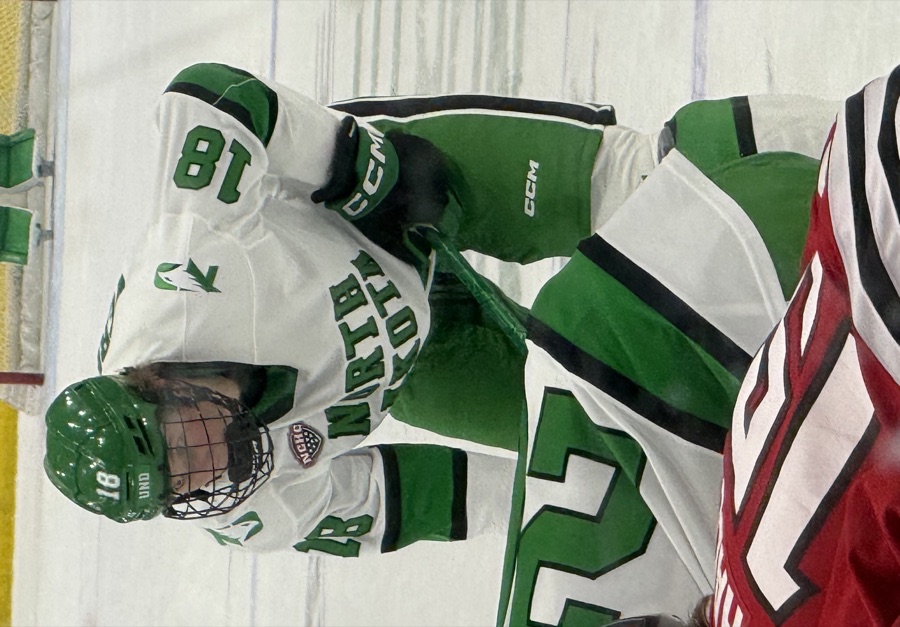
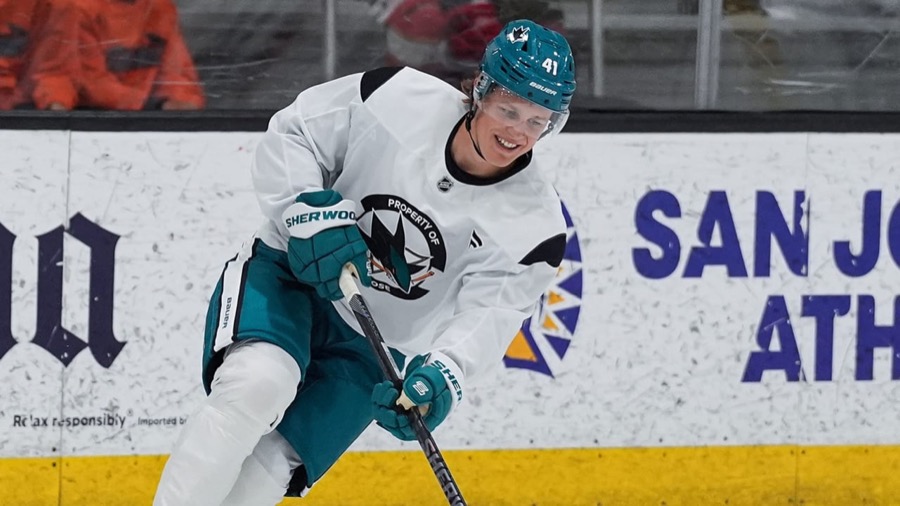
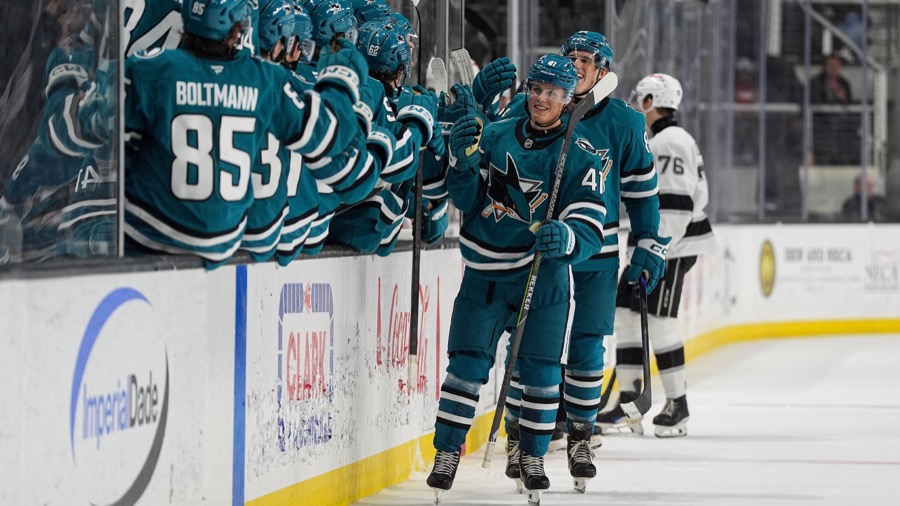
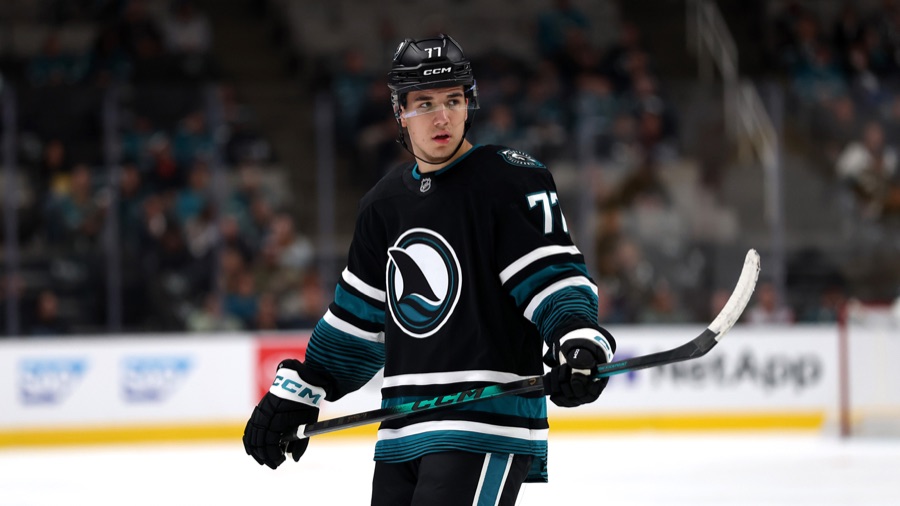
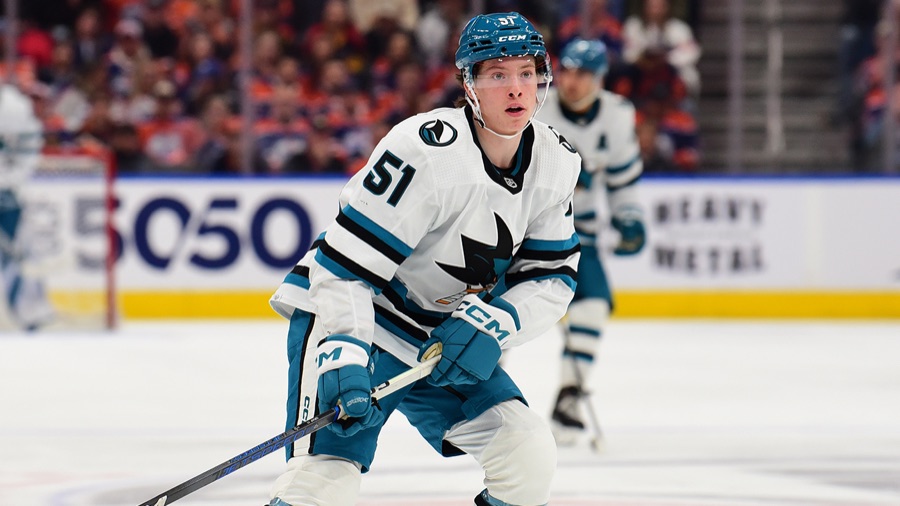
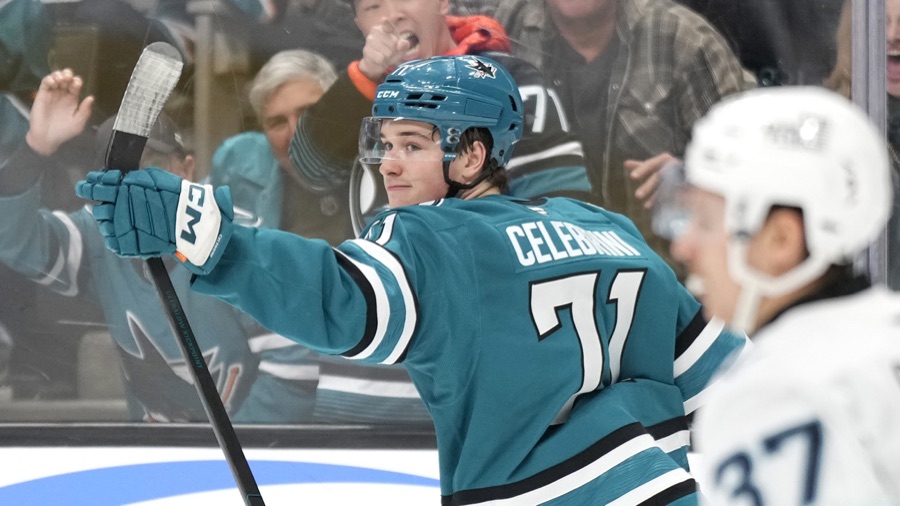
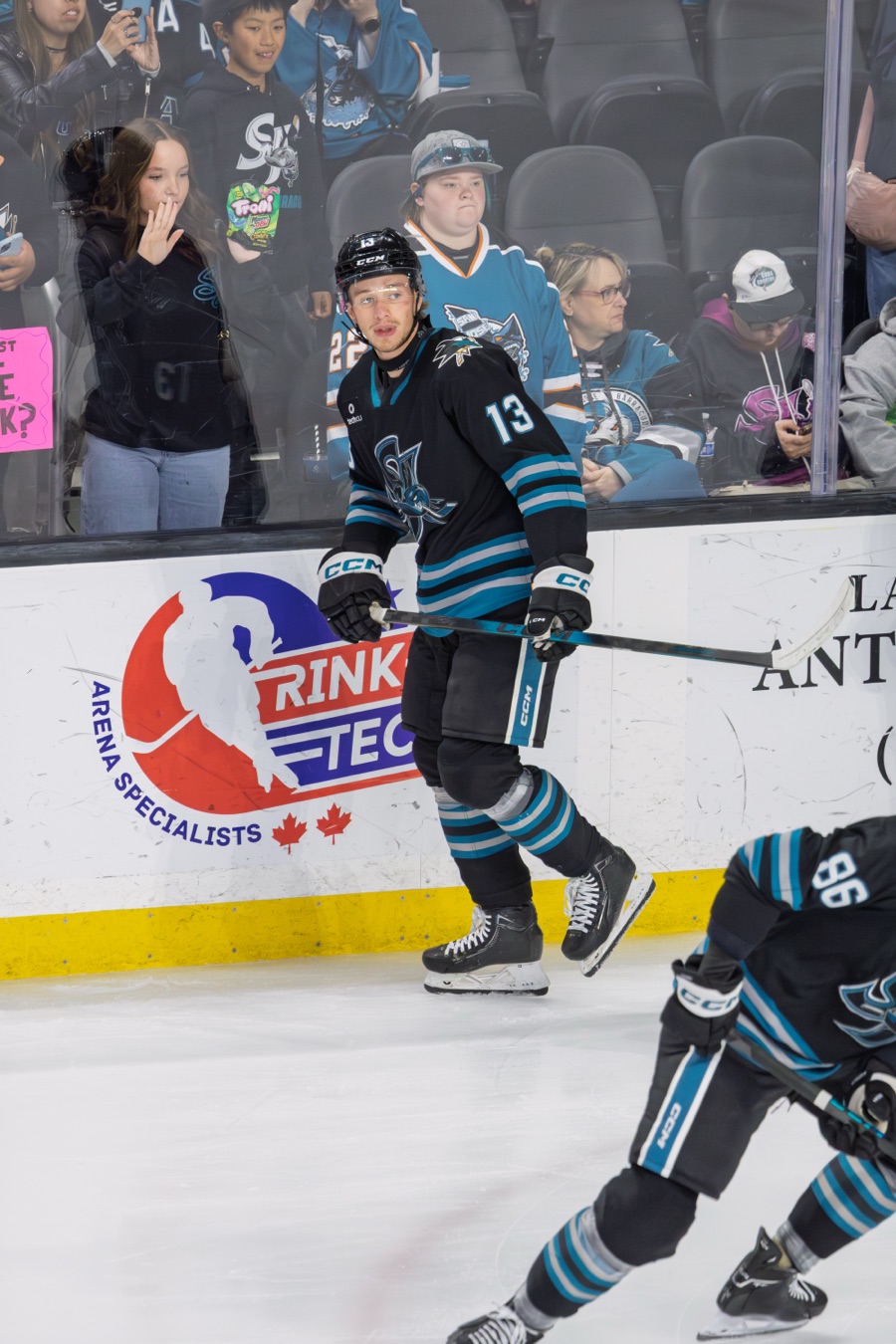
Ivar Stenberg, the deep dive: the models love him as much as the scouts, and he is chasing the Sedins
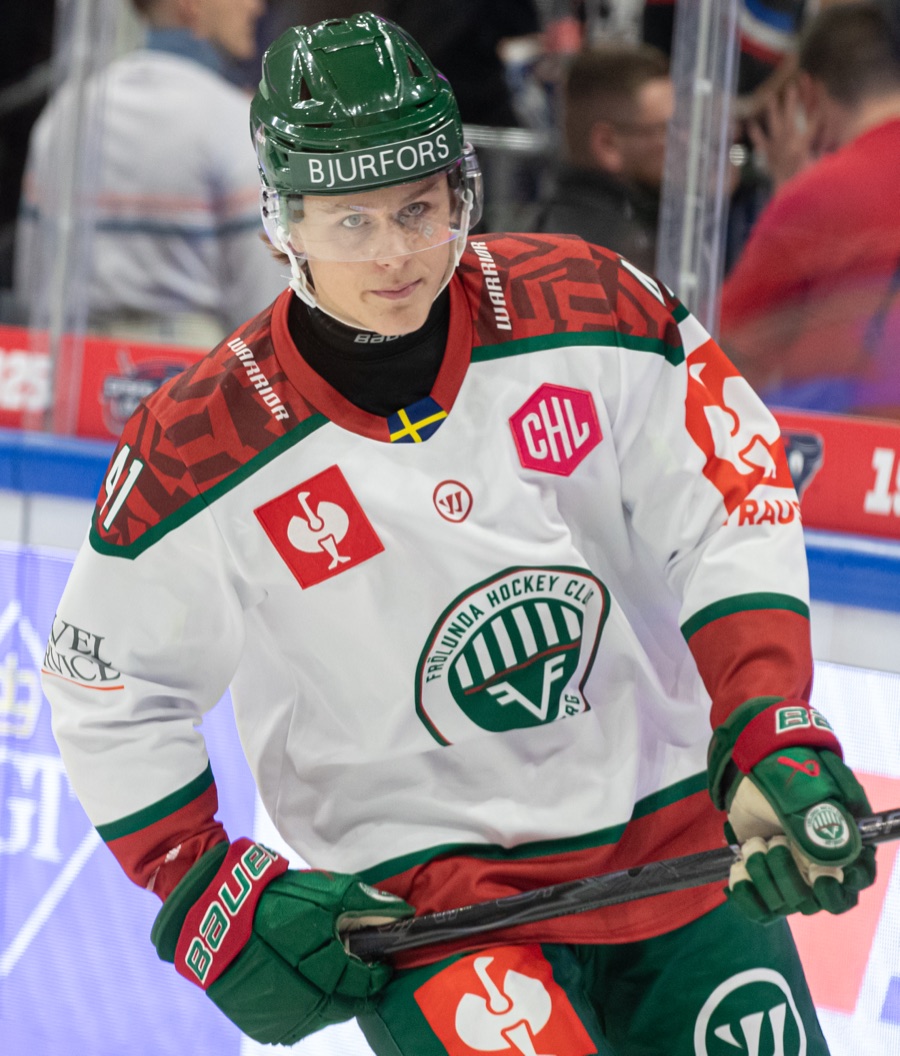
You already have the scouting reports, the tool grades, and the comp soup (Guentzel, Reinhart, Kaprizov, Raymond). So this is the layer underneath that: the advanced stats and the historical context, the stuff that tells you whether the No. 2 pick is a good prospect or a special one. I went and got it, and I cross-checked every number that matters, because a couple of the loudest claims floating around are wrong or unverifiable. The short version: the models love him exactly as much as the scouts do, and the company he is keeping historically is absurd.
The number that matters most: 99 percent#
Byron Bader's Hockey Prospecting model, the most-cited public prospect projection system, gives Stenberg a 99 percent star probability, defined as a career 0.70-plus points-per-game NHL forward. He is tied with Gavin McKenna at the very top of the entire 2026 class. Not "a good bet." A near-lock, by the math, to be a real top-six NHL scorer. That is the single most important thing you did not have on file.
It is built on his NHL-equivalency (NHLe), the stat that translates production across leagues onto one NHL scale. Two records sit under it:
| Advanced marker | Where it ranks |
|---|---|
| Draft-year NHLe (SHL, vs men) | Highest in the entire 2026 class (TopDownHockey) |
| D-1 NHLe (the year before, Swedish J20) | Highest in J20 history (Hockey Prospecting) |
| Star probability (Hockey Prospecting) | 99 percent, tied with McKenna for first |
Read that middle row again. He set the production record two years running, in two different leagues. This is not a one-season spike that might regress; it is a two-year pattern of being the most productive teenager anyone had measured at his level.
A correctness note, because this one is worth double-checking: a Google AI summary is pinning his draft-year NHLe at exactly "50" while also calling him a "60-plus" player. Those cannot both be true, so I am not repeating the number. The verified, attributable claim is "highest in the class." When the only source for a figure is an AI that contradicts itself, the right answer is to not say it.
The historical company: he is chasing the Sedins, literally#
The reports could not even agree on where his SHL season ranks (I saw 2nd, 3rd, and 5th in different outlets), so I pulled Elite Prospects' all-time leaderboard to settle it. Here is the actual top of the list for the best draft-eligible season in SHL history:
| Rank | Player | Season |
|---|---|---|
| 1 | Daniel Sedin | 1998-99 |
| 2 | Henrik Sedin | 1998-99 |
| 3 | Ivar Stenberg | 2025-26 |
That is the whole list above him: two Hall of Famers, in the same season, who went on to a combined 2,600-plus NHL games and a pair of Art Ross and Hart trophies between them. This corrects what is in our own file, by the way (we had ESPN's looser "2nd-most-productive" line). By points among draft-eligibles he is 3rd, behind only the Sedins. The "5th-most by an 18-year-old" figure you may have seen elsewhere uses a wider net that scoops in already-drafted, more-developed players. And by pure rate, mid-season his 0.83 points-per-game pace was the fastest any draft-eligible has ever scored in that league. He finished at 0.767. The rate view ranks him first all-time where the counting-stat view ranks him third, because the teenagers ahead of him on raw points played more games in higher-scoring eras. The rate is the truer number, and nobody has matched it.
The scouts had him first all year, not as a riser#
NHL Central Scouting ranked him the No. 1 international skater in both its midterm (January) and final (April) lists. He did not climb into the spot; he owned it wire to wire. Their European director, Jukka-Pekka Vuorinen, in one sentence: "He's exceptionally smart. High hockey IQ, elite awareness and decision-making." Elite Prospects files his player type as, and I love this, "Cerebral Tactician. Dangler. Playmaker."
And the profile is genuinely pass-first, which the comps (Raymond, Guentzel, Reinhart) all share: 22 assists to 11 goals, plus-10, and just 6 penalty minutes as an 18-year-old against grown men. He creates more than he finishes (16.4 percent shooting, solid not elite), he tilts the ice the right way, and he never sees the box. That is a translatable NHL game, not a junior highlight reel.
The honest counterweights (this is not a hype sheet)#
- He is old for the class. Born September 30, 2007, he is among the oldest 2026-eligible players, older than McKenna and well older than the mid-2008 group (Verhoeff, Lin, Bjorck). An extra eight to ten months is real at this age, so his dominance is modestly age-advantaged, and age-adjusted models shave him for it.
- He is a star, probably not a superstar. Bader has noted that forwards who post a 60-plus draft-year NHLe almost never miss on stardom. Stenberg leads this class in NHLe, but I could not verify he clears that 60 line (see the correctness note above), so the read is elite-and-safe rather than can't-miss-generational. The 99 percent "star" number already bakes that in.
- The McKenna gap is real. Every head-to-head lands the same way: McKenna has the game-breaking ceiling, Stenberg has the higher floor and the more reliable, pro-ready game. He was the safe elite pick at No. 2, not the dynamic one. For this roster, with Celebrini already the dynamo, safe-and-elite is exactly right.
What it means for the Sharks#
He is the in-house answer to the Eklund trade and a near-certain NHL player this fall. ESPN projected 60 rookie points; Wheeler and others put him in the Calder conversation. The advanced case is the strongest argument yet that he hits, and hits fast. The one thing to watch is deployment: the data says trust him early, ideally next to Misa or Celebrini. Burying a 99-percent-star projection on a checking line to "earn it" would be the one self-inflicted way to slow this down.
Strip away the scouting language and the numbers say the same thing the eyes do: a 99-percent-star projection tied with the No. 1 pick, the highest NHL-equivalency in the class, two straight years of record-setting production, and the third-best draft-eligible SHL season ever recorded behind only the Sedins. The honest asterisks (old for the class, a star rather than a superstar, the McKenna ceiling gap) keep it grounded, but they do not change the verdict. This is a high-floor, high-probability top-six winger who should be a Shark in October and a good one quickly. Grier took the safest elite player on the board, and the math agrees with him.
Verified sources: Hockey Prospecting / Byron Bader (99 percent star, NHLe records), TopDownHockey / Patrick Bacon (highest draft-year NHLe in class), Elite Prospects (all-time-season leaderboard, 3rd behind both Sedins; player type; bio), NHL.com / NHL Central Scouting (No. 1 international midterm and final; Vuorinen quote; 5th-most points by an 18-year-old), plus the verified 11-22-33 / plus-10 / 6 PIM / 67-shot line. Deliberately excluded: an internally contradictory AI figure for his exact NHLe. Could not confirm and did not guess: his precise SHL ice time and Frolunda's playoff line. Separate-player note: this is Ivar Stenberg, not the Blues' Otto Stenberg.