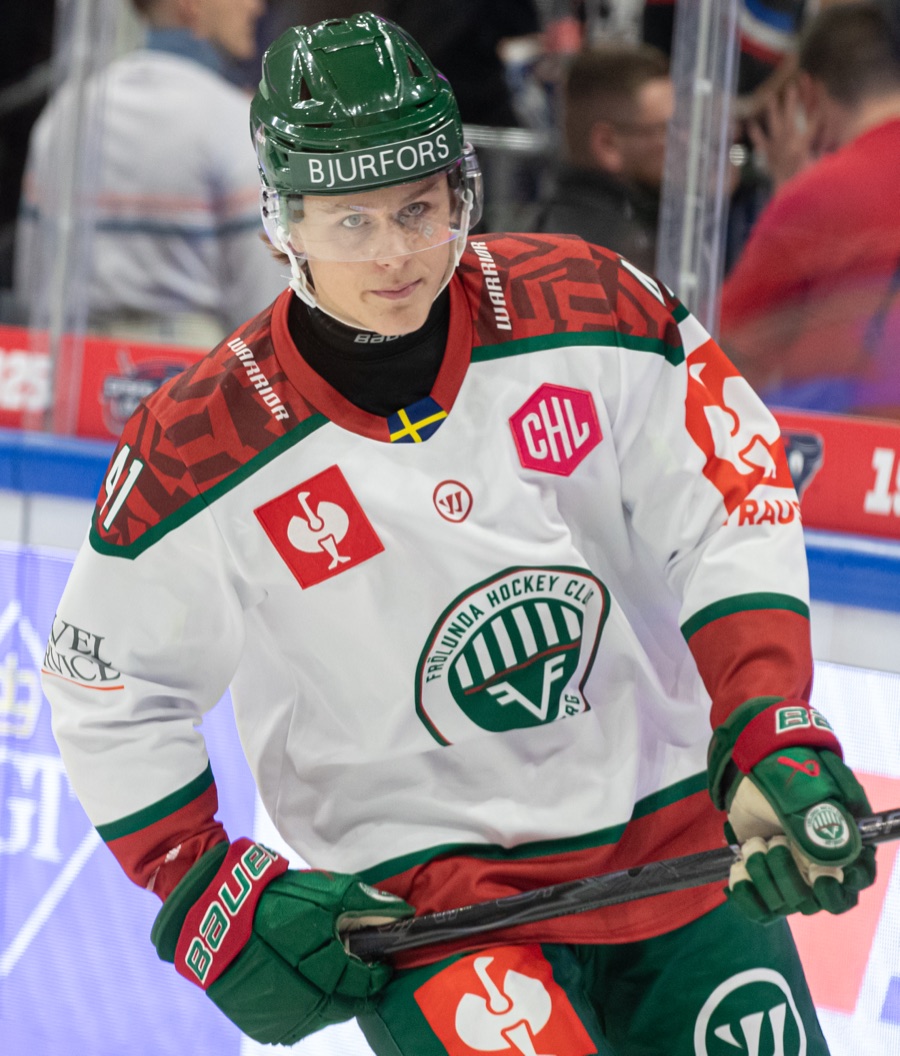
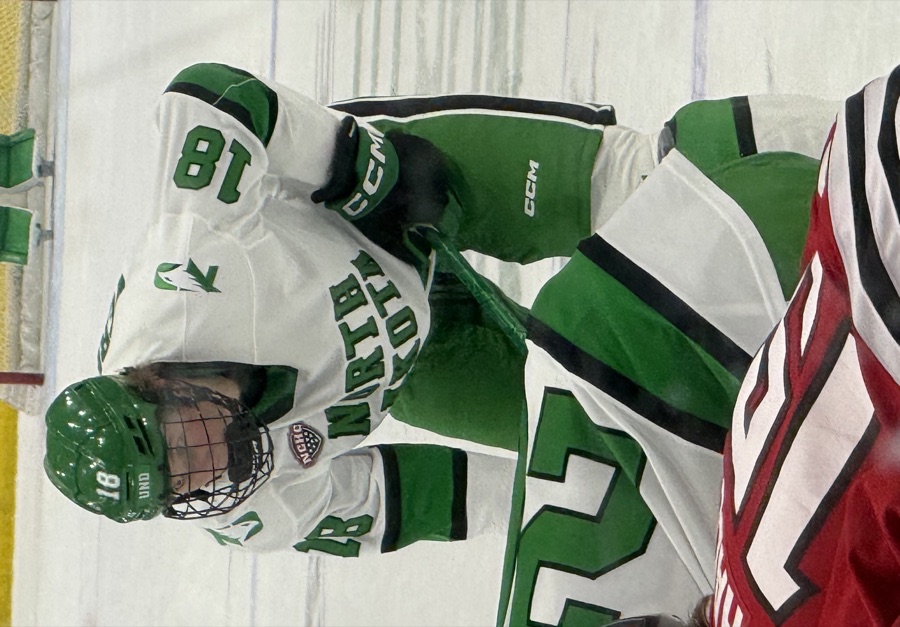
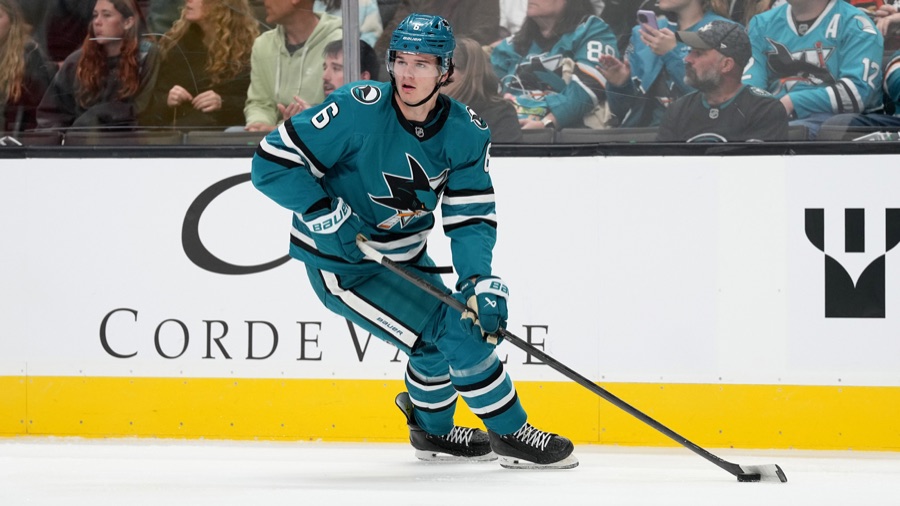
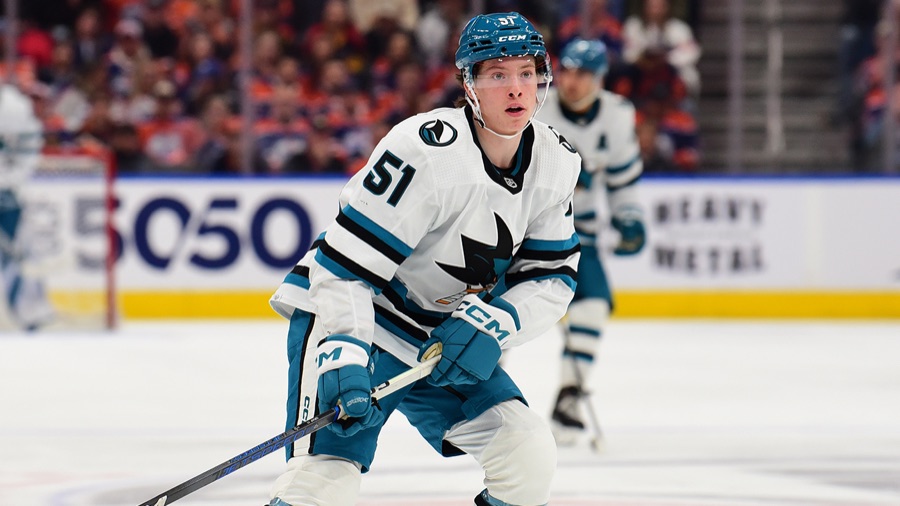
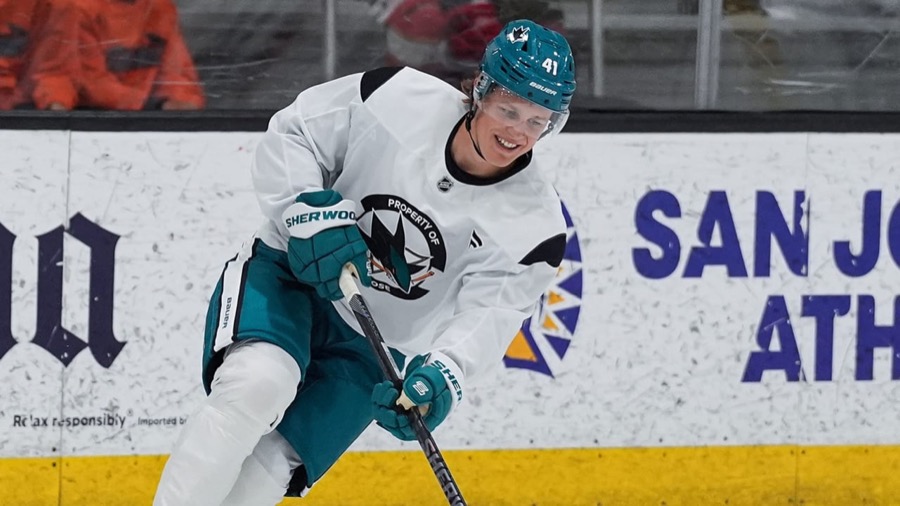
Pohlkamp: the bridge to the bridge, and the only Sharks prospect whose shot is already NHL-ready
The blue-line plan has a now (Desharnais, Carlson, the bridge veterans) and a later (Reid, arriving 2028-29). What it has never properly mapped is the middle, and the middle has a name. Eric Pohlkamp is Professor Hockey's No. 2 prospect in the entire system, the best defenseman in college hockey last season by more than one voter's reckoning, a national champion, and a right shot on a team starving for them, and the repo's plans keep listing him as "seventh defenseman, first callup" like he is a phone number on a sticky note. The season review on file covers what he did. This is about what he is for: the bridge to the bridge.
1. The resume, compressed (because the review already exists)#
Passed over entirely in the 2022 draft. Taken 132nd in 2023, fifth round, as a 19-year-old overage out of Cedar Rapids, where he was USHL Defenseman of the Year. Best defenseman on a conference-champion Bemidji State team as a freshman, gold medal with Team USA at the World Juniors under David Carle, transferred to Carle's Denver, and then the junior year: 42 games, 18-21-39, plus-24, 188 shots on goal (the most of any skater in college hockey, forwards included), 78 blocks, the NCHC's all-time single-season goal record for a defenseman, First-Team All-American, Hobey Baker finalist, national champion. Signed his ELC April 16 and played one Barracuda playoff game on a bad hand and a bad foot because that is apparently who he is. The league was wrong about him twice, at two drafts, on the same two complaints (too small, too old), and he has spent three consecutive seasons making the complaints look silly.
2. The scouting synthesis: not your usual 5-foot-11 defenseman#
| Source | The read |
|---|---|
| Wheeler | "Really stocky (210 pounds and muscular)... one of the hardest point shots outside the NHL; he can absolutely bomb it... doesn't look or play like your typical sub-6-foot defenseman... he would have been my Hobey Baker vote." Played about 24 minutes a night for the champs. |
| Professor Hockey | The system's best D prospect: a bottom-pair floor with a top-four ceiling, the Ferraro template (undersized, but every coach trusts him), and a Raddysh-style deployment dream: park him at the blue line and let Celebrini and Smith feed the cannon. |
| The in-house review | 9.6% shooting on the country's highest volume (sustainable, not luck), 12 of 18 goals at even strength, 33 PIM (engaged, not over-aggressive, the maturity tell), and the one unmeasured axis: defensive play-driving, because the NCAA publishes no on-ice xG. That axis is what the AHL year exists to answer. |
| The skeptic's line (Reid memo) | "Good NCAA story, ceiling probably second-pair at best." Filed honestly. The bear case is that 22-year-old breakouts against college kids compress at pro pace. |
The composite: a stocky, disciplined, right-shot shooting specialist whose physicality is exactly the trait that separates him from the small-righty cautionary tales. Professor Hockey's own warning about little defensemen (the Blankenburg problem, where good underlying play never earns coach trust) applies least to the small defenseman who hits, blocks four shots a night, and won a title playing 24 minutes. Trust is his carrying tool as much as the shot.
3. The honest range#
The projection band runs from useful bottom-pair righty who kills the seventh-defenseman problem forever (the floor, and a real NHL career) through second-pair shot-and-PP2 contributor (the likeliest landing) to the Raddysh outcome (the dream: a late-blooming right-shot point producer whose bomb plays up next to elite feeders). The two honest risks: his age means less projection runway than a usual prospect (what you see at 22 is close to what you get), and the defensive play-driving question is genuinely unanswered. Both risks get resolved by the same thing: a full Barracuda season with top-pair minutes, which is exactly what 2026-27 is for. Nothing about his path suggests he needs two of them; everything about his path suggests betting against his timeline is the move that keeps losing.
4. The role map: bridge to the bridge#
| Window | The right side's answer | Pohlkamp's job |
|---|---|---|
| 2026-27 | Carlson, Kesselring-or-equivalent, Desharnais | Barracuda top pair, first callup, the injury answer |
| 2027-28 | The bridges start expiring (Carlson, Desharnais deals end this summer-to-next) | The push year: bottom-pair NHL job plus the PP2 point, on an ELC, exactly when the Celebrini extension lands |
| 2028-29 (window opens) | Reid arrives as the long-term No. 1 right shot | The 4-5 righty behind Reid, RFA that July at a modest number |
Read the middle row twice, because it is the entire reason this player matters strategically and not just sentimentally. The blue-line plan's veteran bridges are built to expire in the summers of 2027 and 2028, exactly when the cap crunch arrives. The plan's quiet assumption is that somebody cheap and right-handed steps into the vacancy so the money can go to the extensions. Pohlkamp is that assumption, wearing a name. His ELC runs through 2027-28 and his first RFA contract lands at depth-defenseman money in the exact years the five-year cap model needs its surplus value. And the shot has a special-teams job waiting: when Carlson's bridge ends, the PP-point vacancy reopens, and the system's in-house answer is the guy who just set a conference goal record from the blue line. Desharnais holds the door, Pohlkamp walks through it, Reid eventually owns the house. That is the relay, and the middle leg was always the least-examined one.
The verdict#
The right side's middle chapter is already in the organization, costs $1.05M, and shoots harder than anyone on the NHL roster.
Pohlkamp is not Reid and nobody should pretend he is; the ceiling argument between "second-pair at best" and "top-four" is real and unsettled. But the role the franchise actually needs him for does not require settling it: a cheap, trusted, right-shot, PP-capable defenseman who arrives in 2027-28 as the veteran bridges expire and holds the 4-5 slot when Reid lands. Every part of his history (overage, overlooked, transfers up a level and immediately belongs) says the development bet is a good one, and the one open question (can he drive defense at pro pace) gets answered by next spring. Watch the Barracuda's top pair in October. The bridge to the bridge is under construction, and it has been the whole time.
Builds on the full season review at docs/players/Pohlkamp_2025-26_Review_Brisbee.md (the 42 GP, 18-21-39 line, the NCHC record, the Hobey/All-American/national-title hardware, the Spengler Cup minutes). Scouting: Wheeler's prospect-pool profile (Tier 4, No. 5 in system) and Professor Hockey's June top-10 (No. 2 in system, best D prospect). Contract per state/cap.md (2-year ELC at $1.05M starting 2026-27, RFA July 2028). One data correction made while writing this: cap.md listed his draft slot as 2023 second round, 64th; the review and Wheeler both have him at 132nd overall, fifth round, 2023, and cap.md has been corrected accordingly. Role map per the blue-line plan, the five-year cap model, and the contention clock.