San Jose extended Warsofsky before the season that was supposed to judge him
The Sharks announced a multi-year deal on Thursday afternoon, hours after training camp opened and two weeks before the opener. Warsofsky had one year left on the three-year contract he signed in 2024. The club disclosed the terms of neither.
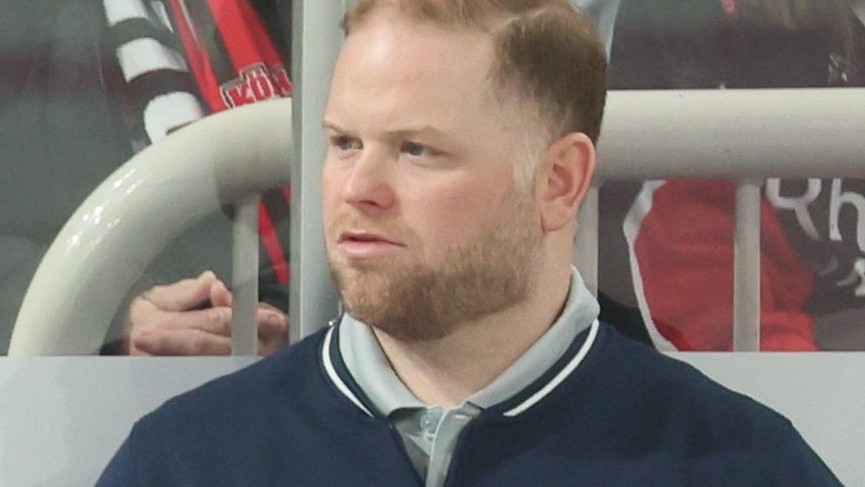
Training camp opened in San Jose on Thursday morning. By the afternoon the Sharks had told everyone how it ends.
Mike Grier announced that Ryan Warsofsky has signed a multi-year contract extension. Per club policy, the terms were not disclosed, which is the same thing the club said in June 2024 when it hired him, and it is why the length of the deal he was already working under is known only because Pierre LeBrun of The Athletic reported it. LeBrun reported three years. Three years from June 2024 runs out in the summer of 2027, which made 2026-27 the last one.
So the situation on Wednesday night was a coach entering the final season of his contract, with a roster that has been rebuilt around him, on a team that has not made the playoffs since 2018-19. The situation on Thursday afternoon is a coach who is not.
Nothing happened in between. That is the whole story, and it is more interesting than it sounds.
What the club had to go on#
Two seasons, and they do not agree with each other.
Year one was 20-50-12. That is 52 points, and it was the worst total in the National Hockey League. Year two was 39-35-8, which is 86, fifth in the Pacific Division, and a 34-point improvement that TSN reported as the largest year-over-year jump by any team in the league last season.
A 34-point jump is a real number and it belongs to the bench as much as to anyone. It is also a number with a footnote attached, because the same team that gained 34 points finished the season having been outscored by 41 goals. Teams that win more games than their goal differential suggests are usually being paid by percentages rather than by process, and percentages do not re-sign. (Goaltending can repeat itself. Results in one-goal games mostly do not.)
That is the honest shape of the evidence: one season that was terrible, one season that was much better and partly borrowed, and a third season that had not started yet.
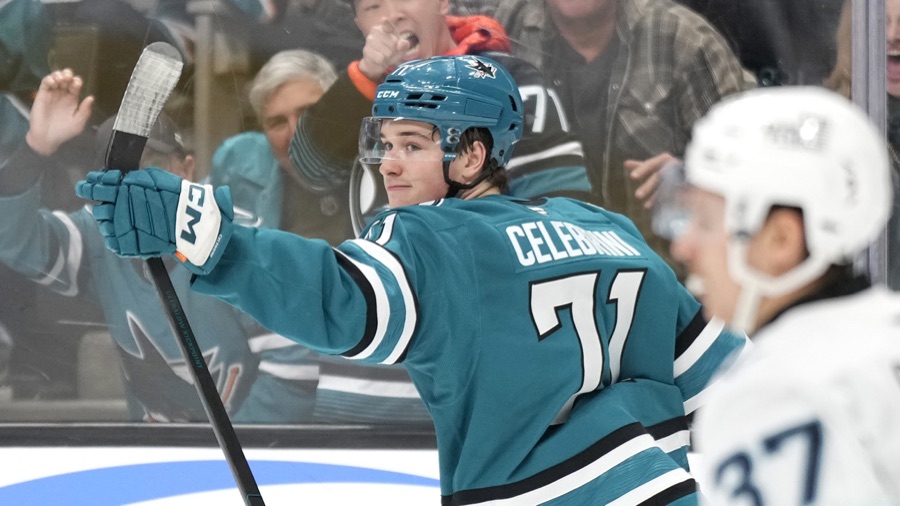
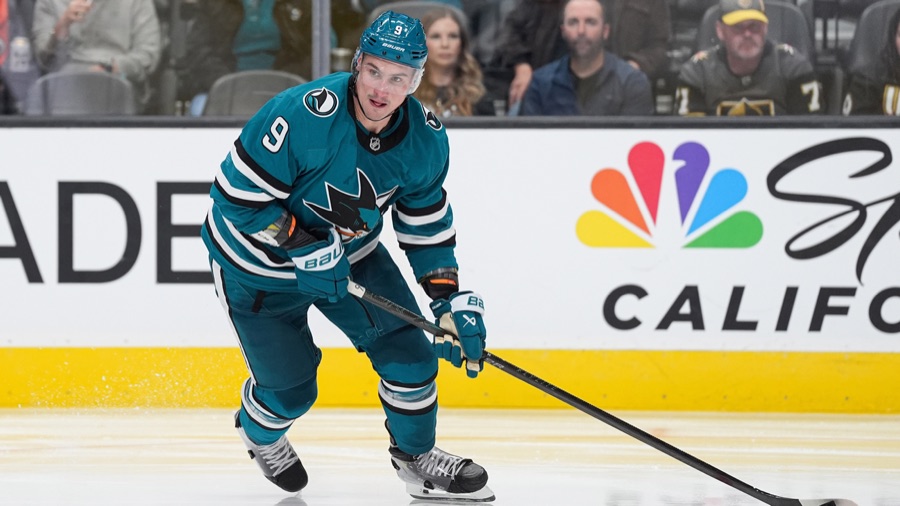
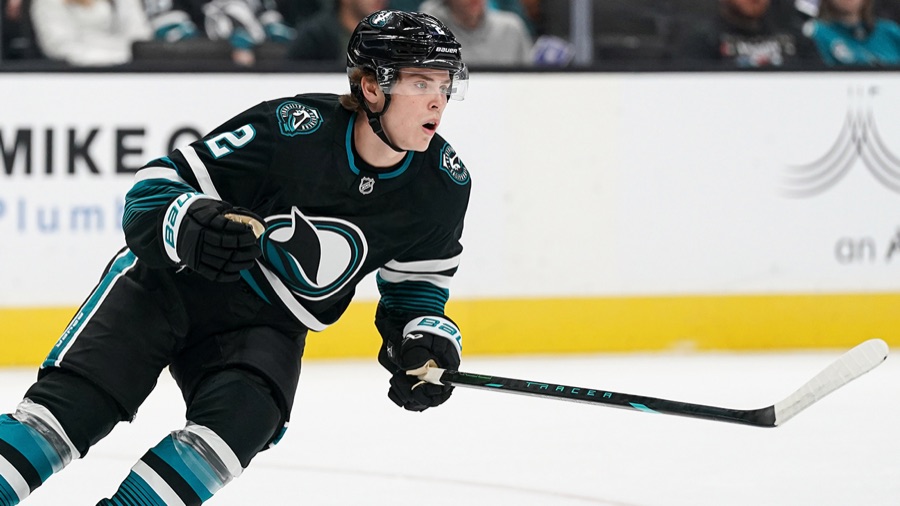
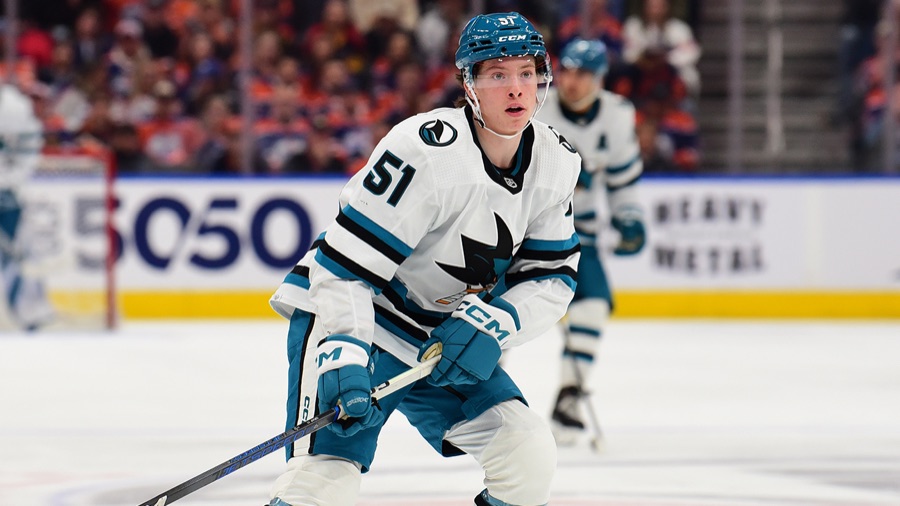
The third season is the one the roster was built for. Macklin Celebrini plays this year on the last year of an entry-level deal before an $18.8 million cap hit begins. Dmitry Orlov, Jacob Trouba, Darnell Nurse and Michael Kesselring are all under contract. Will Smith, Michael Misa, Sam Dickinson and Igor Chernyshov are all young enough that how they are used matters more than who they are playing against. Every question anybody has about Warsofsky gets answered by watching that group play 82 games. (The real ones are about how he hands out minutes, and whether a role on this team is won by evidence or held by seniority.)
San Jose decided not to wait for the answers.
The case for not waiting, which is better than it looks#
A coach in the last year of his contract is a coach every player in the room knows is temporary. That is not an abstraction. It changes how a 19-year-old hears a benching and how a 32-year-old hears a line change. (Anyone who has worked for a boss with a known expiry date knows the difference between an instruction and a suggestion.) Grier has spent two summers assembling a roster young enough to need instruction and expensive enough to need buy-in, and handing that roster a lame duck in September is a strange way to start.
There is also a recruiting argument. San Jose is going to be in the market for free agents who currently have no reason to come, and "we do not know who is coaching next year" is a sentence that costs money.
And there is the plain read, which is that Grier watched his team improve by 34 points and concluded that the man on the bench had something to do with it. That is not a foolish conclusion. It is just one he reached before the season that would have tested it.
What it actually buys#
An extension is not a verdict. It is a purchase of time, and what San Jose has bought is the right to be patient in January.
That matters more than it sounds, because the thing most likely to go wrong this season is slow rather than sudden. It is a power play that stays with the wrong personnel too long, or a penalty kill built around reputations, or a teenager whose minutes never grow to match his play. Those are the failures that used to get argued about in February with a contract clock running in the background. The clock is gone. (A deadline concentrates the mind, which is useful in March and ruinous in November.) Whatever San Jose sees this winter, it now sees without a deadline attached, and a club that cannot fire its way out of a problem has to coach its way out instead.
That is the bet, and it was placed face down. The Sharks open October 1 against Florida.
Called Shots#
San Jose finishes the 2026-27 NHL regular season with fewer than 89 standings points. The Sharks finished on 86 last season and were outscored by 41 goals doing it, which is the combination that usually means a team's record is running ahead of its play rather than behind it. Yaroslav Askarov has been under .900 in both of the seasons he has actually carried a workload, .896 across 13 games in 2024-25 and .884 across 47 last year, and a club that wants a big step forward generally needs one from its goaltender. The case against the call is genuinely strong and it is why this is priced as an underdog rather than a conviction: the roster added Jacob Trouba, Darnell Nurse and Michael Kesselring on multi-year deals inside the last three months, Celebrini is 20 and ascending, and a team that gained 34 points in one year has already proved it can gain points in a hurry. Three more is not a demanding target. Scored off San Jose's final 2026-27 regular-season standings point total as carried by the NHL's own standings. RIGHT at 88 or fewer, WRONG at 89 or more. This does not duplicate the open row on this beat measuring goals allowed per game across the first 20 games, which is a rate over a fifth of a season; this one is a season-long standings total.
Sources: the San Jose Sharks' own release announcing the extension, published at NHL.com and read September 17, 2026, for the multi-year term, the non-disclosure of terms and Mike Grier as the announcing executive; TSN's report of the same announcement, timestamped September 17, 2026 at 3:38 p.m. Eastern, for the league-leading 34-point improvement; NHL.com's June 13, 2024 report of the hiring that replaced David Quinn; Pierre LeBrun of The Athletic for the three-year term of the 2024 contract; Pro Hockey Rumors, read September 17, for the season-by-season coaching record; and the San Jose Sharks' own site, read September 17, for the opening of training camp and the October 1 opener against Florida.