Michigan's Winning Drive Against Oklahoma Was Six Yards Long
Michigan beat the 11th-ranked team in the country 17-10 without its offense ever taking the game over. Oklahoma gained more yards and made more first downs. The difference was two turnovers, six punts downed inside the 20, and an interception that handed Michigan a touchdown it had to travel six yards to score.
Michigan 17, Oklahoma 10, at Michigan Stadium, in front of 111,240 people. Seven things from a game the Wolverines won without ever taking it over.
1. The drive that won the game was six yards long#
The score was 10-10 with 11:49 left in the fourth quarter. Oklahoma had just kicked a field goal to tie it, Michigan had punted after three plays and four yards, and Oklahoma had the ball at its own 15 with nine and a half minutes to play.
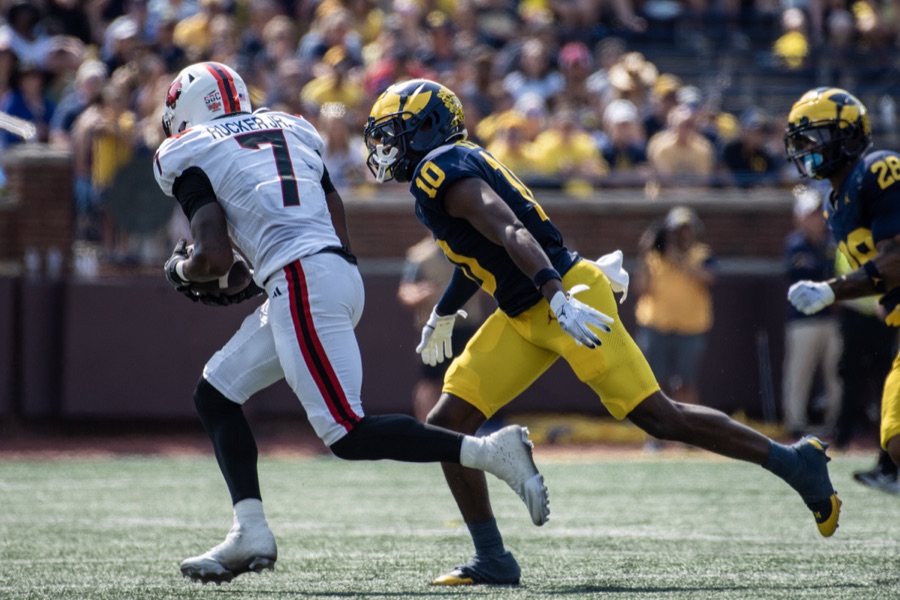
On the third play of that drive John Mateer threw, and Jyaire Hill caught it at the Oklahoma 30 and returned it 24 yards to the Oklahoma 6. Jordan Marshall scored from a yard out at 7:53. Michigan never gave the lead back.
"I didn't think he was going to throw it," Hill said afterward, in the Associated Press game story carried on ESPN's feed.
That is the honest answer to why Michigan won, and it is worth separating from the scoreboard. Michigan had 11 possessions and produced three scores, seven punts and a kneel-down to end the first half. The possession that decided the game began on the Oklahoma 6 and covered six yards. The offense did not win this football game. It was handed a touchdown and it converted it, which is not the same achievement.
Seven and a half minutes of game clock before the interception, Hill had been flagged for a personal foul with Oklahoma pinned at its own 2. More on that next, because it is the same possession.
2. Michigan gave Oklahoma 30 of the 83 yards on the drive that tied the game#
Oklahoma's tying drive started at its own 1 yard line late in the third quarter. It ended with a 34-yard field goal early in the fourth. In between, Michigan handed it 30 yards on two 15-yard personal fouls, and both came with an automatic first down attached.
The first was Hill's, at the Oklahoma 2, moving the ball to the Oklahoma 17. The second was worse. Dominic Nichols sacked Mateer for a nine-yard loss back to the Michigan 45, and was flagged for a face mask on the same play, which erased the sack and moved the ball from the Michigan 36 to the Michigan 21. A nine-yard loss became a 15-yard gain and a fresh set of downs.
Michigan sacked Mateer again on the same drive and pushed Oklahoma back to the Michigan 25. It did not matter. Tate Sandell kicked the field goal and the game was level.
Eighty-three yards, 30 of them gifted. Michigan finished with 11 penalties for 90 yards, a week after nine for 80 against Western Michigan. Oklahoma had nine for 76. Whatever changed about this team between the two Saturdays, the flags went the wrong way.
3. Michigan's quarterback was its run game, and its running backs were not#
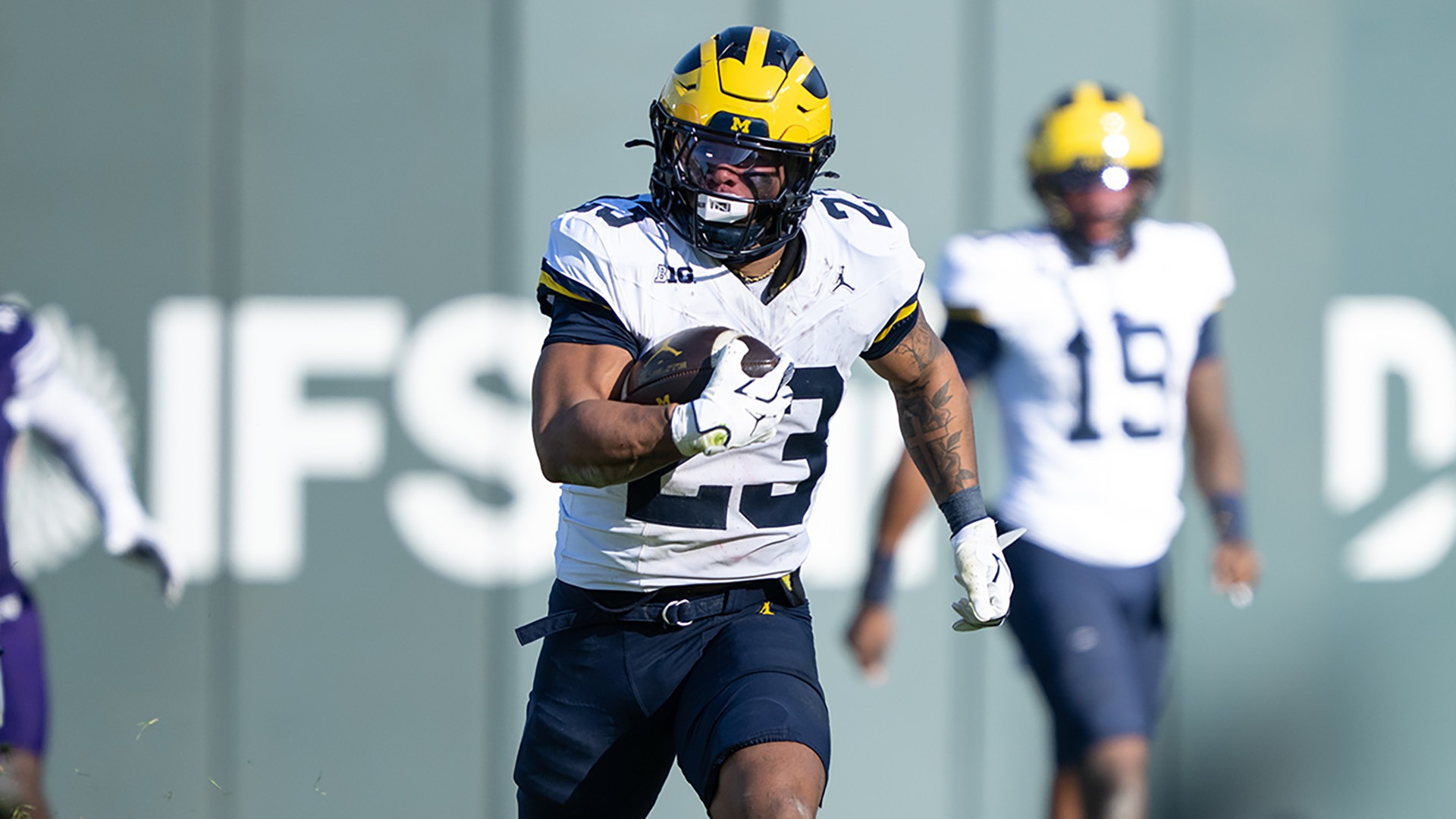
Bryce Underwood is credited with 18 carries for 87 yards. Two of those carries are sacks, which college scoring charges to the rushing column, so his actual runs were 16 for 96 yards, six a carry, including the 38-yard touchdown that opened the scoring.
The three running backs who touched it went 22 carries for 50 yards. That is 2.3 a carry. Jordan Marshall had 11 for 32. Savion Hiter had eight for six. Bryson Kuzdzal had three for 12. Andrew Marsh, a receiver, had the second-longest run of the day at 15 yards on his only carry.
Michigan ran the ball 41 times for 152 yards and won a game with it, and almost none of that was the running backs. A quarterback carrying the offense on 16 runs is a plan that works until it is the plan every week, and Underwood took two sacks and a forced fumble on top of those carries.
4. Michigan threw four passes in the second half, and the head coach said the quiet part#
Underwood finished nine of 17 for 111 yards. The Associated Press put the split in print: two of four for 15 yards after halftime. Michigan led for the entire second half and attempted four forward passes in it.
Kyle Whittingham did not pretend otherwise. "We understand we've got to throw the ball a lot better," he said. "We can't just sit there and rely on running the ball."
That is a head coach naming the problem inside his own win, on the day of it, and it belongs next to the other thing he said: "They were determined to have a lot more passion, energy and physicality. Everything that we were looking for in this game was missing last week." Both are true at once. Michigan played harder and still could not throw.
Third down did not improve either. Michigan converted four of 13, after three of 10 in the opener. That is seven of 23 across two games, and 13 third downs is 13 snaps, so a week of it proves less than it feels like it proves.
5. Oklahoma gained more and lost, and the turnover margin is thinner than 2-0 looks#
Oklahoma outgained Michigan 289 yards to 263, made 17 first downs to 14, and ran 62 plays to Michigan's 58. Both offenses were poor: 4.66 yards a play for Oklahoma, 4.53 for Michigan. Oklahoma converted three of 13 third downs and failed on its only fourth down, at midfield with 3:05 left.
The entire difference was the two turnovers. Parker Livingstone caught a pass at the Michigan 38 in the second quarter, carried it to the Michigan 27 and fumbled it away, killing a 48-yard drive inside Michigan's 30. Then Hill's interception.
Michigan's zero is doing more work than it deserves. The Wolverines fumbled twice and recovered both: Underwood at his own 40, forced by Taylor Wein, and Hiter at the Oklahoma 40, recovered by Hiter himself. A clean turnover column is not the same thing as ball security, and two loose balls that bounce the other way is a 17-10 loss with the same football played.
6. Six Oklahoma drives started inside its own 15, and two of them produced all 10 points#
Cameron Brown punted seven times and dropped six of them inside the 20. Michigan's average drive started at its own 30; Oklahoma's started at its own 19. That 11-yard edge on every possession is most of how a team that gained fewer yards controlled the afternoon.
Here is the part that should temper it. Oklahoma began six of its 11 drives inside its own 15, twice at the 1. Two of those six went for points, and they were the only two scoring drives Oklahoma had: 90 yards for the touchdown, 83 yards for the tying field goal. Both times Michigan had the 11th-ranked team in the country backed into its own end zone, and both times Oklahoma drove the length of the field.
Michigan's defense won the day on the ledger. It did not win the two possessions where Oklahoma most needed it to bend, and it had the best field position of the game on both of them.
7. On injuries, the confirmed news is Oklahoma's#
Kip Lewis, an Oklahoma linebacker, hurt his right knee in the first half and did not return. Brent Venables was asked about him afterward and said, "He'll miss some time." That is the only availability statement either coaching staff put on the record after this game.
No Michigan player was named as injured in the postgame reporting, and no Michigan player has been named since. That is a statement about what has been said, not about what is true. College football requires no injury report, Michigan has published nothing all season, and the document that settles who was on the field is the participation report in the official gamebook, which is not the box score and does not answer whether a man who played was hurt doing it.
Andrew Babalola, Carter Meadows and Hogan Hansen all missed the opener, and Whittingham said in the week before it that he hoped to work them back. Whether any of them dressed on Saturday is not something a box score can answer, because offensive linemen and tight ends can play 60 snaps and be credited with nothing.
Sources: CollegeFootballData, all read September 13, 2026: the 2026 Michigan schedule file for the result, line scores and postgame ratings; the week-two team and player box files for the statistics, penalties, possession time and individual lines; the week-two drive file for starting field position and drive outcomes. ESPN's game summary feed for the same game, read September 13, 2026, for the scoring summary, attendance, the play-by-play penalty and sack log, and the closing DraftKings line. The Associated Press game story published September 12, 2026 and carried in that feed, for the quotations from Kyle Whittingham, Brent Venables, Jyaire Hill and Blake Frazier, for Underwood's second-half passing split, and for the Kip Lewis injury.