Carr's three touchdowns came on third down, and Rutgers lived on three plays
Michigan 28, Rutgers 21. Michigan converted 12 of 16 third downs a week after going 6 of 20 against Indiana, and Rutgers gained 166 of its 249 yards on three snaps.
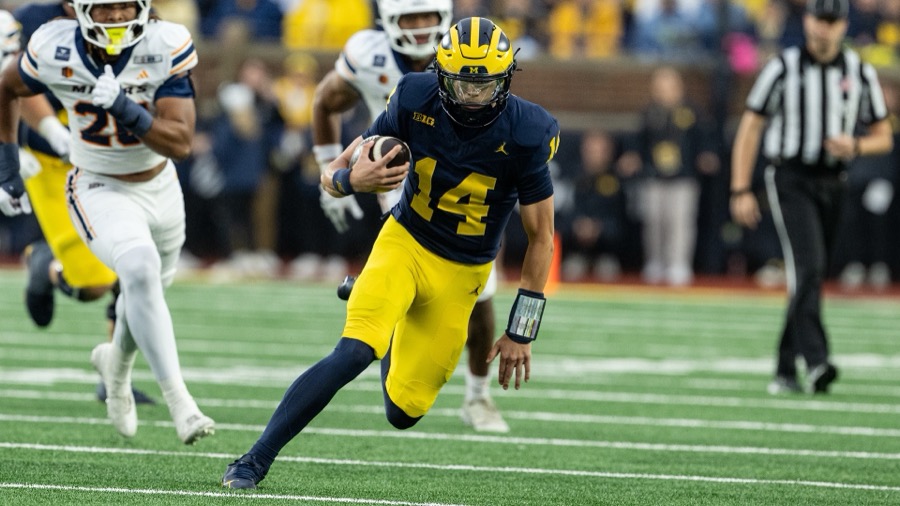
Michigan 28, Rutgers 21, at SHI Stadium in Piscataway, N.J., in front of 39,540. Tommy Carr ran 9 yards for the go-ahead touchdown with 4:24 left, and Michigan kept the ball for the final 3:17. It was Michigan's first road win of the season and its 10th straight over Rutgers, per Michigan's postgame notes. Michigan is 5-3 and 2-3 in the Big Ten, and seven of its eight games have been decided by seven points or fewer. Rutgers is 2-6. Seven things from the afternoon.
1. Why Michigan won: 12 of 16 on third down, and Carr on nine of the 12#
Against Indiana a week earlier Michigan was 6 of 20 on third down, and all four sacks it took came on third down. At Rutgers it was 12 of 16, and it was not sacked on third down once.
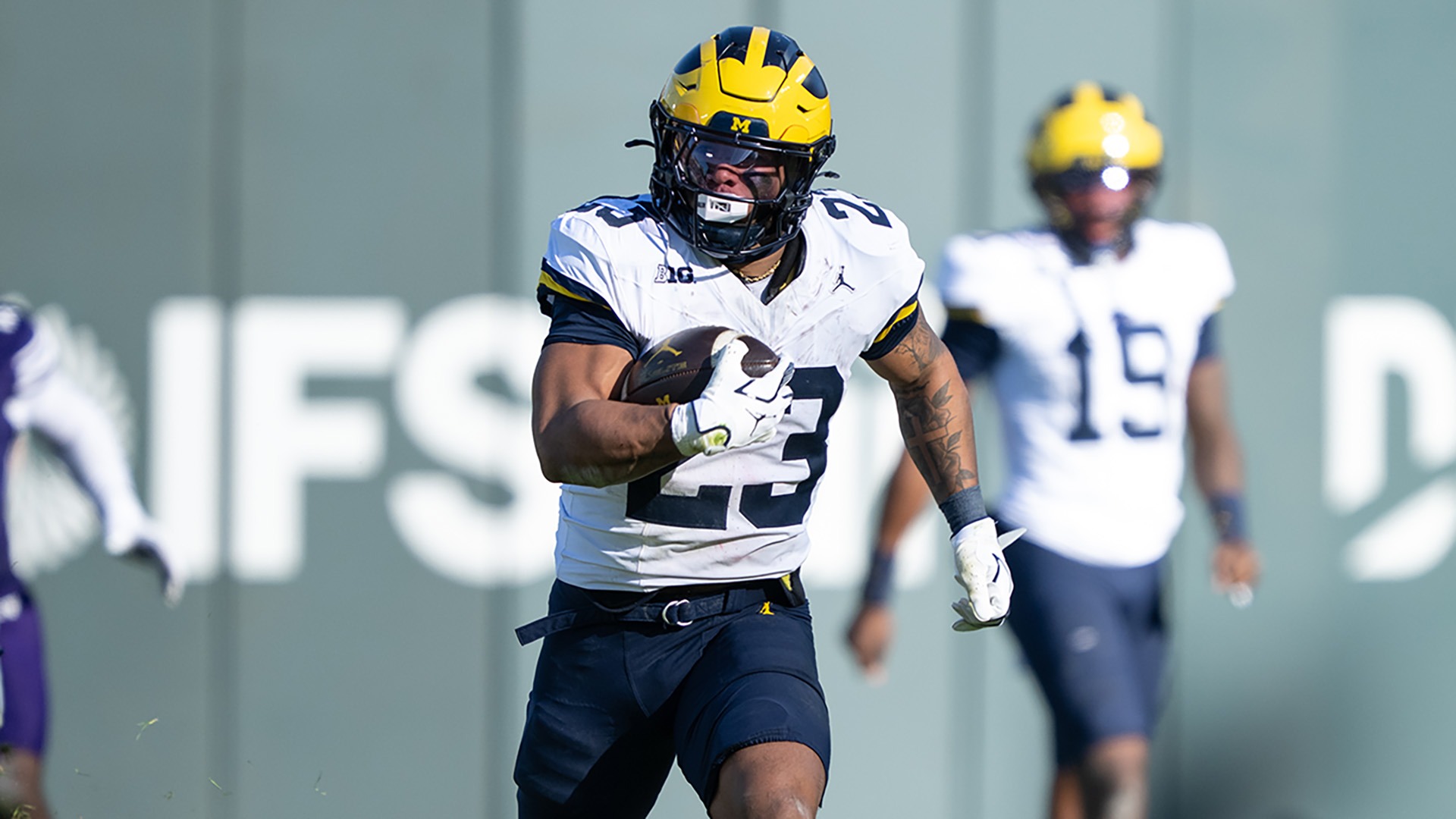
The distances make it more than a good day on short yardage. Michigan faced eight third downs of 6 yards or more and converted six. Three of its four touchdowns came on those downs. Carr threw 6 yards to JJ Buchanan on third-and-goal from the 6 to finish a 92-yard opening drive. He ran 15 yards on third-and-6 to open the second half with a 21-13 lead. And with the score 21-21, he ran 9 yards on third-and-7 from the Rutgers 9 for the winner.
Carr's arm or legs produced nine of the 12 conversions: six completions, every one of them a first down or a touchdown, and three runs. The last was a 3-yard run on third-and-1 at the Michigan 41 with 1:51 left, after Rutgers had spent all three timeouts, and Carr took a knee from there.
The conversions are why Michigan had the ball for 39:06 to Rutgers' 20:54. The four failures cost it. Two ended in missed field goals, one in a punt from its own 20, and the fourth, Jordan Marshall stopped for a 2-yard loss on third-and-1 to open the fourth quarter, produced the punt that led to Rutgers' tying drive. Sixteen third downs is one game's sample, and Rutgers has allowed at least 25 points in each of its six losses, per the AP.
2. Three snaps were 166 of Rutgers' 249 yards#
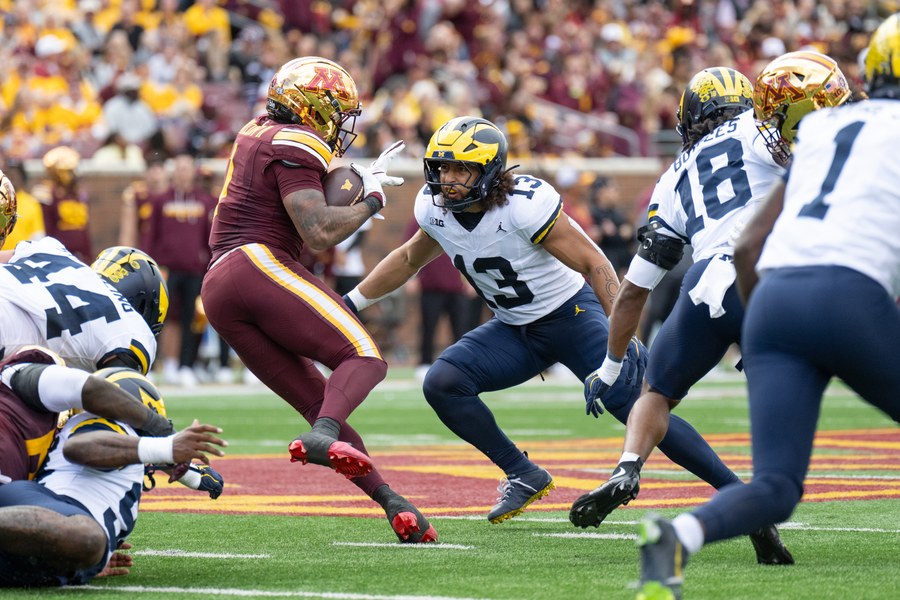
Rutgers completed three passes. AJ Surace, starting in place of the injured Dylan Lonergan, was 3 of 12 for 123 yards, and the three completions were an 80-yard touchdown to Jourdin Houston on third-and-15, which the AP described as a throw to a "wide-open" receiver, an 11-yarder, and a 32-yarder to Antwan Raymond that began a field-goal drive. Add Raymond's 54-yard run on third-and-4 to the Michigan 3, which set up the tying touchdown, and three plays account for 166 of Rutgers' 249 yards. Its other 35 plays gained 83, or 2.4 a play.
Rutgers completed no pass after halftime, the second straight opponent to manage none, per the postgame notes. It went 3 of 10 on third down.
Rutgers is still the first opponent to score more than 20 against Michigan this season; Iowa and Minnesota each had 20. Whittingham's account of the long run: "We blew a few gap integrity situations particularly whatever that run was, 54 yards." He called the timing "critical."
3. Michigan's penalties built two Rutgers drives and restarted a third#
Michigan was flagged seven times for 90 yards, five of them on defense or special teams for 70. Four of Rutgers' nine first downs came on Michigan penalties.
Both Rutgers field-goal drives were alive because of them. The first continued on a pass-interference call against Jyaire Hill on a third-and-4 throw to KJ Duff and ended in a 46-yard field goal. Duff, a preseason AP second-team All-American, left the game in the first quarter after being hit on a pass-interference call, per the AP. The second continued on a holding call against Smith Snowden on third-and-4 at the Michigan 32 and ended in a 32-yarder.
The costliest flag came with Michigan ahead 21-13 early in the fourth quarter. Rutgers fumbled Cam Brown's punt and Logan Forbes recovered at the Rutgers 20, but Zeke Berry was called for kick-catch interference. Rutgers took the ball at its own 37 and tied the game five plays later. Whittingham said that under the rule as it has been explained to him, "that's exactly the right call."
On offense, holding calls on Salesi Moa and Brady Norton turned second-and-2 into second-and-19 on the same second-quarter drive, which went backward 5 yards and ended in a punt. "Another game over our quota of penalties," Whittingham said.
4. Carr completed 22 of 27, and one of them travelled more than 15 yards#
Carr's 81 percent is the highest single-game completion rate by a freshman starting quarterback in Michigan history, with a minimum of 20 attempts, per the postgame notes. A week earlier he was 20 of 32 for 167 against Indiana.
The yards came short. By the catch spots the play-by-play records, one of his 22 completions travelled more than 15 yards past the line of scrimmage: the 30-yarder to Buchanan on third-and-7 that set up the second touchdown. Salesi Moa's 44-yard catch on the opening drive was made 2 yards past the line. Carr's two deep throws to Andrew Marsh fell incomplete, the second drawing pass interference. "Both of those balls were underthrown," Whittingham said, and added that Carr "needs to get the ball out a hair quicker, and put a little more on it."
By the same count, Michigan has six completions of 20 or more air yards in eight games. The completion rate was a first; the depth was not.
5. Savion Hiter got 20 carries, and Michigan's running backs got 113 yards#
Jordan Marshall started at running back and carried five times for no net yards, with the 2-yard touchdown. Savion Hiter carried 20 times for 76 yards, his first 20-carry game, per The Michigan Daily. Bryson Kuzdzal ran six times for 37. The three backs totalled 31 carries for 113 yards, and Michigan finished with 161 on 45 carries, sacks counted, or 3.6 a carry.
Whittingham said "Tony Alford determines who's playing reps at running back," and that Hiter "seemingly separated himself at least to a certain extent this game, which is the reason he got the bulk of the carries in the second half."
It was the second time in eight games that Hiter out-carried Marshall, per CollegeFootballData's game logs. The first was Iowa, 14 to 11, and Marshall led 10 to 8 the following week at Minnesota. The call here is that Hiter carries more times than any other Michigan running back against Michigan State. The other side is that history: Marshall has led the backfield in carries in six of eight games, and the one previous week Hiter led it did not carry over.
6. Trey Butkowski is 2 of 6 in two weeks, and the job may be open#
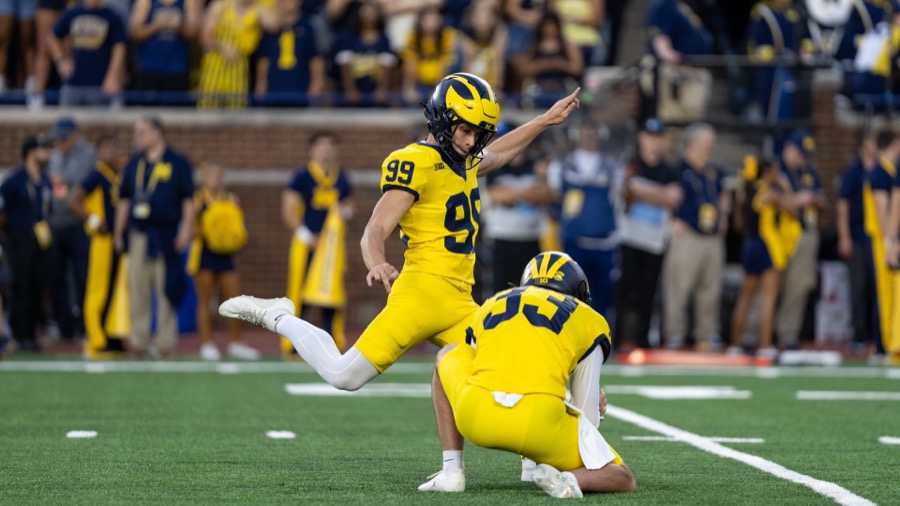
Butkowski missed from 48 yards in the second quarter and from 35 in the third, the second a red-zone miss with Michigan ahead 21-13. He made all four of his attempts before the Indiana game and is 2 of 6 since, 6 of 10 on the season, per CollegeFootballData.
Whittingham said the wind affected the 48-yarder and "the short one was disappointing." He said Butkowski is "our guy," then that Michigan may open the competition this week: "Got a couple other kickers that are pretty good."
7. Injuries: Norton went down, Guarnera played hurt, Carr played sick#
Whittingham said right guard Brady Norton "went down today, so I'm not sure what his availability is next week." He did not say when or how. Avery Gach is listed behind Norton at right guard in Michigan's participation release.
Center Jake Guarnera started while playing through what Whittingham called "a lower leg injury," and said he could barely practice during the week. "It's just a pain tolerance thing," Whittingham said. Carr played through a cold; he told the AP the two days before the game "were pretty rough."
Michigan's game-day availability report ruled out Kendrick Bell, Jo'Ziah Edmond, Braydon Alford, Micah Ka'apana, Julius Holly, Ace Hamilton and Andrew Sprague, and listed Dom Nichols, Enow Etta and John Henry Daley as game-time decisions. Etta started and had what Michigan's recap called his first solo sack of 2026. Nichols and Daley do not appear in the participation release, and Tariq Boney made his first career start at defensive end. Right tackle Blake Frazier was not on the game-day report and started. Safety Rod Moore Jr. was not on it either, and does not appear in the participation release; Michigan has not said why.
Jeremiah Earby, the transfer cornerback, made his Michigan debut on special teams, per the postgame notes.
For Rutgers, Duff, a game-time decision who started, came back for one play after his injury and did not return. "We are not certain if he will be able to play again this year," Greg Schiano said, per the AP.
Michigan State visits Michigan Stadium on Saturday at 7:30 p.m. Eastern on Peacock, per Michigan Athletics.
Sources: Michigan Athletics' official box score, play-by-play and drive chart, game recap, postgame notes and player participation release for Michigan at Rutgers, all dated October 31, 2026; Michigan Athletics' official box score for Indiana at Michigan, October 24, 2026; the Big Ten's game-day availability report, October 31, 2026; Kyle Whittingham's postgame press conference as published by The Wolverine (Clayton Sayfie), October 31, 2026; the Associated Press game story, October 31, 2026; The Michigan Daily (Nate Schreck; Drew Lenard), October 31, 2026; CollegeFootballData's 2026 game, player-game and season kicking files.