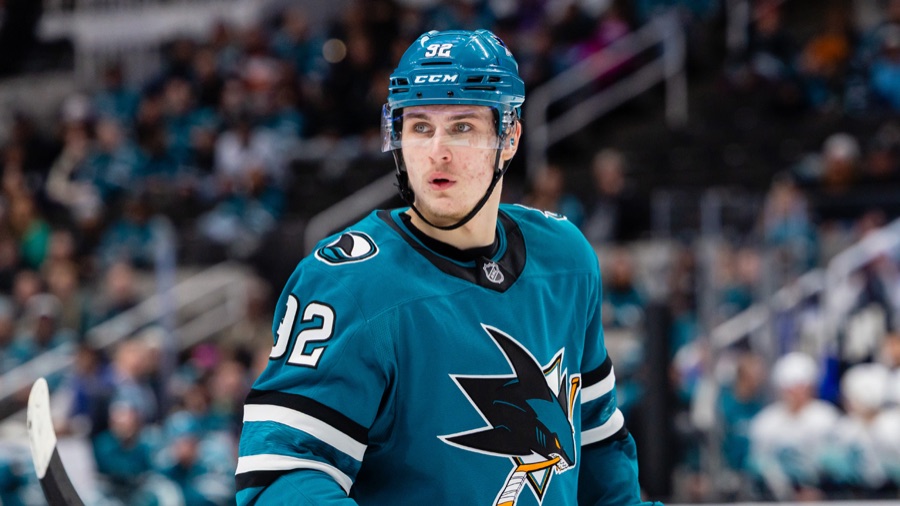
The Misa verdict: the 2C is earned, not hoped, except for one thing at the dot
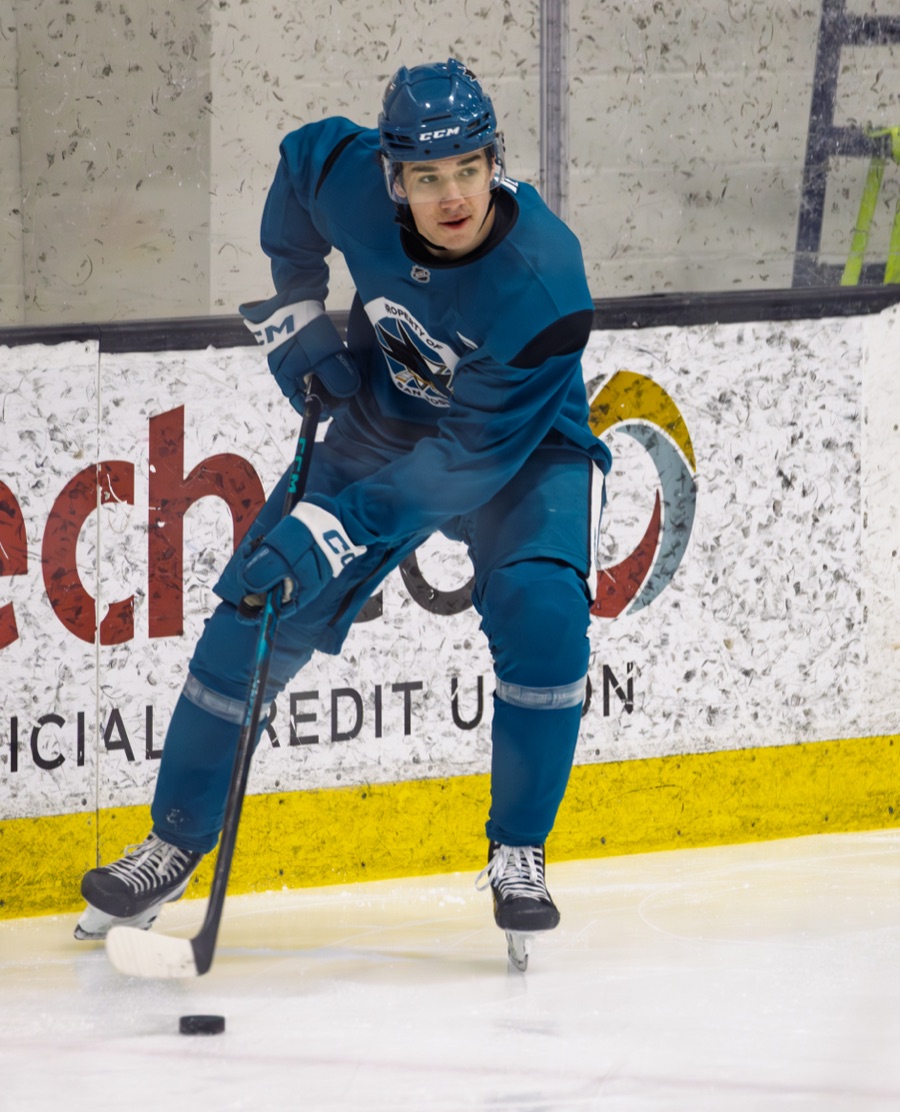
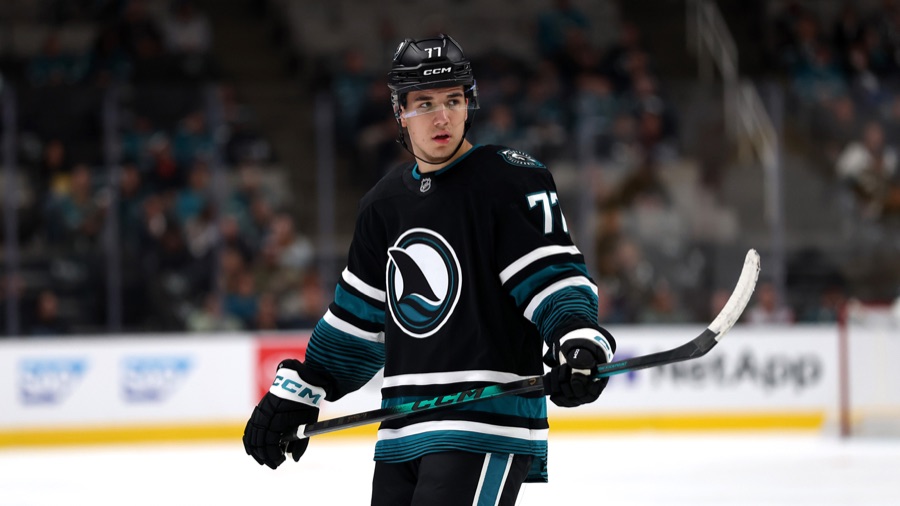
The forward plan hands the second-line center job to Michael Misa and builds a line around the assumption (Eklund on his wing specifically to support him). That is the biggest unexamined bet in the whole roster design, so let us examine it with the same lens we used on Chernyshov and Dickinson: the usage, the sheltering question with actual competition data, the translation math, and the on-ice components. And one fact has to sit on the table before any number does: Misa played this entire season at age 18. He did not turn 19 until February 16. Everything below is an 18-year-old doing it.
1. The sample#
| 2025-26 (rookie, age 18) | Misa |
|---|---|
| Line | 45 GP, 9-12-21, minus-2 |
| Ice time | 12:49 a night (11:26 at 5v5), 1:10 of second-unit PP, no PK |
| Role arc | Bottom-six minutes most of the year, moved to center full-time for the final 20 games |
| Midseason detour | World Juniors: 7 points in 7 games for Canada, plus an ankle injury that cost him time |
A 0.47-points-per-game rookie year (a 38-point pace) sounds modest until you weight it: fourth-line-to-third-line minutes, barely any power play, and a December spent winning best-on-team honors at the World Juniors instead of riding NHL buses. The exceptional-status kid who entered the OHL at 15 spent his age-18 season as a functioning NHL forward. The bar for that is on the floor; he stepped over it comfortably.
2. Was he sheltered? No. He was just young.#
You taught me not to answer this question without the head-to-head competition data, so here is Misa's WoodMoney profile next to the two reference points we have already built:
| Player | vs Elite | vs Grit | Elite minus Grit | Read |
|---|---|---|---|---|
| Dickinson (rookie D) | 23.2% | 40.4% | -17.2 | Competition-sheltered |
| Chernyshov (rookie W) | 28.0% | 32.1% | -4.1 | Zone-sheltered instead (72.7% O-zone starts) |
| Misa (rookie C) | 29.4% | 31.4% | -2.0 | Neutral. A normal NHL diet. |
And the zone starts agree: 55.6% offensive-zone starts at 5v5, a mild tilt, nothing like the cushion Chernyshov got on the top line. The staff did not hide Misa from anyone. They gave an 18-year-old a regular forward's matchup diet, and here is the part that decides the verdict: he broke even against it. Dead-flat relative numbers against elite competition, and against depth lines he did exactly what a future top-six center should do to them, a 56.1% Corsi and plus-6.9 relative. Caving in the bottom of the league while treading water against the top, at 18, with no help, is the developmental profile you want, in the right order.
3. The components: it was his own line, and that matters#
The Chernyshov verdict came with an asterisk: his numbers were Celebrini-flavored, earned on the league's softest zone starts next to a generational center. Misa's came the hard way, centering his own depth lines:
- Individual chance creation: 0.73 expected goals per 60 at 5v5. That is the same neighborhood as Celebrini (0.72), Eklund (0.72), and Smith (0.74). The rookie on 11 minutes a night generated chances at the young core's rate.
- Finishing: 9 goals on 9.65 expected. Dead at expectation. No shooting-percentage mirage in either direction; the 21 points are real.
- On-ice results: 50% expected-goal share at 5v5 on a team that was 49% without him, and 53% versus 47% across all situations. The Sharks were better with the teenager on the ice. On a minus-41 team, break-even is a compliment.
And the translation math says this is on script: his 134-point draft year (2.06 points per game, the OHL scoring title) translates to roughly a 50-point NHL pace at full deployment. He produced a 38-point pace at 18 on 12:49 a night with one shift of power play. Give him second-line minutes and PP2, and the translation, the Cup Checklist (which already grades him ideal-tier for his slot, the most bullish forecast of any young Shark), and the components all point the same direction: 50-plus points in the role the plan drew for him.
4. The asterisk, because there is always one: the dot#
Misa won 45.8% of his faceoffs. That is a normal rookie-center number and a real second-line-center problem. A 2C who loses the draw 54 times out of 100 starts too many shifts chasing, and it is the one part of the center job where he is demonstrably not NHL-ready yet (it is also the precise skill that took Bystedt three AHL years to fix). The plan already contains the mitigations, which is to its credit: Eklund on his wing is a puck-retrieval machine who shortens lost-draw shifts, Wennberg sits behind him for the defensive-zone draws that matter, and a coach can tilt a young center's draw diet for months without anyone noticing. But it is the number to watch from October 9 onward, because faceoff percentage is the rare skill that improves almost monotonically with reps, and 45.8 needs to be 48-plus by spring.
The verdict#
The bet the forward plan makes on Misa is smaller than it looks. It is not "we hope an 18-year-old becomes a 2C." It is "the 18-year-old who already generated chances at the core's rate, broke even on a normal matchup diet with no shelter and no Celebrini, finished exactly at expectation, and ran his own line for the final 20 games gets more minutes at the job he was already doing." The Chernyshov verdict was a finisher who passed his audition in a protected role. The Misa verdict is arguably stronger: a play-driver who passed his without the protection. The one incomplete on the report card is the faceoff dot, and the plan already built the scaffolding around it. Give him the line.
Counting line verified across MoneyPuck and the NHL.com API (45 GP, 9-12-21, minus-2, 12:49 ATOI). Components (ixG/60, on-ice shares, zone starts, faceoffs) from MoneyPuck 2025-26. Competition data from PuckIQ WoodMoney (note: PuckIQ logs 37 games of qualifying even-strength data against the official 45, the same bucketing gap flagged on Dickinson; the share metrics carry the conclusion). Translation factor ~0.30 OHL-to-NHL, approximate. Role arc, WJC line, and injury context per the season summary and NHL API history; 2C design per docs/2026-offseason/2026-06-07_forward-lines-plan_top12-and-deployment.md; ideal-tier slot grade per the Cup Checklist in docs/offseason-outline.md.