The blue-line logjam: why the pipeline is all left-handed, and why that makes Reid non-negotiable
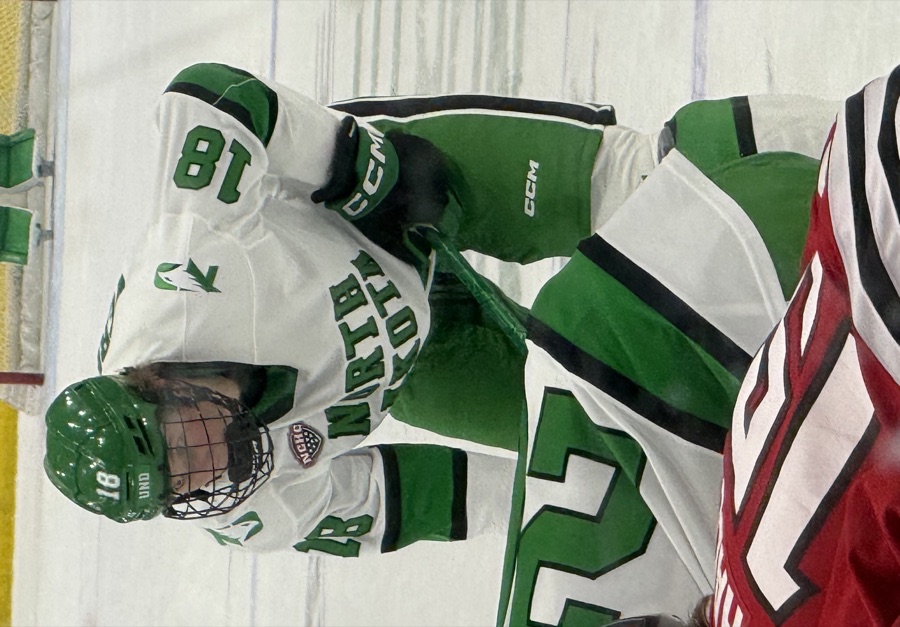
The Sharks have built a genuinely deep blue-line pipeline, which is the good news, and they have built almost all of it on one side, which is the structural reason Chase Reid matters at No. 2 more than any "best player available" debate. Lay the prospects out by handedness and year and the picture is stark: a left side stacked four deep, a right side held together by a bridge piece, a depth flier, and a 6-foot-6 lottery ticket. Here is the depth chart through 2029.
The two sides, side by side#
| LEFT (stacked) | Profile | RIGHT (thin) | Profile |
|---|---|---|---|
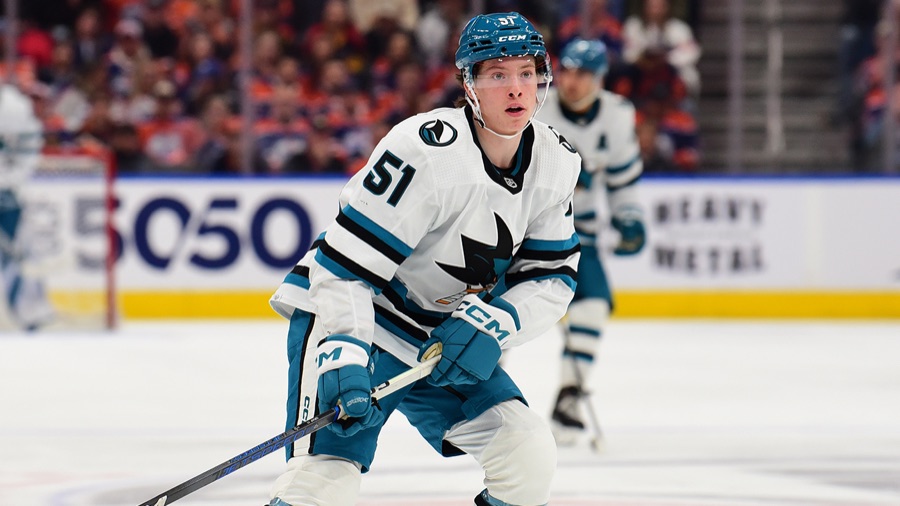
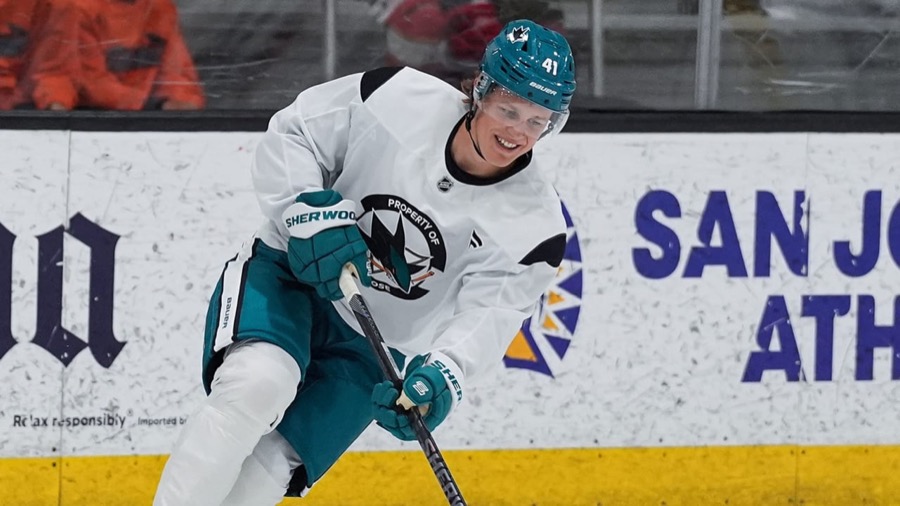
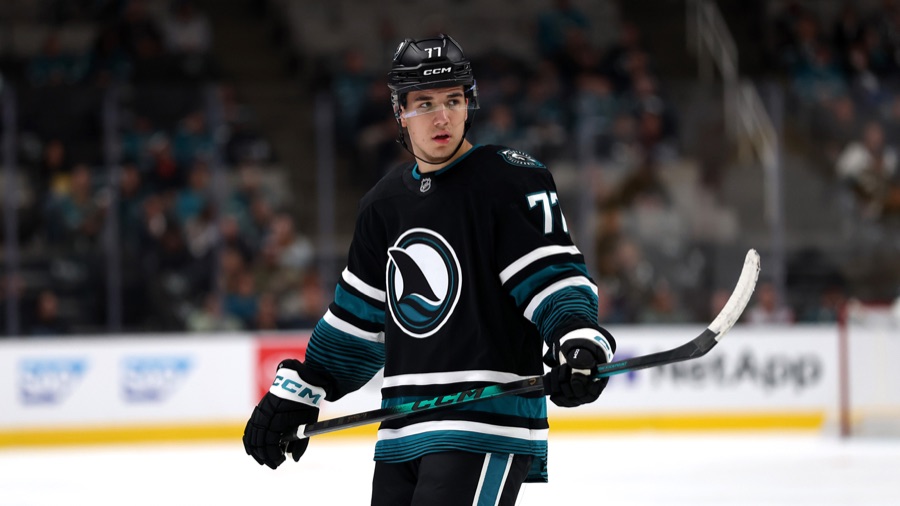
| Sam Dickinson | Cornerstone, top-pair trajectory, here now | Eric Pohlkamp | Bridge-to-bridge, 2nd-pair ceiling, here 2026-27 |
| Luca Cagnoni | NHL-ready, PP-driving, 3rd-pair-plus | Mattias Havelid | Depth, undersized, AHL-to-NHL bubble |
| Leo Sahlin Wallenius | ELC, in Sweden, arrives 2027-28 | Haoxi Wang | The 6-foot-6 project, arrives ~2029, a flier |
| Shakir Mukhamadullin | RFA, can play the off-side, tweener | (the hole) | No franchise RHD in the system |
Four legitimate left-shot prospects, three of them NHL-ready or close. On the right, exactly one player with a real NHL future and a ceiling above the second pair, and his ceiling is the second pair. The position that wins playoff series, the top-pair right-shot defenseman, is the one the pipeline structurally cannot produce. You can develop a Pohlkamp. You cannot develop a franchise RHD out of a fifth-round bridge piece and a project.
The arrival timeline#
| Year | Arrives / pushes for NHL time |
|---|---|
| 2026-27 | Dickinson (locked), Cagnoni (locked), Pohlkamp (first callup / 7th D) |
| 2027-28 | Sahlin Wallenius (over from Sweden), Havelid pushes, Pohlkamp pushes for a full job |
| 2028-29 | Reid arrives as the long-term No. 1 RHD (if drafted), the window opens |
| 2029-plus | Wang, if the project hits |
Who gets blocked, and who becomes currency#
On the left, the logjam is real and it is an asset. Dickinson owns the top-pair left for a decade; Cagnoni slots in below him; that leaves Sahlin Wallenius and Mukhamadullin competing for ice behind two younger, better players. That surplus is exactly what funds a right-side trade. Mukhamadullin's off-side flexibility makes him a useful piece or a trade chip; Sahlin Wallenius or Cagnoni is the kind of cost-controlled left-shot prospect that headlines a package for a Hronek-tier righty. The pipeline's imbalance is not just a weakness to flag, it is the trade capital to fix itself.
The depth chart is the No. 2 argument, drawn as a diagram. The left side has its franchise piece (Dickinson). The right side has a bridge, a flier, and a project. Reid is the one thing the system cannot grow on its own.
This is why the "best player available" debate at No. 2 is, for this specific roster, almost beside the point. Among a near-tie of similarly graded players, the Sharks have a stacked left side and a right side that ends at the second pair. Reid is the right-shot Dickinson the pipeline is missing, the only player on the board who fills the one hole the organization cannot fill any other way. The handedness imbalance does not just favor taking a defenseman; it favors taking this defenseman, on this side, and using the left-shot surplus to round out the rest by trade.
Prospect profiles and contract years per state/cap.md (Sahlin Wallenius, Havelid, Pohlkamp ELCs; Mukhamadullin RFA; Wang's Aug 2029 horizon) and the prospect rankings (Pohlkamp, Cagnoni). Pohlkamp's bridge-to-bridge role per his deep-dive; Reid's fit per the Reid decision memo and Court's June 11 calibration (fit decides among near-equals). Ceilings are projections.