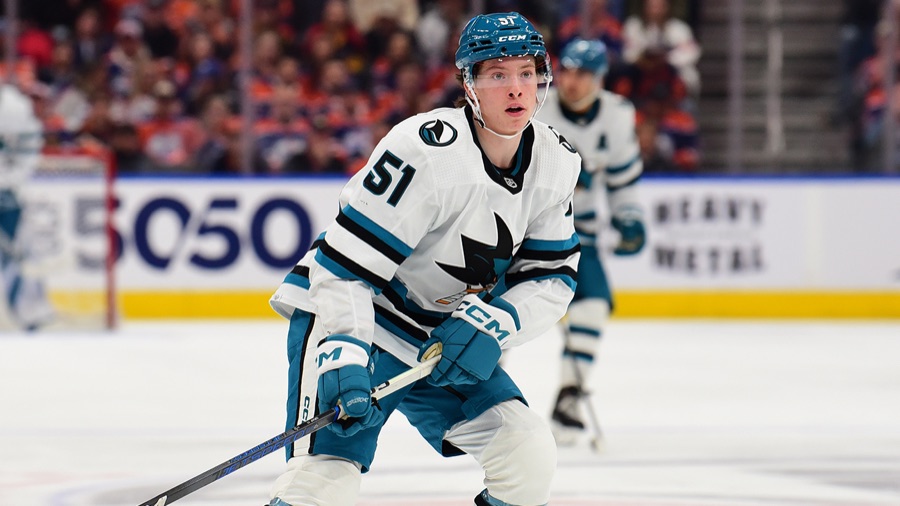
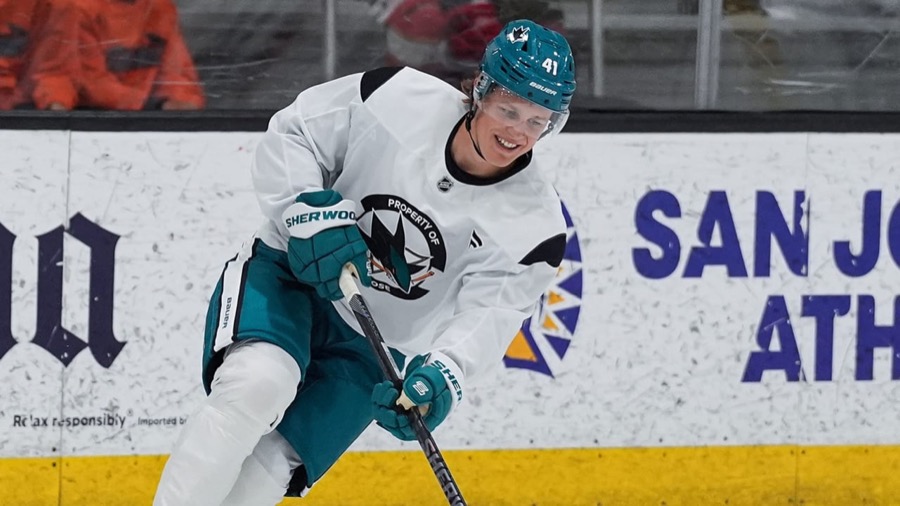
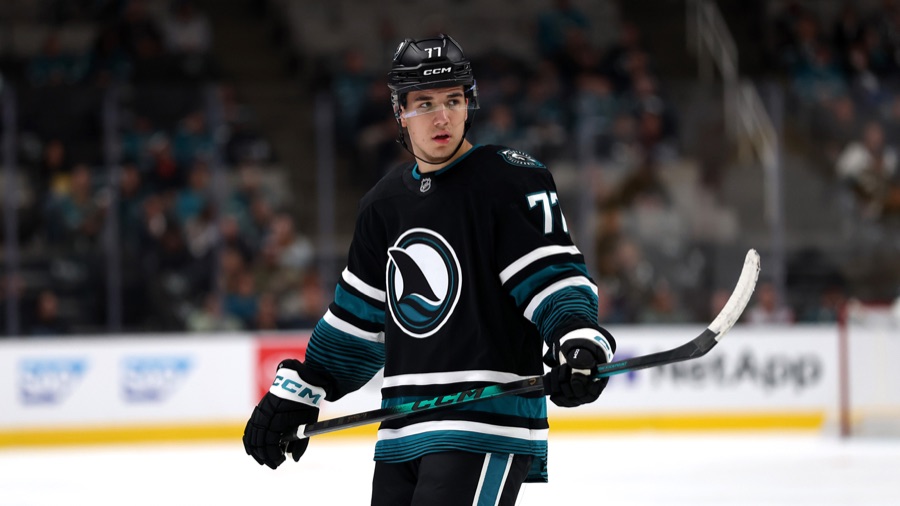
Chase Reid, scouted as a player: the NAHL-to-No.2 climb, the comps stress-tested, and when he actually helps
We have spent a dozen clippings deciding that Reid is the pick. We have barely scouted him as a hockey player. So set the draft argument aside, the roster-construction case, the Stenberg tiebreaker, all of it, and answer the only questions that matter once his name is called: who is this kid, how good does he get, and when does he actually move the needle in San Jose. The short version is that the most interesting thing about Chase Reid is not where he is ranked. It is how fast he got there.
1. The climb: NAHL to No. 2 in eighteen months#
Two years ago, Chase Reid was playing in the NAHL, the third tier of American junior hockey, the league you end up in when the better programs have passed on you. He was cut by the U.S. National Team Development Program. He was cut by Waterloo of the USHL. As recently as 2024 he was a kid most scouts had filed under "maybe a college player someday." Then he got to the OHL midway through 2024-25, and the floor fell out of everyone's projection in the good direction. By the spring of 2026 he is the consensus top defenseman in the draft, NHL Central Scouting's No. 2 North American skater behind only Gavin McKenna, and the No. 1 overall prospect on Corey Pronman's board. That is not a normal development curve. That is the curve that makes scouts nervous they are still underrating him, because the line has not flattened yet.
This is the single most important fact in his profile, and it is why the Makar comparison keeps coming up. Not because Reid is Cale Makar, he is not, but because Makar made the same kind of leap, NAHL to dominant junior in about eighteen months, and players on that specific trajectory tend to keep rising after the draft rather than plateauing. You are not buying a finished product. You are buying a still-accelerating one, which is the most valuable kind of uncertainty there is.
2. The player: a two-way, puck-moving No. 1 with size#
| 2025-26 (Soo, OHL) | Number | |
|---|---|---|
| Line (regular season) | 45 GP, 18 G, 48 P, plus-27 (led the Greyhounds) | |
| Ice time | ~26 minutes a night, used unprotected vs top matchups | |
| Frame / shot | OHL West coaches poll | Best offensive D AND second-best defensive D |
| NHL Central Scouting | No. 2 North American skater (top D) |
Read the coaches-poll line twice, because it is the whole player in one data point. The coaches who game-plan against him voted him both the best offensive defenseman and the second-best defensive defenseman in the conference. That is the two-way profile the Sharks' entire blue line lacks, a right shot who can run a power play and kill the other team's, log 26 minutes, and tilt the ice in both directions. He is not a Parekh-style offense-only gambler, and he is not a stay-at-home plodder. He is the rare prospect who scouts have to argue down rather than up.
3. The one knock, and why it closed#
The honest bear case, and it was real for a while: a scout in Pronman's June confidential said Reid "cares more about scoring than playing in his own end." For an offense-first junior defenseman, that is the knock that turns a No. 2 pick into a No. 8 pick. But it closed, from the most credible possible source. Pronman, who shared the doubt a year ago, wrote his full explainer saying Reid made "massive progress" defensively, and pointed at the World Juniors as the proof: Reid killed penalties and took the toughest matchup minutes against elite competition for Team USA, where his per-game impact beat both McKenna's and Stenberg's for their own teams. Stack that on the OHL coaches voting him the second-best defensive D in the conference, and the score-first label is now a minority view, not a live concern. The defense is not a hole. It is the part of his game that improved fastest, which fits the whole ascending-curve story.
4. The comps, stress-tested#
Three names get thrown at Reid. Each says something true and each overreaches, so here is the honest version of all three.
| Comp | What it gets right | Where it overreaches |
|---|---|---|
| Seth Jones (the role) | Big, mobile RHD who plays huge minutes and scores; a foundational piece of a Cup roster (Florida 2025). This is the ceiling-role Reid projects to fill. | Jones needed years and a trade to find that level; it is the destination, not a promise of a smooth path. |
| Drew Doughty (draft-year impact) | Pronman puts Reid's draft-year impact "closer to Doughty," ahead of Mintyukov and Sergachev at the same age. The two-way, all-situations, huge-minutes profile rhymes. | Doughty is a Norris winner, a Cup winner, and a durability freak. That is the dream, not the median outcome for a No. 2 D. |
| Cale Makar (the jump) | The development curve, NAHL to dominant junior in 18 months. The trajectory, not the player. | Makar became a generational, Conn-Smythe defenseman. Nobody, including Pronman, projects Reid there. |
So strip the comps down to what survives. The role he projects to fill is the Seth Jones slot, a foundational, minute-eating, two-way right shot on a good team. The trajectory is Makar-like in shape, still rising, which is the upside. And the one comp that bounds him honestly is the one in the photo caption of his own scouting coverage: Reid "isn't projected to hit the same heights as Matthew Schaefer." He is not the generational tier (Schaefer, Makar, Dahlin). He is the tier below, the Ekblad/Owen Power/Seth Jones tier, a franchise top-pair right shot rather than a franchise-altering one. For a team that has Dickinson as its young franchise lefty and literally cannot grow a top-pair righty any other way, that tier is exactly, precisely the thing worth a No. 2 pick.
The honest projection band: floor of a good, mobile top-four RHD (a real NHL career either way); ceiling of a 22-to-24-minute, both-special-teams, top-pair franchise No. 1 right shot. The still-ascending curve is the reason to weight the upper half of that band more than you would for a typical prospect.
5. When he actually helps, and what he steps into#
This is the part that matters for roster planning, and it requires patience. Reid is committed to Michigan State, the same program now central to the Sharks pipeline, and the realistic path runs through development, not a fast track: another season of junior-or-college, then college at MSU, then the AHL or a push for the NHL. The honest arrival window is 2028-29 at the earliest, more likely the 2028-29 to 2029-30 band. That is not a knock. It is the plan. The contention clock has the window opening in 2028-29, and Reid is built to walk through the door exactly as it opens, not to patch a 2026-27 roster that the veteran bridges are already covering.
2026-27, the bridge holds the fort: Kesselring (just acquired) on the second pair, a top-pair veteran add (Carlson, Hamilton, or Nemec) up top, Pohlkamp as depth and the first callup. 2028-29, the bridge expires and Reid arrives as the long-term No. 1 right shot, the franchise piece the veterans were keeping the seat warm for. He does not compete with Kesselring or Pohlkamp; he is the reason they were signed short and cheap. The whole blue-line plan is a holding action until this player is ready, which is why drafting him and being patient with him are the same decision.
6. The one real risk#
Intellectual honesty demands naming it: the same ascending curve that is his best feature is also his only real risk. Reid is a late-2007 birthday, older for the class, and Wheeler's caveat is fair, his point-per-game production, for an offense-leaning defenseman, was good rather than jaw-dropping next to past OHL stars like Brandt Clarke or Zayne Parekh. The bear case is that the eighteen-month rocket ride was a late bloomer catching up to younger competition, and that the curve flattens at "good top-four" rather than continuing to "franchise No. 1." It is a real possibility. But the counter is the World Juniors, where he did it against the best players his age on the biggest stage, and the defensive leap, which is the hardest part of the game to fake. The risk is real and it is bounded: even the bear case is a top-four NHL defenseman, which is a fine outcome for the pick. The bull case is the franchise right shot the Sharks cannot acquire any other way.
The verdict#
A still-ascending, two-way, puck-moving right shot with a top-four floor and a franchise-No.-1 ceiling, arriving as the window opens in 2028-29. The pick is correct as a draft decision and better as a player than the draft debate made it sound.
The dozen clippings argued about whether to take him. The player underneath the argument is a kid who went from the NAHL to the second-best skater in his draft in a year and a half, whose only knock closed on the biggest stage, who profiles as the Seth Jones role rather than the Makar tier, and who is built to arrive precisely when the Sharks need him. Draft night is not the end of the analysis; it is the start of a three-year watch. Track the MSU progression against the Augustine-style benchmark, watch whether the curve keeps rising or flattens, and remember the thing that makes him special is not that he is ranked second. It is that nobody is sure he should not be ranked first.
Built on the verified Reid corpus: the OHL line (45 GP, 18-48, plus-27, ~26 min) and NHL Central Scouting No. 2 / OHL coaches-poll data per Wheeler's profile and docs/prospects/MSU-pipeline.md; the No. 1-on-Pronman's-board, the Doughty/Seth Jones/Makar-jump comps, and the closed defensive knock per the Reid decision memo (docs/2026-offseason/draft/2026-05-19_Reid-vs-Stenberg_decision-at-No2.md) and its June 8-11 update chain (the Pronman explainer, the panel, the debate); the Schaefer-tier caveat from the merged-board coverage; the arrival window and the right-side relay per the contention clock and the blue-line plan (Kesselring acquired, Pohlkamp depth). The 6-2.5 vs 6-3 height is a minor unresolved discrepancy; the 2028-29/2029-30 arrival is a projection with development-path options through MSU. Happy to file this as a standalone Reid player profile alongside the decision memo if useful.