San Jose Lost Eighty Four Percent Of Its Penalty Kill And Replaced It With Jacob Trouba
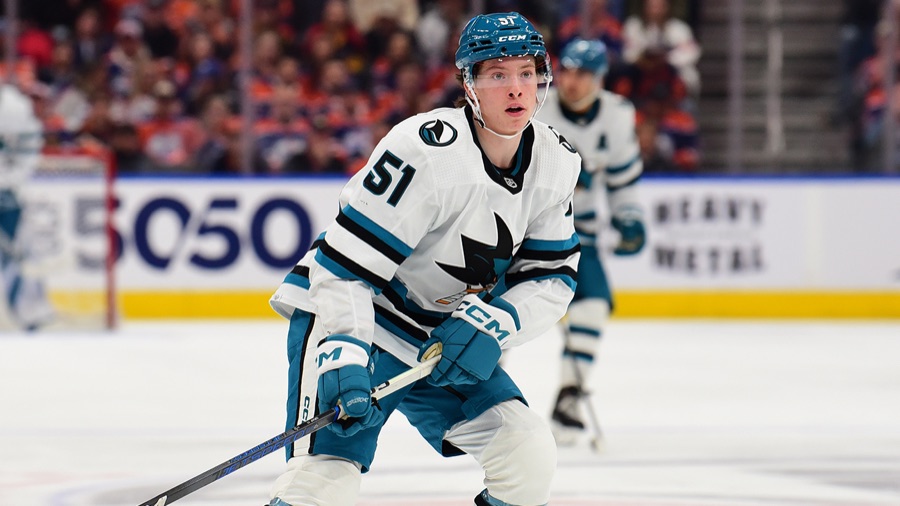
The Sharks 25, No. 7. Seven of the ten defensemen who killed a penalty for San Jose last season are somewhere else now, and they took 693 of the blue line's 822 shorthanded minutes with them. Trouba played 249 of those minutes by himself at Anaheim, for a kill that finished one place below the one he is being paid to fix.

Take the ten defensemen who took a shorthanded shift for San Jose last season. Sort them by total time killing a penalty, most first. Now cross off every man no longer in the organisation.
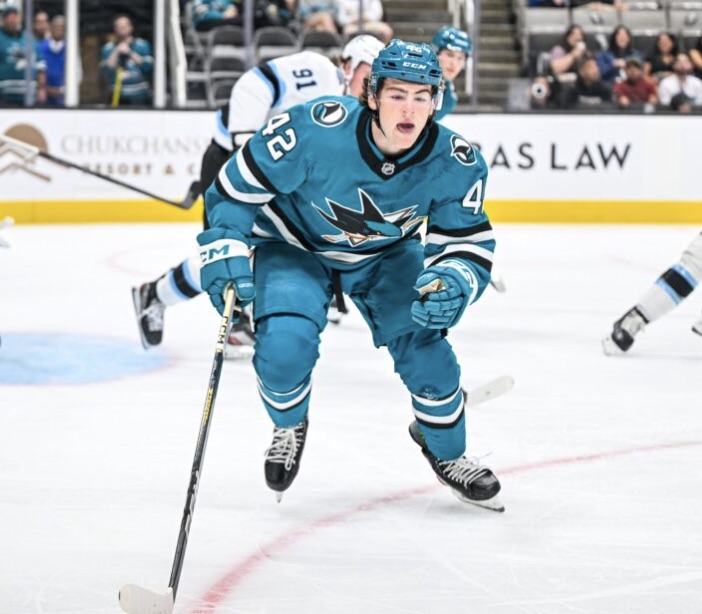
You cross off the first four. Mario Ferraro at 277:11, now in Winnipeg. Vincent Desharnais at 171:00 and Timothy Liljegren at 99:53, both now in Washington. Shakir Mukhamadullin at 70:02, sent to Edmonton in the deal that brought Darnell Nurse the other way.
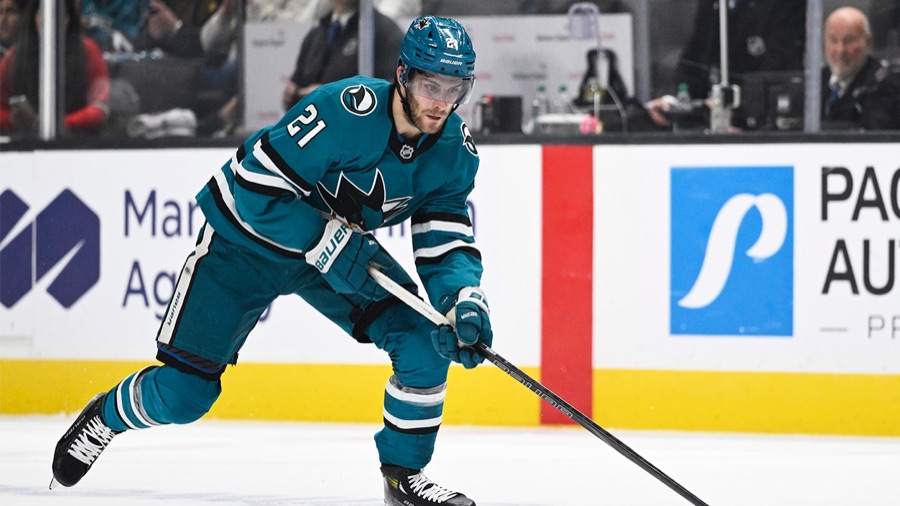
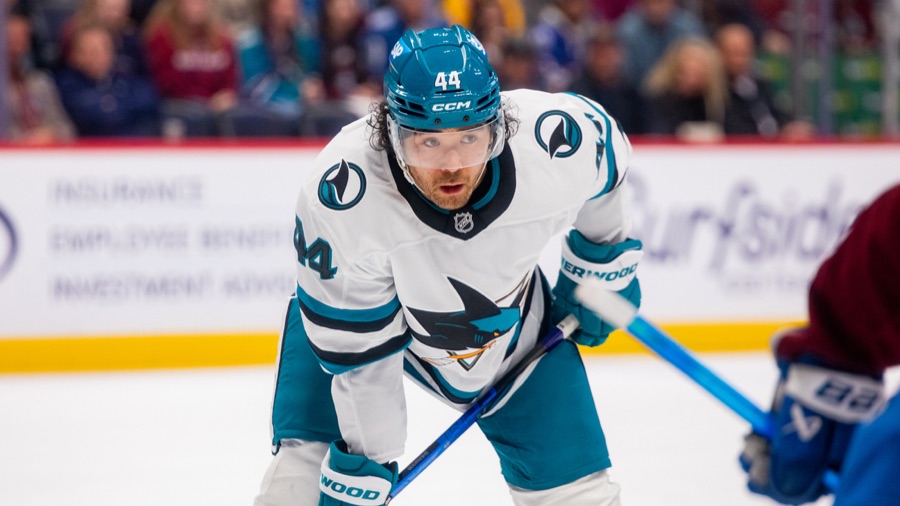
Then you keep Sam Dickinson at 64:55 and Dmitry Orlov at 64:06, and cross off Nick Leddy, Vincent Iorio and John Klingberg. The last man is Luca Cagnoni, still here, who killed zero.
San Jose's defensemen spent 822:53 shorthanded in 2025-26, every figure in that list a season total rather than a per-game rate. Men now elsewhere played 693:52 of it, 84.3 percent. The three who return killed 129:01 between them across a full season.
The replacement#
Jacob Trouba killed 249:32 for Anaheim last season across 81 games, fifth among all 325 defensemen who dressed in the NHL, behind Esa Lindell, Mike Matheson, Ferraro and Travis Sanheim. Per game it is 3:04, eighth among the 201 defensemen who played 40 games or more.
Over the same 81 games he took 55:12 on the power play, 0:40 a night, and finished with one power-play point. The year before, split between New York and Anaheim, it was 193:24 shorthanded against 9:44 on the power play. Thirteen and a half percent of his ice time last season was spent a man down. San Jose bought a penalty killer on July 1, at the moment it had almost none left.
The case for him, which is not thin#
Sheng Peng of San Jose Hockey Now published a piece on September 10, built on Stathletes tracking data and two unnamed NHL scouts, arguing Trouba is better than the public models say. The figures are Stathletes' and are not independently checkable: 148 puck battles won, sixteenth in the league, and a 71.8 percent win rate, third among defensemen with 200 or more battles. Peng prints an unflattering one beside them, 16.64 defensive-zone giveaways per 60.
The deployment is his own coach's verdict rather than a model's. Anaheim gave him 22:50 a night, his heaviest load since 2016-17, then made the playoffs and raised it to 24:30 across 12 games. A staff that had watched him all year asked for more of him, not less.
The number that complicates all of it#
Anaheim's penalty kill finished the season ranked 27th of 32 at 76.36 percent.
San Jose's finished 26th at 76.42 percent.
The gap is six hundredths of a percentage point, which is to say there is no gap. It was not a one-year accident. In 2024-25 Anaheim's kill ranked 29th at 74.19 percent and San Jose's 27th at 74.22 percent. Two seasons, and San Jose is marginally ahead in both.
Dom Luszczyszyn of The Athletic put Trouba fifth on his ten worst contracts list on July 22, with a model market value of $3.1M against the $8.25M San Jose is paying and a penalty kill graded in the first percentile. That grade and these team ranks are the same finding. The minutes were real; the results were not.
Best case, and it is about which minutes#
The club's best case is not that Trouba is good. It is that the minutes he takes are the ones nobody else in the building should want. San Jose has a 20-year-old defenseman to grow, a right shot in Michael Kesselring to find out about, and a kill to rebuild from almost nothing. If Trouba absorbs three minutes a night of the least forgiving work in hockey and the kill climbs into the teens, because a penalty kill is four skaters, a goaltender and a structure rather than one defenseman, then $8.25M bought what it was meant to buy.
The second half of that best case is that his even-strength load goes down, not up, and it matters more. Anaheim asked 19:03 a night of him at even strength, a figure that folds in four-on-four and runs above his true five-on-five load, because it had nobody else. If San Jose asks the same, something has gone wrong upstream.
Worst case, and it is not the cap sheet#
The worst case is that the kill does not move, because replacing four-fifths of a penalty-killing blue line at once is a systems problem rather than a personnel one, and San Jose is 26th again in March with a 32-year-old signed through 2029-30 carrying the label of the fix.
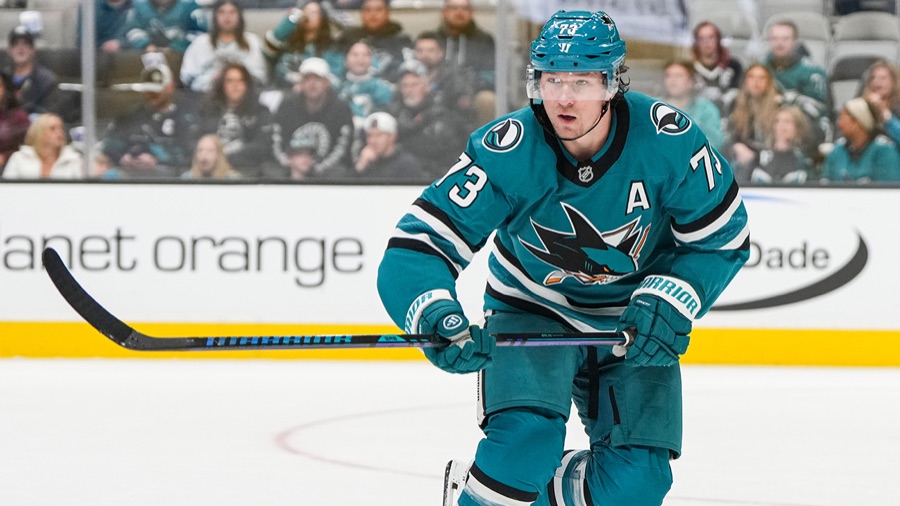
The sharper version is about deployment rather than money. Trouba arrives with a full no-trade clause through 2027-28 and a coach entering the last year of his own contract. Professor Hockey, projecting the pairings in July, expected Warsofsky to hand Trouba and Nurse the highest-leverage minutes on the strength of their experience, and to default to a veteran wherever one was available. If that preference puts Trouba at 22:50 here the way it did in Anaheim, the extra minutes do not come out of the air. They come out of Dickinson and Kesselring, and San Jose spends a season of a 20-year-old's development paying for a contract already signed. The money is not the damage. The money is the reason the deployment stops getting questioned.
What to watch early#
Shorthanded time on ice per game, Trouba against Dickinson and Orlov. It is in every box score from October 1 against Florida onward, and this site already has a call on the ledger that Trouba leads all San Jose defensemen in it across the first 20 games, resolving December 1.
The ratio matters more than the total. Over three minutes a night shorthanded and under a minute on the power play means Anaheim is repeating itself, and the club is using him for what he has been for two seasons. If he turns up on the first power-play unit, San Jose has answered its right-shot question with a man nobody has deployed that way since 2023-24, and Kesselring, who took 69:49 of power play across 82 games in Utah in 2024-25, is the answer it skipped.
The stakes#
San Jose finished with 86 points and has not made the playoffs in seven seasons. It allowed 3.5366 goals a game; Anaheim allowed 3.5122 and won six more points, so nobody is arriving here from a defensive structure that worked. The penalty kill is one of the two places where a bad team finds points quickly, and San Jose turned over almost all of it in one summer. Trouba is the largest single bet inside that turnover.
Previously in this series: No. 8, Darnell Nurse.
Sources: NHL time-on-ice, team penalty-kill and team summary data for 2024-25 and 2025-26, and player landing records, all read 2026-09-11; Sheng Peng, San Jose Hockey Now, September 10, 2026, for the Stathletes figures and scout assessments; Dom Luszczyszyn, The Athletic, July 22, 2026, for the contract valuation and penalty-kill grade.
This piece treats "its right-shot question" as the live question on San Jose's power play. The 32-club count published here on September 20 says that question was the wrong one to be asking, and it was the desk's to catch before publication rather than the writer's alone. The penalty-kill argument, which is the spine of the piece, is untouched by it.
CP