Bystedt and Musty: the NHL comps, and why two good prospects can't get in the lineup
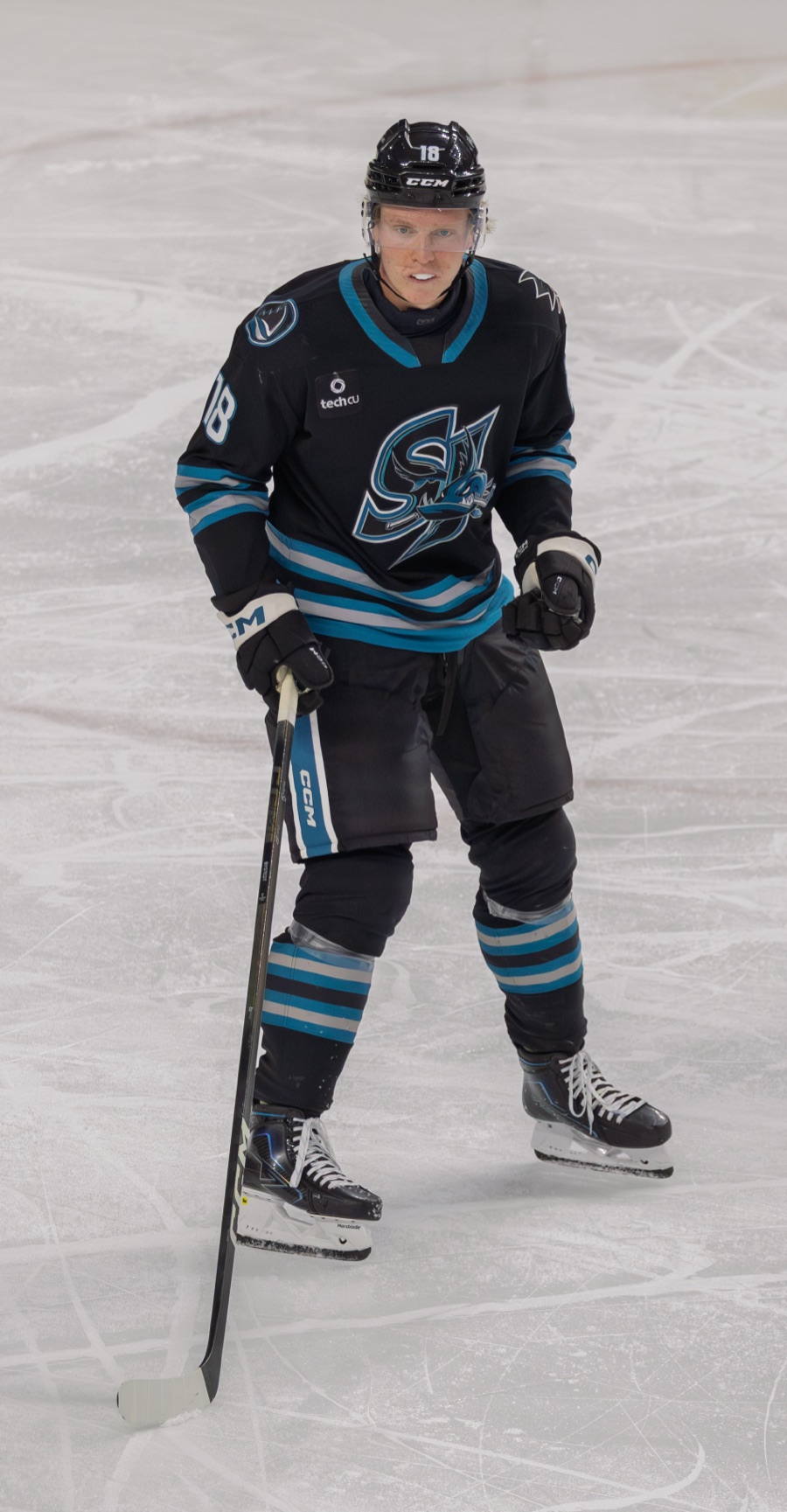
You put your finger on the exact thing that makes these two frustrating: the fans love them, the production is real, and yet neither can buy a shift in San Jose. That feels like a contradiction. It is not. It is the signature of a rebuild that drafted too well up front. Let me comp them honestly and then resolve the riddle.
One methodology note, because it matters. Neither has played an NHL game, so there is no NHL expected-goals or Corsi to compare. These comps are built on what we do have: AHL production run through a standard NHL-equivalency translation (about 0.40 for forwards, AHL to NHL), AHL rate stats (power-play share, shot volume, faceoffs), and role-archetype matching. Treat the comps as projections of a profile, not measurements of impact.
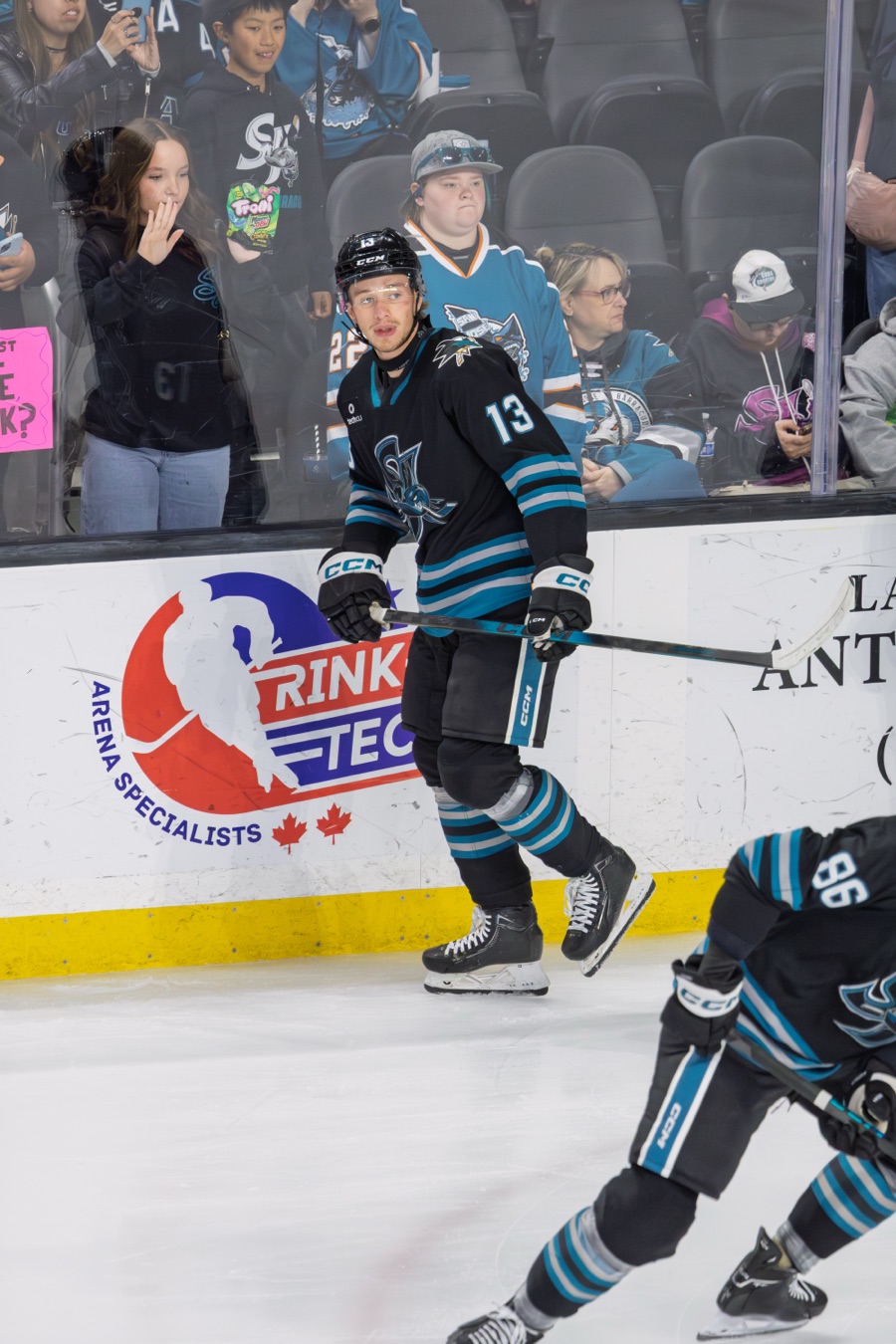
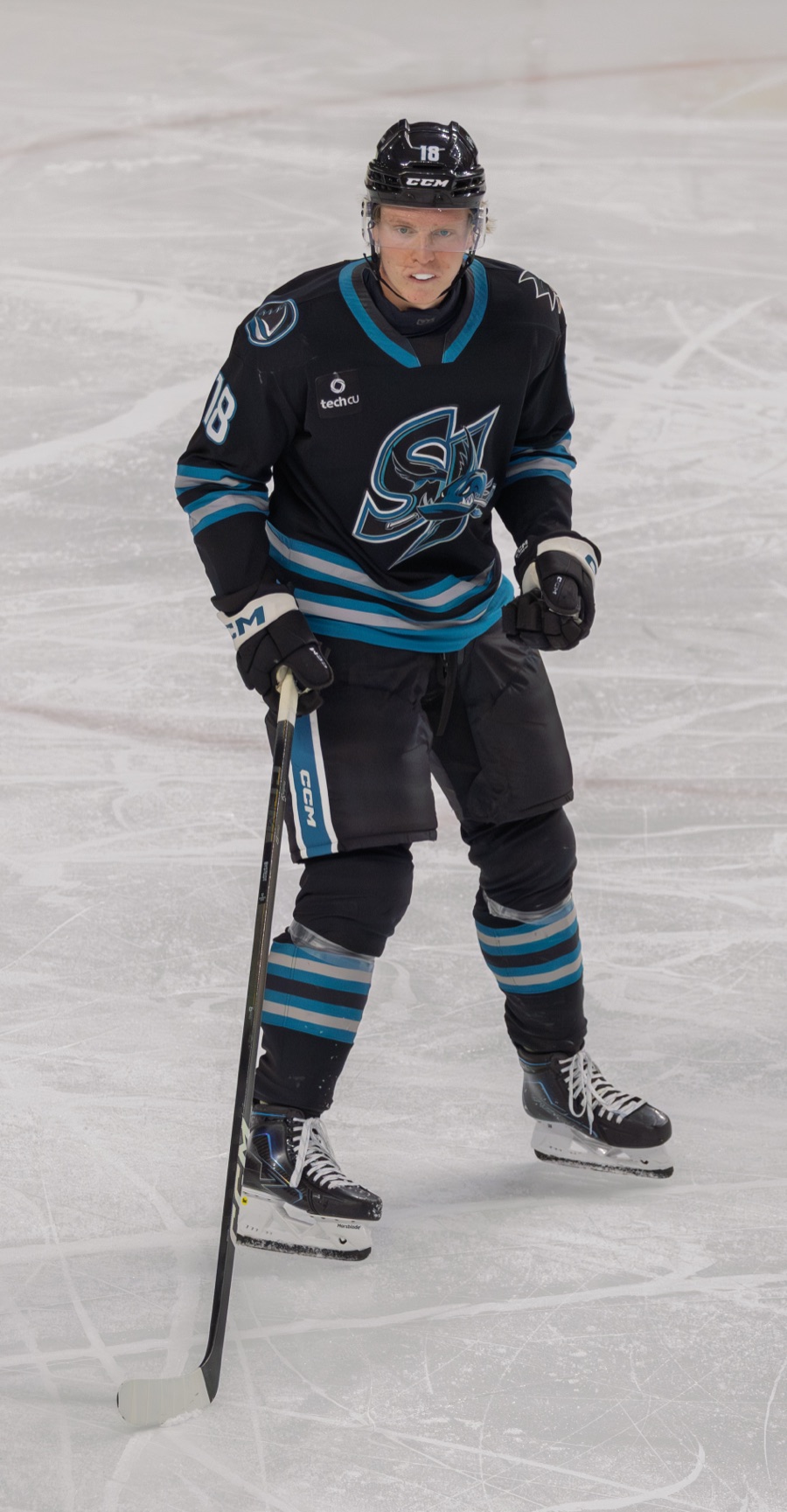
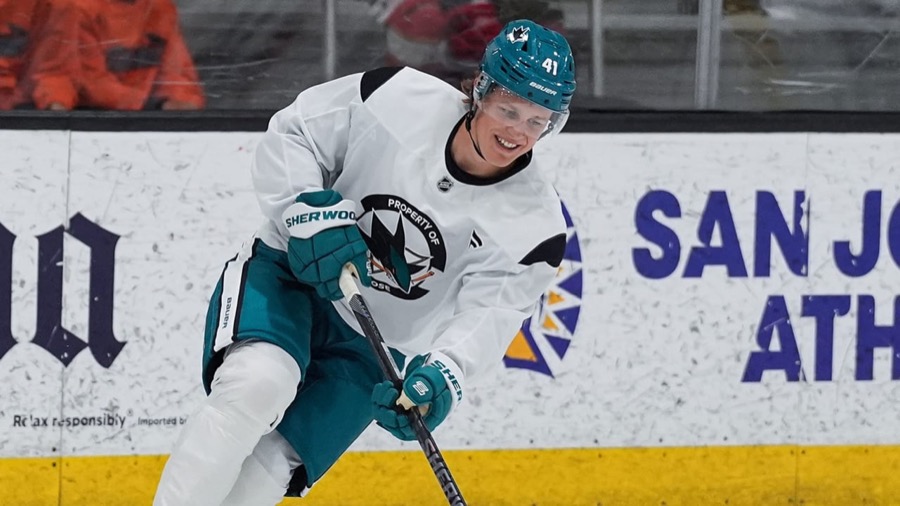
Filip Bystedt: a real NHL center, at the one position San Jose can't use one#
The analytics profile: 22-38-60 in 65 AHL games as a D-plus-4, a near point-per-game year that led the Barracuda and made the AHL All-Star Classic. Run 0.92 AHL points per game through the translation and you get roughly a low-30s-point NHL rookie pace, a third-line-center scoring level. Add the parts that travel well: faceoffs over 50 percent (a real 4C skill, and stable across levels), plus penalty-kill and power-play reps. That is not a tease. That is a functional bottom-six NHL center, right now.
| NHL comp | Why it fits | Tier |
|---|---|---|
| Nick Bjugstad | 6-foot-plus skilled lefty C who lived as a 3C/middle-six tweener, scores in the 30s, useful but never locked in | Median |
| Morgan Geekie | Big center, patient AHL path, broke out as a middle-six scorer in his mid-20s once the offense clicked | Ceiling |
| Joe Veleno | Skilled, fine-skating center whose defensive-detail gaps kept him a 3C/4C bouncer despite the pedigree | Floor |
The honest middle of that range is a big, skilled, defensively-limited 3C/4C. The swing variable is the same one the scouts flag: defensive-zone awareness. Get it to NHL-average and he is a Geekie-style middle-sixer; leave it where it is and he is a Veleno-style tweener. Either way, he is an NHL player. Just not a Sharks one.
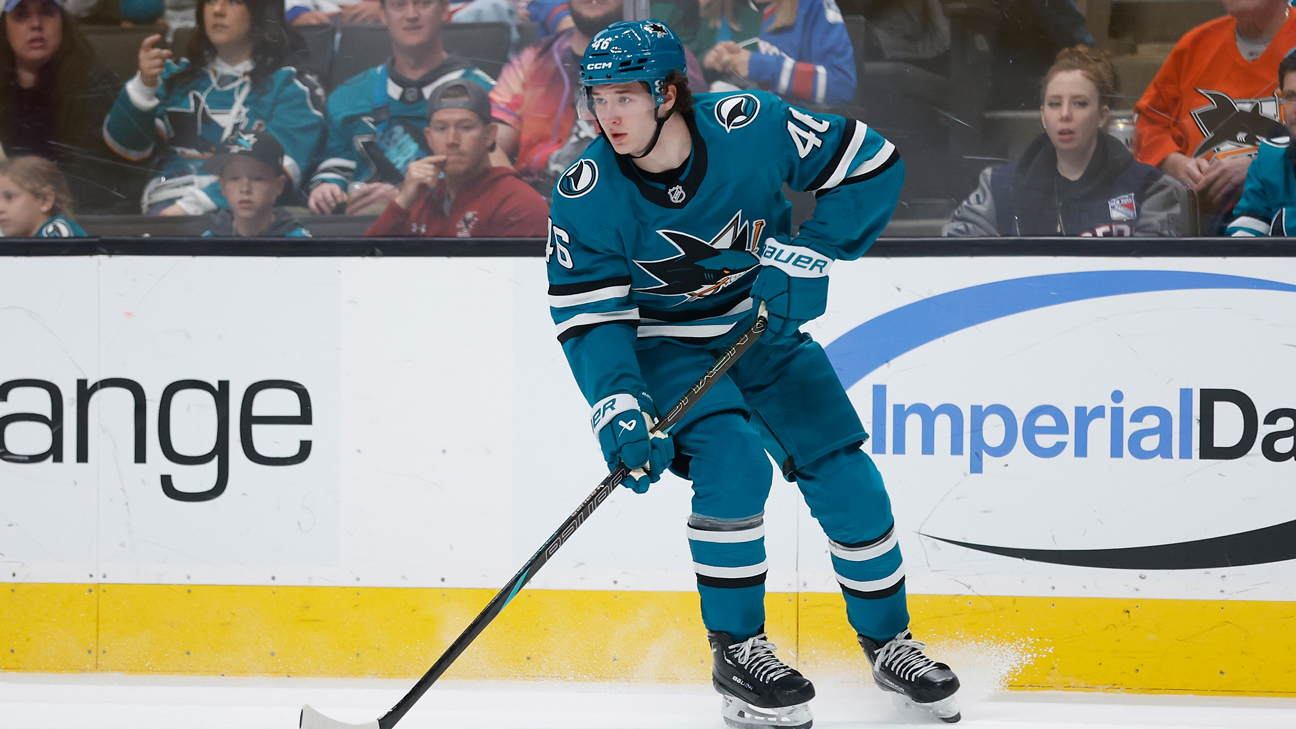
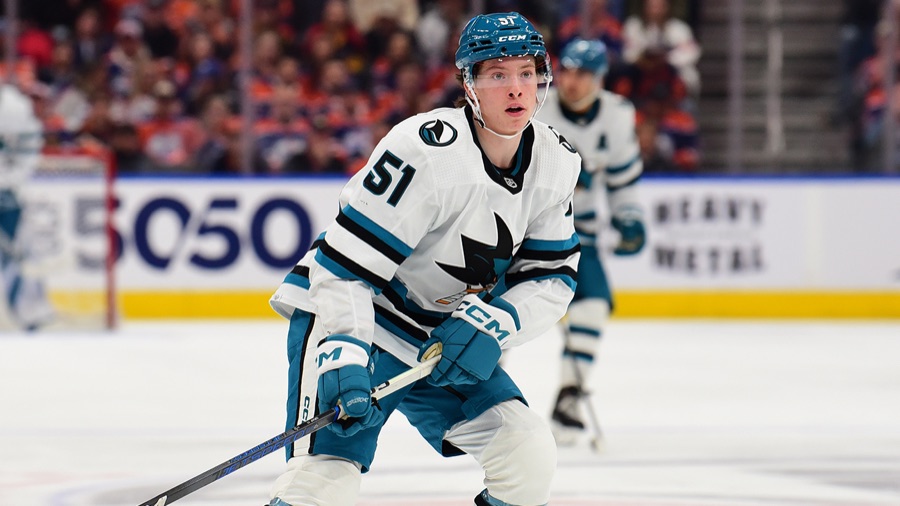
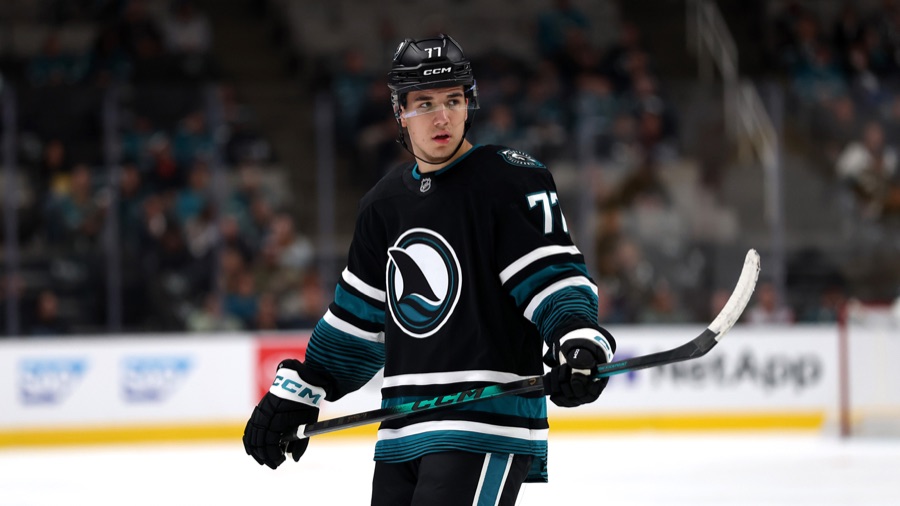
Quentin Musty: a scoring winger whose best skill is the one San Jose needs least#
The profile: 21-24-45 as a D-plus-3 AHL rookie, co-Rookie of the Year, second among all AHL rookies in shots (168) and third in power-play points (21 on 8 power-play goals). Translate the raw line and you get a mid-20s-point rookie floor, but that understates him two ways: he is younger than Bystedt with more growth in front of him, and the shot volume is the most stable, most translatable thing a winger can bring. The catch is where the value is concentrated. His production leans hard on the power play, and that is precisely the unit the Sharks have least room on (Celebrini, Eklund, Smith, Misa, plus Carlson on the point if that signing lands).
| NHL comp | Why it fits | Tier |
|---|---|---|
| Oliver Bjorkstrand | Streaky scoring winger who scores in bunches and settles into a useful middle-six role | Floor |
| Anthony Mantha | Big power winger, dangerous shot, power-play weapon, real consistency and compete questions; the "talent vs nightly effort" comp | Median |
| Alex Tuch (lite) | 6-foot-4 power winger who added the two-way B-game and became a 30-goal complete top-sixer, the outcome if the details come | Ceiling |
Notice that the floor and median there (Bjorkstrand, Mantha) are literally on this summer's free-agent board. That is the point: a scoring power winger with a shaky B-game is a known, useful, and replaceable NHL commodity. Musty becomes a Tuch instead of a Bjorkstrand only if the parts the scouts knock (interior attack, defense, consistency) actually develop. The shot is real. The rest is a bet.
Now the conundrum, resolved#
The fans are right that they're good. The coach is right that there's no room. Both are true, and the bridge between them is one idea: absolute value is not the same as marginal value.
A 30-point center is a genuinely useful NHL player in a vacuum (absolute value). But rosters are zero-sum. If you already have five centers better, younger, or cheaper, that same player's value to your team is replacement-level (marginal value), because he is competing with a free 13F for the last spot. Bystedt and Musty are good in the abstract and nearly valueless to this specific depth chart, not because they are not good, but because the players ahead of them are better and on entry-level deals. That is not a knock on the prospects. It is a compliment to the drafting.
So the two of them are the same problem with opposite answers:
- Bystedt is the bullet you fire. He is NHL-ready as a 4C, but he plays the one position the Sharks are stacked at (Celebrini, Misa, Wennberg, Ostapchuk, Dellandrea), and he has one entry-level year left. His value to San Jose is not a lineup spot; it is as the asset that gets a blue-line trade over the line. His marginal value to a team with a center hole is real money, and that is exactly why you cash it.
- Musty is the bullet you keep. He is a winger (a position you can flex), he is younger with two entry-level years, and there is an aging incumbent (Toffoli) directly in his lane. He is not ready to take a top-nine wing from Eklund, Smith, Chernyshov, or Graf today, and his power-play value is redundant on this team right now. But the runway is real: stash him in the AHL, make him the first scoring-winger callup, and let him inherit Toffoli's minutes in 2027-28. Patience is the play.
Where they fit, in one line each#
Bystedt: not in the lineup, in the trade package (he is the value-add in a deal for the right-shot defenseman the team actually needs). Musty: not in the lineup yet, in the AHL as the in-house reinforcement and the heir to the declining veteran wing. The reason neither cracks the rotation is the same reason the rebuild is working: the team in front of them got good first.
Comps and projections built from the deep-dives at docs/players/Bystedt_2026-27_role-and-fit_Deep-Dive.md and docs/players/Musty_2026-27_role-and-fit_Deep-Dive.md; AHL lines per the Barracuda/AHL rookie leaderboards; roster fit per the forward-lines and blue-line plans. NHL-equivalency translation is approximate (no NHL sample exists for either yet), so treat the comps as profile projections, not measured impact.