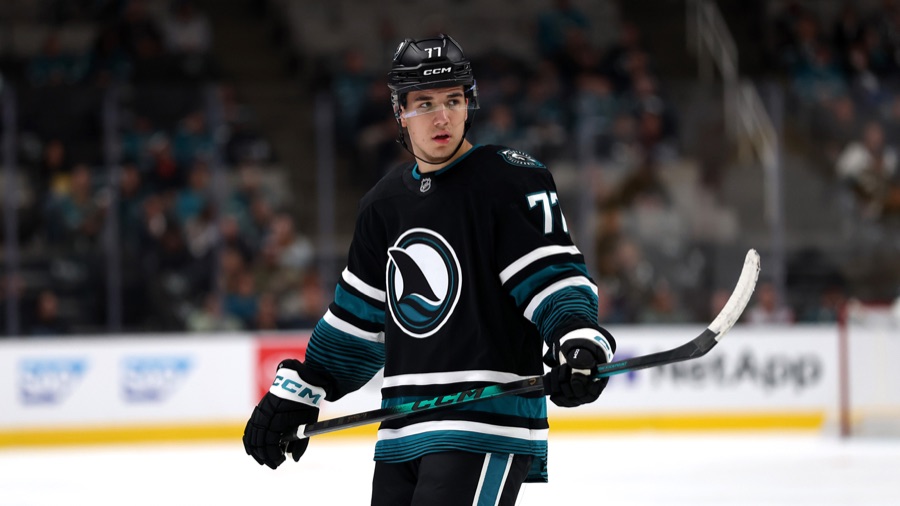
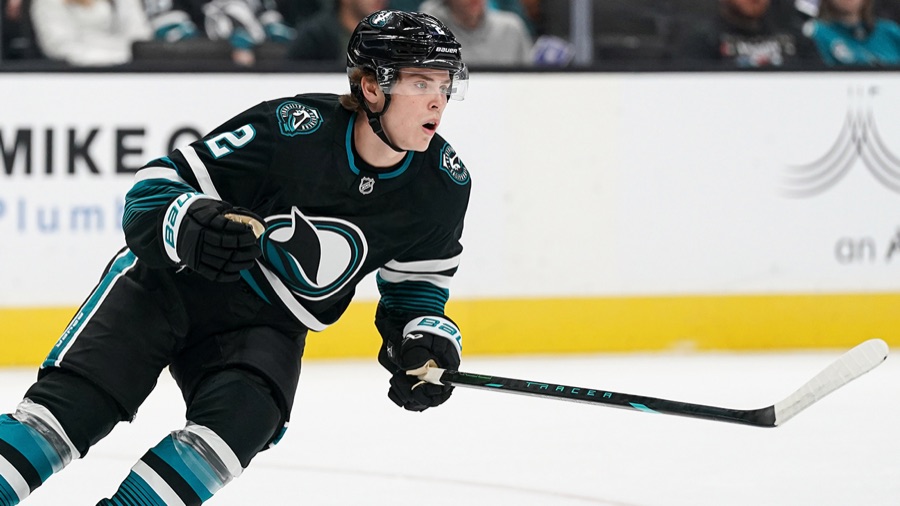
The Warsofsky file: elite developer, suspect allocator, and the year-three test already written
The repo's coaching tracker reached a verdict in May: keep him, hot seat. Since then we built a month of analytics the tracker never had, the competition data, the pairing tables, the penalty-kill autopsy, the value board, the rookie comparisons. So this is the audit: hold the May verdict up against the June data and see what survives. The short answer: the verdict survives, but the shape of the man sharpens considerably. Ryan Warsofsky is an elite developer of young players and a suspect allocator of minutes, and year three is the test of whether the allocator can learn from the developer.
1. The strangest split on record#
Start with the season's central riddle. Games 1 through 55: a decent record built on dead-last underlying numbers in every category, floated by Celebrini heroics and friendly percentages. Games 56 through 82: roughly the same record, on upper-half-of-the-NHL underlying numbers, as the bounces normalized exactly when the systems caught up. Same standings, opposite hockey. The generous reading: the systems work took 55 games to install and the second sample is who they are now. The cynical reading: a coach rode his superstar's percentages for four months of bottom-five hockey. Both are true, which is precisely why the verdict was "keep, hot seat" and not either word alone. The 27-game upper-half window is the predictive sample, and it is also the entire burden of proof for October.
2. What the new data vindicates: the developer#
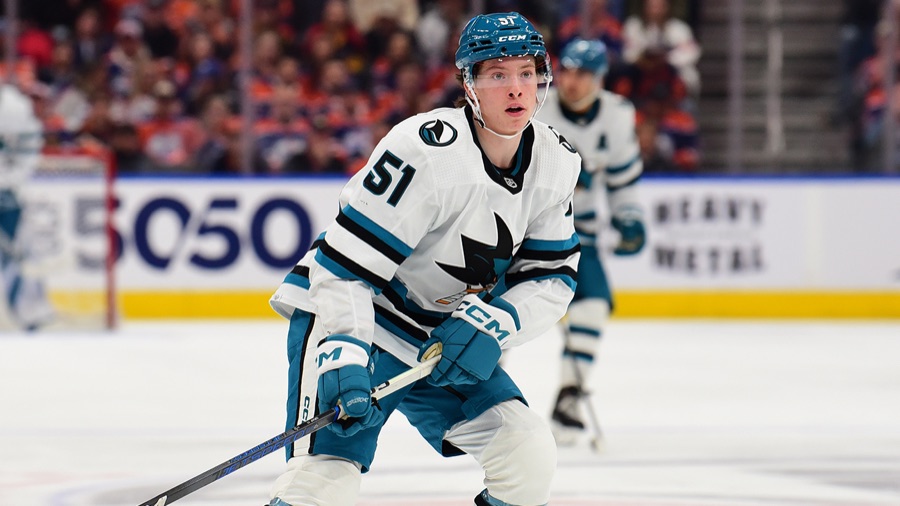
- The Dickinson handling now has receipts. The tracker listed his "offensive leash" as a weakness. The competition data reframes it: protected matchups (23.2% elite exposure), honest defensive-zone starts, real top-four minutes, and the result was a rookie who ranked second among all rookie defensemen in goals-for impact while Levshunov, handled the opposite way in Chicago, finished dead last in goals-against impact. The textbook says break in a teenage defenseman exactly like this, and the head-to-head outcome is the strongest pro-Warsofsky data point we own. (The power-play muzzle critique survives: 0:18 a game was too tight, and year two must loosen it.)
- Chernyshov's integration, confirmed quantitatively: recalled, given the top line in December, and the 28-game audit shows positive relative numbers and finishing exactly at expectation. Did not over-protect, did not bury, got a player.
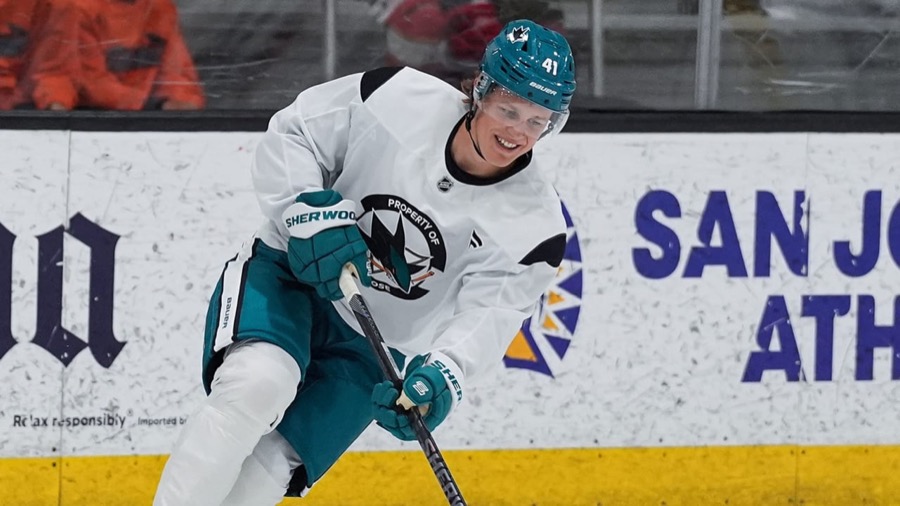
- Smith, Graf, Misa as a developmental class: Smith jumped to 59 points once unleashed, Graf became the team's best individual chance generator and a top penalty killer on a coach's-trust arc, and Misa, on a neutral matchup diet at 18, broke even, which the Misa verdict graded as readiness. (The tracker's critique that Misa's success never earned bigger minutes also survives; the diet was honest, the portion was stingy.)
3. What the new data convicts: the allocator#
| The call | What the June data says | Grade |
|---|---|---|
| Orlov-Klingberg, 527 minutes | Two puck-movers, outscored at 42% goals-for, the team's worst-performing heavy pairing, while the pairing data says Orlov's best partner all year (Mukhamadullin, plus-0.62 xG/60 together) spent stretches in the press box on the yo-yo. The new data turns a known weakness into the season's clearest allocation failure | D |
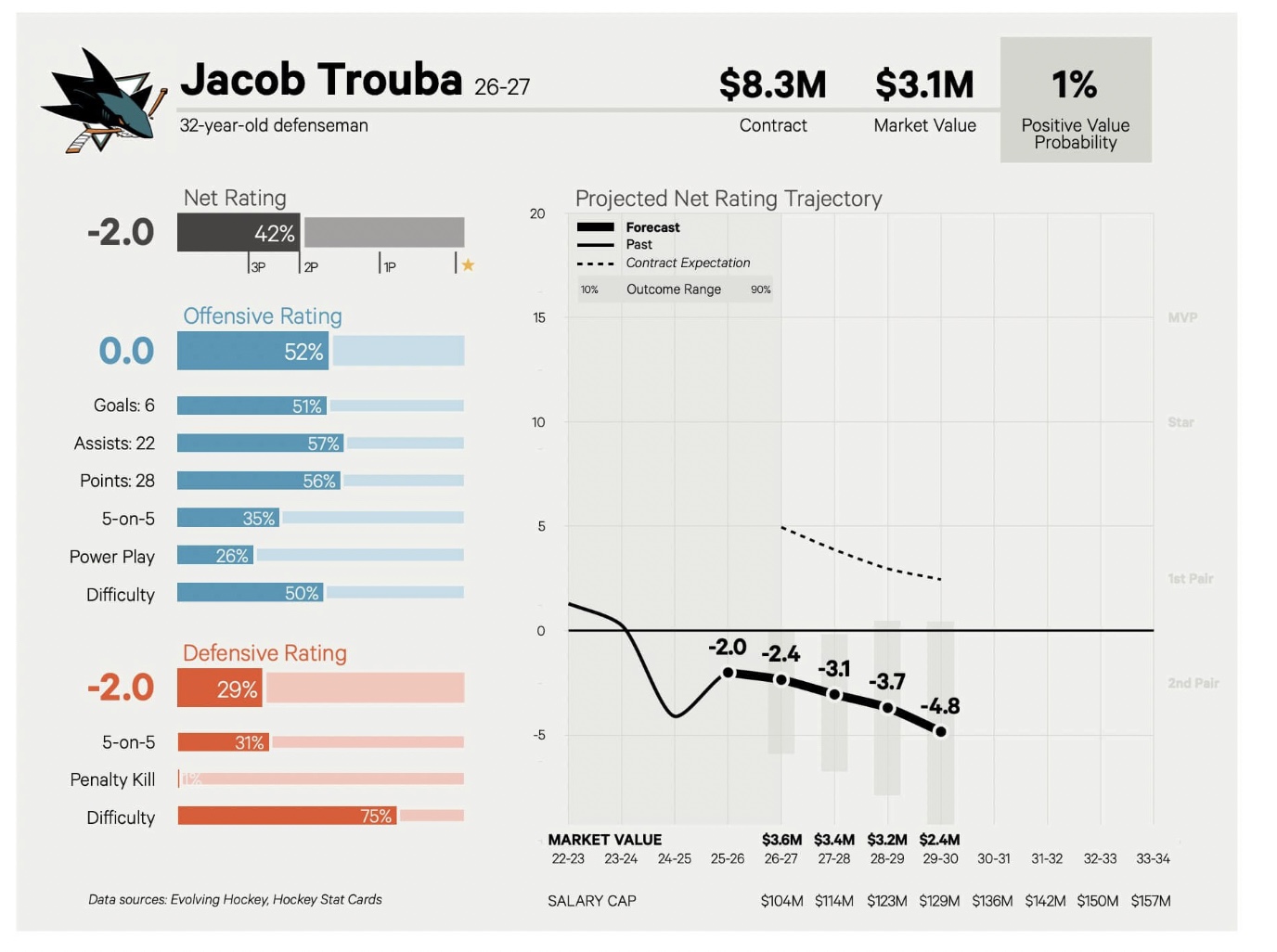
| The penalty-kill minutes | 28th in the league, and the autopsy found why: Goodrow (155 min at 9.0 expected-against) and Wennberg (164 at 8.6) ate the heaviest forward loads while the two genuine suppressors (Graf, Desharnais, both 6.52) were the exception, not the spine. Minutes by reputation, not results | D |
| Klingberg as PP1 QB, five months | The unit created chances (7-to-9 xGF/60) and converted at a 17th-place rate behind one of the league's worst PP quarterbacks. The structure worked; the personnel inertia did not. Demoted only in month five | C-minus |
| Dellandrea as 3C into January | The value board's worst even-strength defense on the roster (2.98 xGA/60, minus-11 relative), in a scoring-line role, ended by injury rather than decision, while Bystedt led the AHL farm | D |
| The Eklund burial (exoneration) | The minus-31 happened on a 95.7 PDO with .839 goaltending behind him, while he ate the heaviest elite-competition diet of any scoring forward with positive relative play. Somebody had to take those minutes; the results-noise was not coachable. The eye-test F becomes a data B | B |
See the pattern, because it is one pattern wearing four jerseys: roles get assigned by reputation and corrected by injury or calendar, not by results. The veteran QB held PP1 for five months. The veteran pairing got 527 minutes. The veteran killers kept the kill. The veteran 3C kept the middle until his clavicle gave out. Meanwhile every story where Warsofsky trusted the data's answer early (Dickinson's matchups, Chernyshov's promotion, Graf's kill role) turned to gold. The man's best decisions and worst decisions are the same decision, made in opposite directions.
And the one pure systems conviction, carried over and still standing: rush defense, unsolved for a second consecutive year. The repeated three-on-three coverage failures are the single failure that belongs to the bench alone, and the young scorers' leaky on-ice numbers (Chernyshov 2.80 expected-against, Smith 2.72) live partly downstream of it.
4. The messaging footnote#
Two quotes from the tracker deserve their dishonorable mention because they reveal where his attention is miscalibrated: the "four years of handing out ice time" line (wrong on the timeline, and ironic from the man handing Klingberg PP1), and the post-Chicago "learn to play mature third periods" lament, delivered about a team that went 28-1-2 protecting third-period leads, better than three of the four conference finalists. A coach publicly diagnosing a strength as a weakness, the night of its only failure all season, is a coach grading vibes instead of his own data. It is a small thing. It is also exactly the same flaw as the minutes allocation, wearing a microphone.
5. The hot-seat math, already written down#
The convenient part of year three: the test exists, in the scorecard, with bars he either clears or does not. Upper-half 5v5 expected goals from October onward (not from game 56; the installation excuse is spent). The penalty kill to 78-plus and top 20, which is purely an allocation test, his weakest subject. Dickinson's elite exposure climbing toward 30 with real power-play time, the leash test. Misa's second line held, the portion-size test. Hit those inside the 89-to-97 band and the hot seat cools into an extension conversation. Miss the band with bottom-ten underlying numbers and the combination is fireable on its face, no February debate required. The man is auditioning against his own second-half tape, and the second-half tape is good enough to pass.
The verdict#
Keep, hot seat: confirmed, and sharpened. He develops young players as well as any coach the franchise has employed, and he distributes minutes like a man paying off old debts.
The stress test found the May verdict sound and the diagnosis incomplete. The thing that gets coaches fired in year three is not systems (his flipped to upper-half and may be real) and not development (his case file is Dickinson, Chernyshov, Smith, Graf, and Misa, which is a defense attorney's dream). It is the allocation reflex: reputation minutes, corrected late, by injury and calendar instead of by evidence. Every bar on his year-three test is, one way or another, a test of that single reflex. If the roster plans' deployment notes (Dickinson up, Dellandrea capped, the kill rebuilt around Graf and Desharnais) show up on opening night, he read the data. If October looks like last October, the seat will do what seats do.
Built on docs/coaching/Warsofsky-Y2-evaluation.md (the May verdict, the split, the messaging and tactical entries), stress-tested against the June analytics: the value board, the WoodMoney competition data (Dickinson, Eklund), the Dickinson-Levshunov comparison, the Fear the Fin pairing tables (Orlov-Klingberg, Orlov-Mukhamadullin), the PK autopsy, and the season scorecard's year-three bars. A stress-test addendum will be logged in the coaching tracker.