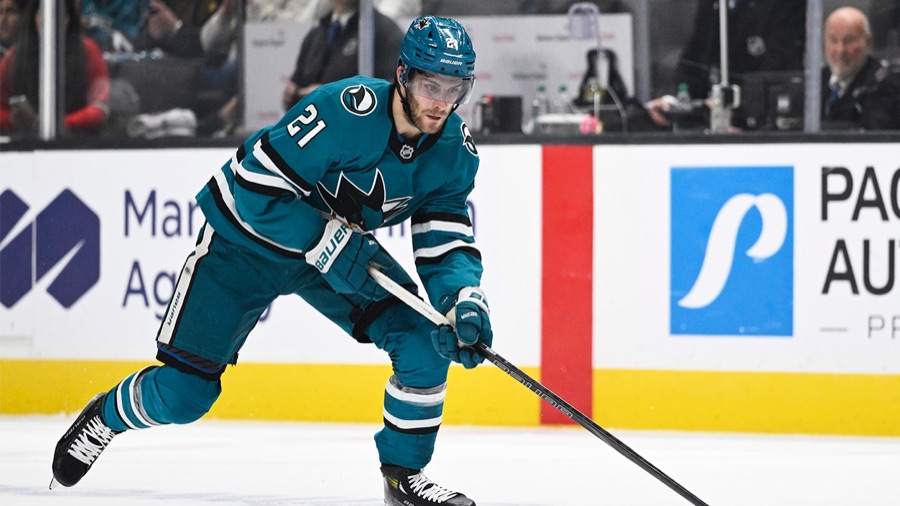
Sam Dickinson, year two: the rookie line that hid his best trait, and the leap that comes when the leash drops
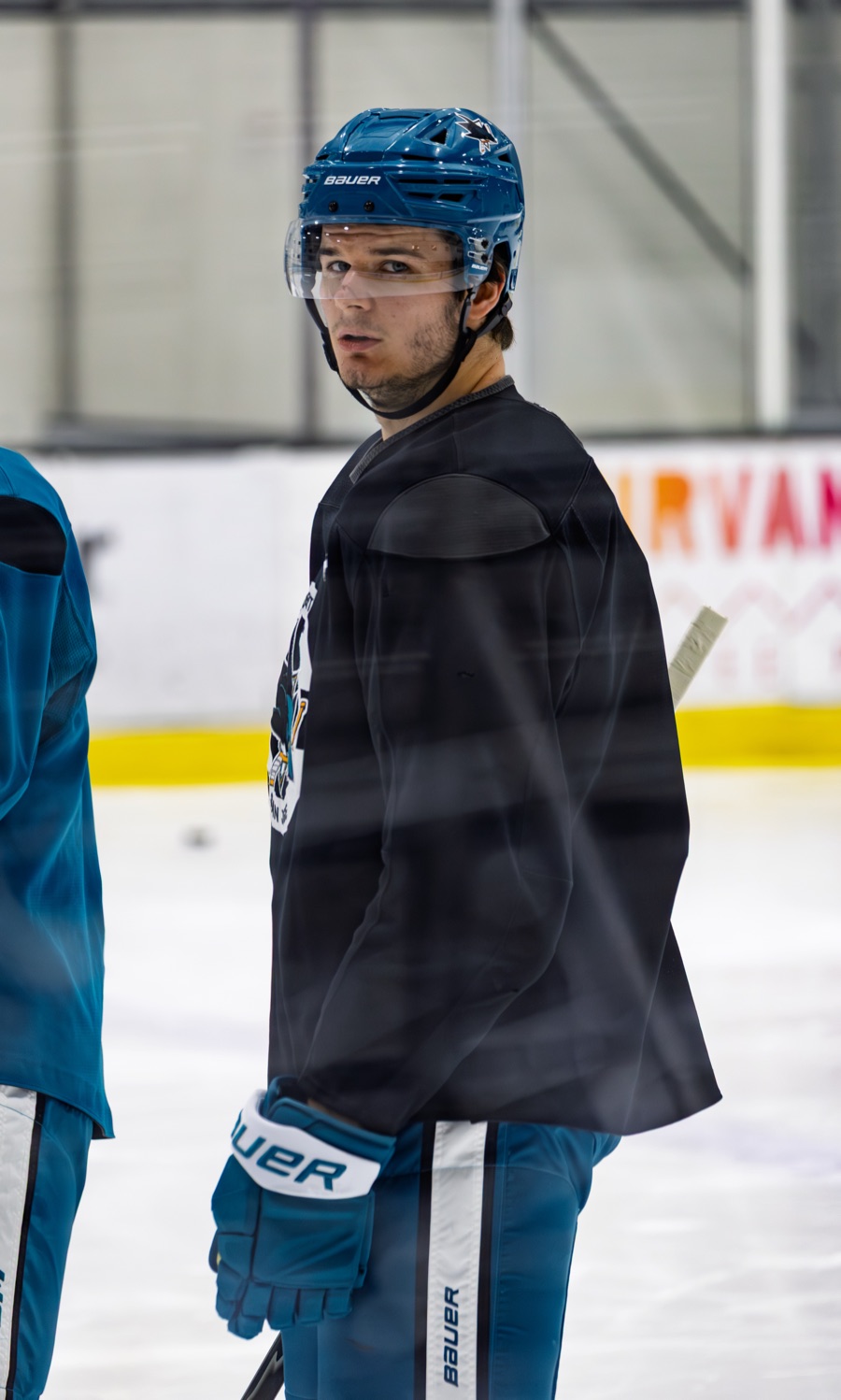
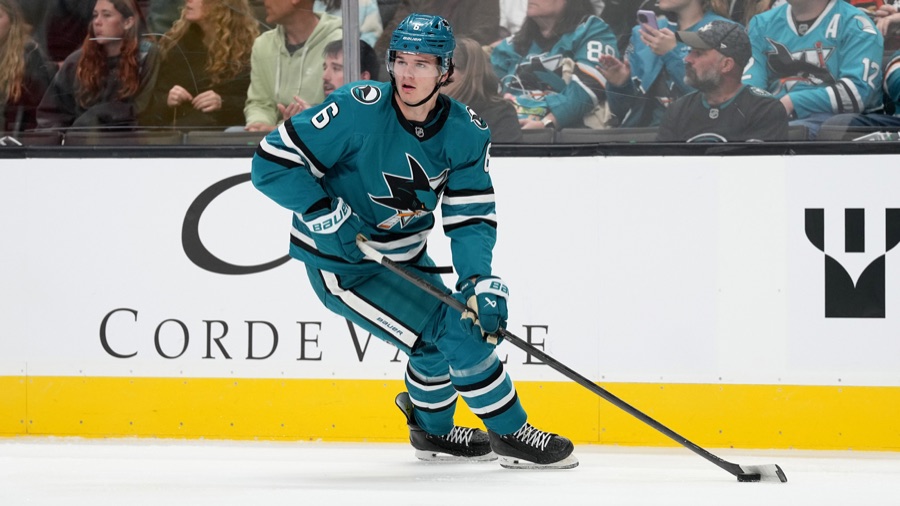
Sam Dickinson scored one goal in 72 NHL games as a rookie. If you stopped there you would conclude the Sharks' franchise left-shot defenseman is a defensive specialist with no offense, which is the exact opposite of who he is. Dickinson was one of the highest-scoring defensemen in junior hockey. The Sharks traded UP, from 14 to 11, to get him over Zeev Buium. And then they spent his entire rookie year muzzling the one thing that made him a top-12 pick. That was the correct call. Year two is where it pays off, and the projection is the most exciting one on the blue line.
1. The rookie line, decoded#
| 2025-26 rookie | Number | What it actually means |
|---|---|---|
| Line | 72 GP, 1-13-14, minus-5 | Muted offense, respectable defense |
| Elite-competition exposure | 23.2% | The MOST sheltered regular on the team |
| Power-play time | 0:18 per game | Muzzled; his junior calling card, benched |
The 14 points is not a measurement of his offensive ability. It is a measurement of his deployment. He played the softest competition of any Sharks regular, started in conservative spots, and got eighteen seconds of power play a night, which for a defenseman drafted on his skating and his offense is the equivalent of buying a sports car and never leaving second gear. The minus-5, on the other hand, is real, and it is good, and it is the part of the story everyone is about to miss.
2. The draft-class comparison, where Dickinson quietly wins#
Here is the verified 2024 first-round defenseman class, rookie years, side by side. Watch the last column.
| D (2024 pick) | 2025-26 line | Points | Plus-minus |
|---|---|---|---|
| Sam Dickinson (No. 11, SJS) | 72 GP, 1-13-14 | 14 | -5 |
| Artyom Levshunov (No. 2, CHI) | 68 GP, 2-22-24 | 24 | -41 |
| Zeev Buium (No. 12, MIN/VAN) | 76 GP, 6-20-26 | 26 | -33 |
| Zayne Parekh (No. 9, CGY) | 37 NHL GP, 4-5-9 (+ AHL) | 9 | -9 |
The pattern is the whole point. The defensemen handed big NHL roles early, Levshunov (the No. 2 pick) and Buium (the guy the Sharks passed on), out-scored Dickinson, and got absolutely shredded defensively, a minus-41 and a minus-33. The pure-offense junior star, Parekh, could not translate at all and spent time in the AHL. Dickinson scored the least and was the only one of the four to defend at a respectable level. That is not an accident; it is the sheltering working exactly as designed. The Sharks chose to build the foundation first and add the offense second, while Chicago and Minnesota threw their kids to the wolves and watched the goals-against pile up. A year in, the Sharks look right, both about the development path and about taking Dickinson over Buium, because Dickinson is the only one of the group with a defensive floor already poured.
3. What the leap looks like#
Year two is when the leash drops, and the scorecard already wrote the bars: elite-competition exposure climbing from 23% toward 30%, power-play time from eighteen seconds to ninety-plus with real PP2 reps, and the vs-depth-competition sag fixed. Now layer the junior pedigree on top. This is a defenseman who put up huge offensive numbers in the OHL on the strength of elite skating and puck-movement, the headline traits every pre-draft report led with. Give that player power-play minutes and permission to activate, and the offense that was sitting in the garage all year comes out. The realistic sophomore line is a jump from 14 points to the 30-to-40 range, the offense finally joining the defense, which is the definition of a real sophomore leap rather than a counting-stat bump.
The bet in one line: Dickinson already proved the hard half (defending as a teenager). Year two tests the half that is supposed to be easy for him (the offense he was drafted for). That is the best possible order to do it in, and it is why his arrow points up harder than any defenseman in the system.
4. What stalls it#
- The leash stays on. The single biggest risk is not Dickinson; it is whether Warsofsky actually loosens the deployment. The Warsofsky file's whole critique is reputation-and-caution over evidence. If the elite exposure sits at 23% and the PP stays muzzled in February, the leap does not happen and the failure is the bench's, not the player's. The scorecard tracks this precisely.
- The offense does not translate. The Parekh warning: big junior offense is not guaranteed NHL offense. Dickinson is more two-way than Parekh, so the risk is lower, but it is not zero, the reps could come and the points could still not.
- The defense regresses under tougher minutes. The scorecard's own failure trigger: if the elite-exposure share climbs but his results against depth competition sag again, he is "caught in between." Adding offense cannot come at the cost of the defensive floor that is currently his best asset.
The verdict#
The offensive half of the blue line's future, with the defensive floor already built and the offense due to arrive in year two. Floor: a solid two-way top-four defenseman. Ceiling: a franchise No. 1 left shot who runs a power play and logs 24 minutes.
Dickinson's rookie year was a masterclass in patience that his counting stats actively hid, and the draft-class table is the receipt: the kids who got the early offense also got the early beatings, and Dickinson alone came out with a defensive game intact. Year two is the offense's turn, gated almost entirely by whether the staff takes the leash off. Watch the power-play time in October; it is the single best leading indicator of the whole leap. And keep the long picture in frame: a year from now this is the offensive lefty, and in 2028-29 Reid arrives as the two-way righty, and the Sharks have the homegrown franchise top pair the entire rebuild has been pointed at. Dickinson is the half that is already here.
All four rookie lines verified from the NHL API (Dickinson 72 GP/1-13-14/-5; Levshunov 68 GP/2-22-24/-41; Buium 76 GP combined across Minnesota and Vancouver/6-20-26/-33; Parekh 37 NHL GP/4-5-9/-9 plus 4 AHL). Dickinson vitals: 6-3, shoots L, born June 7, 2006, drafted No. 11 in 2024 (traded up from 14). Sheltering data (23.2% elite exposure, 0:18 PP, the vs-depth sag, the 2nd-in-rookie-D goals-for-impact vs Levshunov-last finding) per the sheltered-minutes synthesis and the Warsofsky tracker; the year-two bars per the season scorecard. The 30-40 point sophomore projection is a forecast; the rookie lines and the deployment data are on the record.