Only two clubs in hockey ran two power-play point men, and San Jose was one
San Jose gave Dmitry Orlov and John Klingberg 368 of the 449 power-play minutes its blue line played last season. Across the other 31 clubs, exactly one did anything like that, and it is Florida, which opens the Sharks' season on October 1. The job Klingberg left behind is not a right-shot job. It is 37 percent of a job, and I had that wrong.
Open the league's own time-on-ice report for last season, keep only the defensemen, and sort each club's blue line by power-play minutes. Now count the clubs that had two men above 150 minutes.
There are two. San Jose is one of them. The other is Florida, which is at SAP Center on October 1.
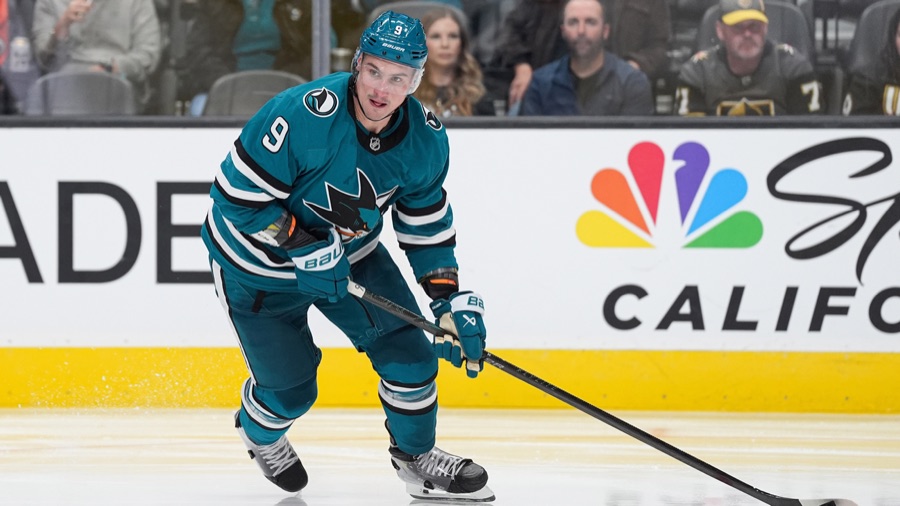
Dmitry Orlov, No. 9, played 202:55 on the power play across all 82 games. John Klingberg played 165:29 across 56. Between them that is 368:24 of the 448:41 the San Jose blue line played on the man advantage, which is 82.1 percent, and it is the closest thing to a two-quarterback power play anybody ran. Klingberg retired on September 11. The seat is open and San Jose plays its first exhibition game this afternoon.
What is actually vacant#
Klingberg's share of his blue line's power-play minutes was 36.9 percent. Orlov's was 45.2 percent.
In August I called that hole specifically right-shot shaped, because Klingberg shoots right and Luca Cagnoni, the man every outside projection has put in his chair, does not. That was wrong, and the thing that says so is a table of all 32 clubs rather than an opinion about any of them.
Across the 2025-26 regular season, 17 of the 32 clubs gave more power-play time to a left-shot defenseman than to any right-shot defenseman. Fifteen led with a right shot. League-wide, left shots took 53.7 percent of every power-play minute a defenseman played, 7,355:06 of 13,692:42.
Eleven of the 32 gave no right-shot defenseman even 100 minutes across the whole season. Three of those eleven gave one essentially nothing: Buffalo 1:34, Toronto 2:45, Dallas 5:24.
Those eleven clubs were not worse for it. Their mean power play was 22.00 percent against a 21.10 percent mean across all 32, six of the eleven finished in the top half, and Dallas ran the second-best power play in the NHL while giving right-shot defensemen five and a half minutes all year.
The eleven clubs that gave no right-shot defenseman 100 minutes on the power play, and where their power plays finished
Power-play conversion rate in the 2025-26 regular season for the eleven clubs of 32 whose most-used right-shot defenseman played under 100:00 on the man advantage. Rank out of 32 in brackets. Named beside each club is that club's most-used power-play defenseman, who is a left shot in all eleven cases, and the most-used right shot he was preferred to. Bars run from zero to 32 percent. Teal marks the two clubs that finished in the top five.
Eleven clubs declined to fill that hole at all and paid nothing for it. So a hole is not specifically shaped because of the shot side of the man who left it.
The thing San Jose actually did#
What separates the Sharks from those eleven is not handedness. It is that they used two point men rather than one.
Twenty-one of the 32 clubs gave two defensemen at least 100 minutes on the power play, so a second man is ordinary. Move the bar to 150 minutes, which is my threshold and not the league's, and the list collapses to San Jose and Florida. Florida did it with Seth Jones at 185:04 and Aaron Ekblad at 155:51, and both of them shoot right.
That is the correct way to describe what left. Not a right-shot chair. Nearly half of a two-man arrangement that almost nobody else runs, in the hands of a man who turned 35 in July and played every game.
What the blue line brings to Anaheim#
The twelve defensemen on San Jose's roster played 307:51 of NHL power-play time between them last season. Orlov is 202:55 of that, 65.9 percent.
Six of the twelve did not play an NHL game at all. The four right shots on the roster account for 55:14 of the total, 17.9 percent, and 55:12 of that belongs to Jacob Trouba, No. 65, earned at Anaheim, who is one of the eleven clubs above. Anaheim's three most-used power-play defensemen were all left shots and Trouba was fourth.
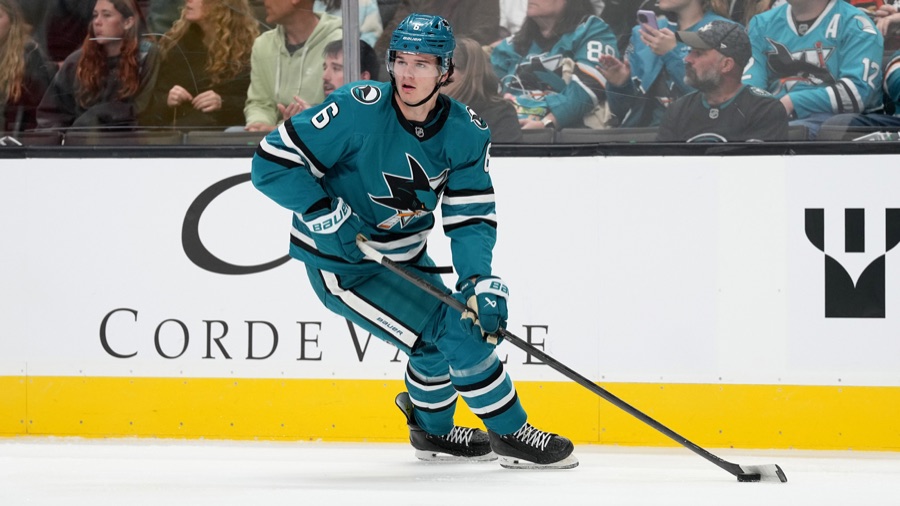
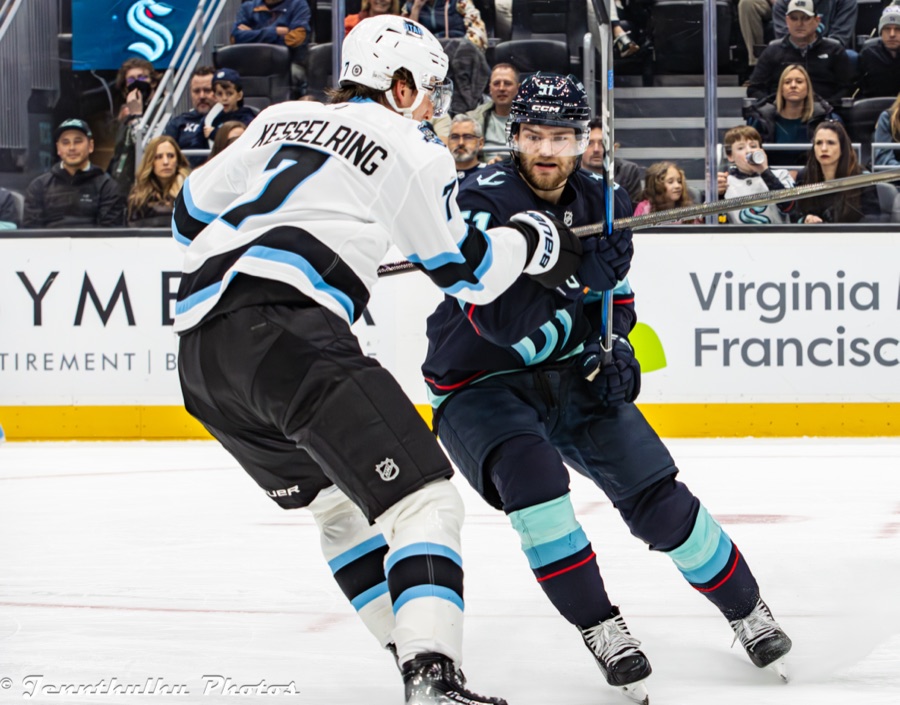
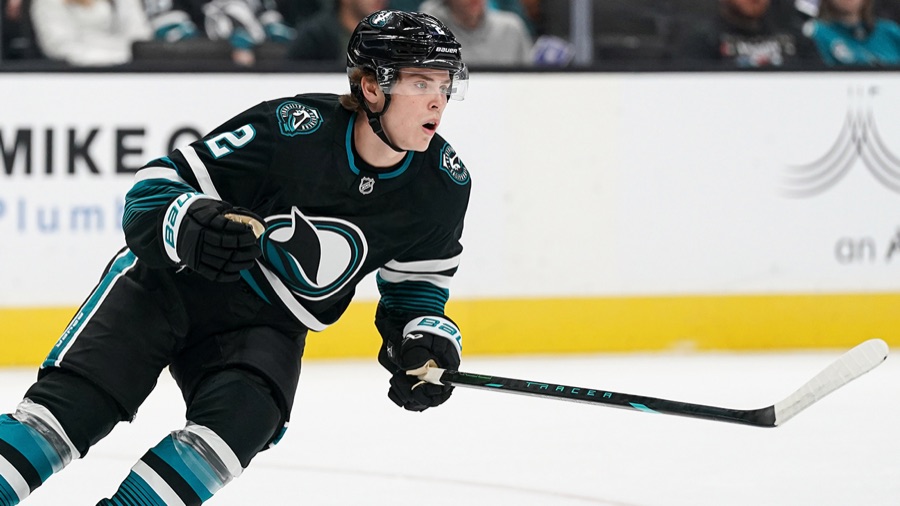
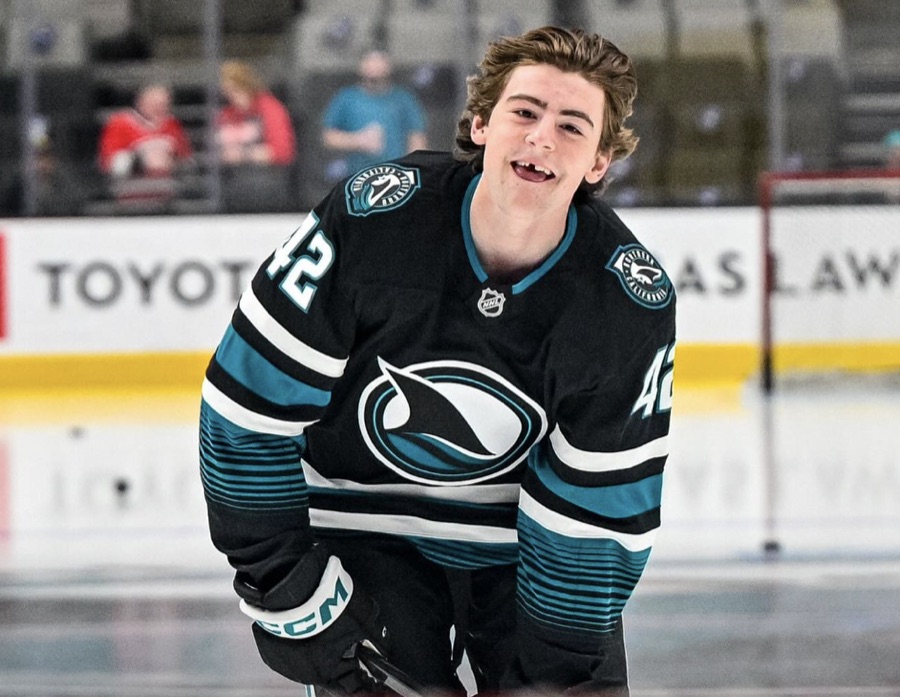
Sam Dickinson, No. 6, played 21:57 on the power play in 72 games. Luca Cagnoni, No. 42, played 8:21 in three. Michael Kesselring, No. 7, played two seconds in 34 games at Buffalo. Darnell Nurse played 19:24 in 82 for the best power play in the league, which ran Evan Bouchard for 297:46 and did not need him.
The afternoon#
San Jose is at Honda Center at 1 p.m. Pacific, the first of four exhibition games inside seven days, and the first power play this club runs in front of anyone is in that building today. Four exhibition games inside seven days is a narrow window, and the units that skate this afternoon are a sample rather than an announcement.
Watch the first one, and watch who is standing beside whoever is standing at the top of it. A one-man point and a two-man point look identical for about eight seconds.
Where they sit, honestly#
They do not sit anywhere yet. The league's standings page still returns the final 2025-26 table, dated April 17: San Jose 39-35-8, 86 points, a .524 points percentage, fifth in the Pacific and 24th of 32. Every club played 82 games, so points and points percentage order the league identically and the distinction does not bite until October. It will bite by the end of the month, because the 2026-27 season runs 84 games and San Jose plays 15 of them in October.
The three arguments against me, and the second one is real#
- One season. Everything above is 2025-26 only. A three-year pull would firm up the 17 to 15 split, which is the closest of these numbers to a coin flip.
- Season minutes are a proxy for a unit, not a record of one. The free league data does not say which five men were on the ice together, so "most-used power-play defenseman" is a stand-in for the first-unit point man. It is the standard stand-in and it is still a stand-in. The narrow version of the handedness argument, that a right shot is better in one particular geometry at the top of a 1-3-1, is not tested here and is not refuted here.
- San Jose is not the eleven. The Sharks did give a right shot 165:29 and did score at 21.18 percent doing it. A club that ran a right shot heavily and lost him has lost something real. The league's answer is only that the replacement does not have to shoot the same way.
The call#
San Jose gives two defensemen 150 minutes or more of power-play time in the 2026-27 regular season. +260.
Two of 32 clubs did it last season. The Sharks are one of the two, they have 84 games to do it in rather than 82, and the whole camp argument is about a single quarterback rather than a pair. That is a roughly one-in-four call and it is priced as one.
Sources: the NHL's own statistics database, read Sunday, September 20, 2026. The skater/timeonice report for the 2025-26 regular season, queried once per club so that a player traded mid-season is counted separately for each club, supplied power-play time on ice, position and shot handedness for 353 defenseman rows across 32 clubs. The team/summary report for the same season supplied every club power-play percentage and the 21.10 percent mean of the 32. The league's club roster feed for San Jose, 2026-27, supplied the twelve defensemen and their shot sides, and the player pages for Dmitry Orlov and Luca Cagnoni confirmed both as left shots on a second endpoint. The club schedule feed supplied the four exhibition games, the October 1 opener and the 84-game season, and the standings page supplied the final 2025-26 table dated April 17. John Klingberg's retirement was announced on September 11 and reported by San Jose Hockey Now on September 12. Sweater numbers come from the club roster feed and were confirmed against each player's own league page; the feed and the player pages both list two San Jose defensemen at No. 25, so neither is printed above.