Michigan ran for 215 yards at Oregon, and ran exactly as well as it always does
By the play-by-play, 14 of Michigan's 36 runs in Eugene kept it on schedule, 39%, the same rate as its first nine games. Its first- and second-down dropbacks did that 4 times in 16, its worst game of the season, and that is why Jim Harding's first offense kept facing third-and-long.
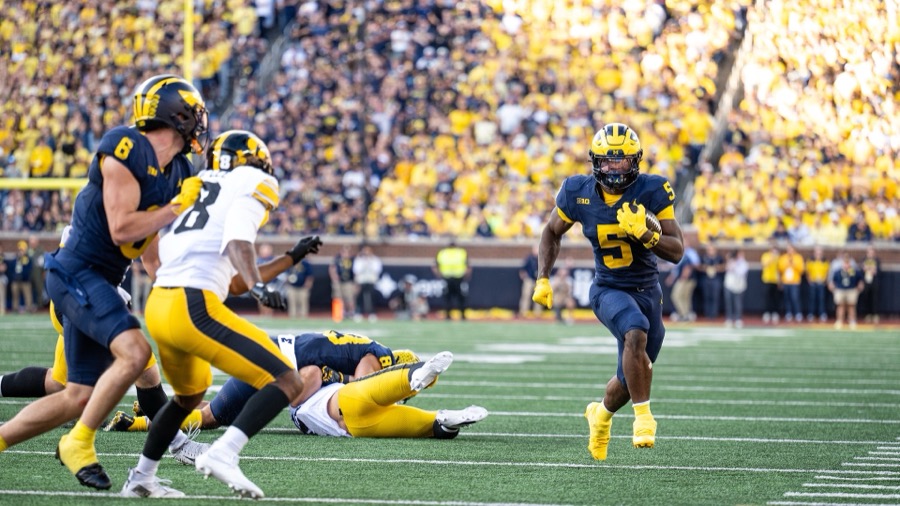
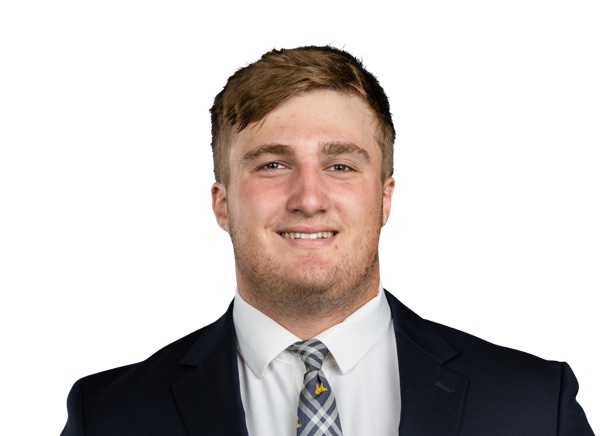
Savion Hiter ran for a career-high 107 yards at Oregon, and 70 of them came on one carry. His other 12 carries gained 37 yards.
Michigan's own postgame notes made the 70-yard touchdown the longest touchdown run by a Michigan freshman back since Tyrone Wheatley's 74-yarder in 1991, and it was Michigan's longest play by yardage this season. It was also one of 3 Hiter carries that did what a run is supposed to do. The measure here is the one college football analysts use for success rate: a run succeeds if it gains half the yards to go on first down, 70% of them on second down, and all of them on third or fourth. By CollegeFootballData's play-by-play, checked against Michigan's official play-by-play, Hiter succeeded on 3 of 13. The touchdown was one. Another was the last snap of the game, at 31-7.
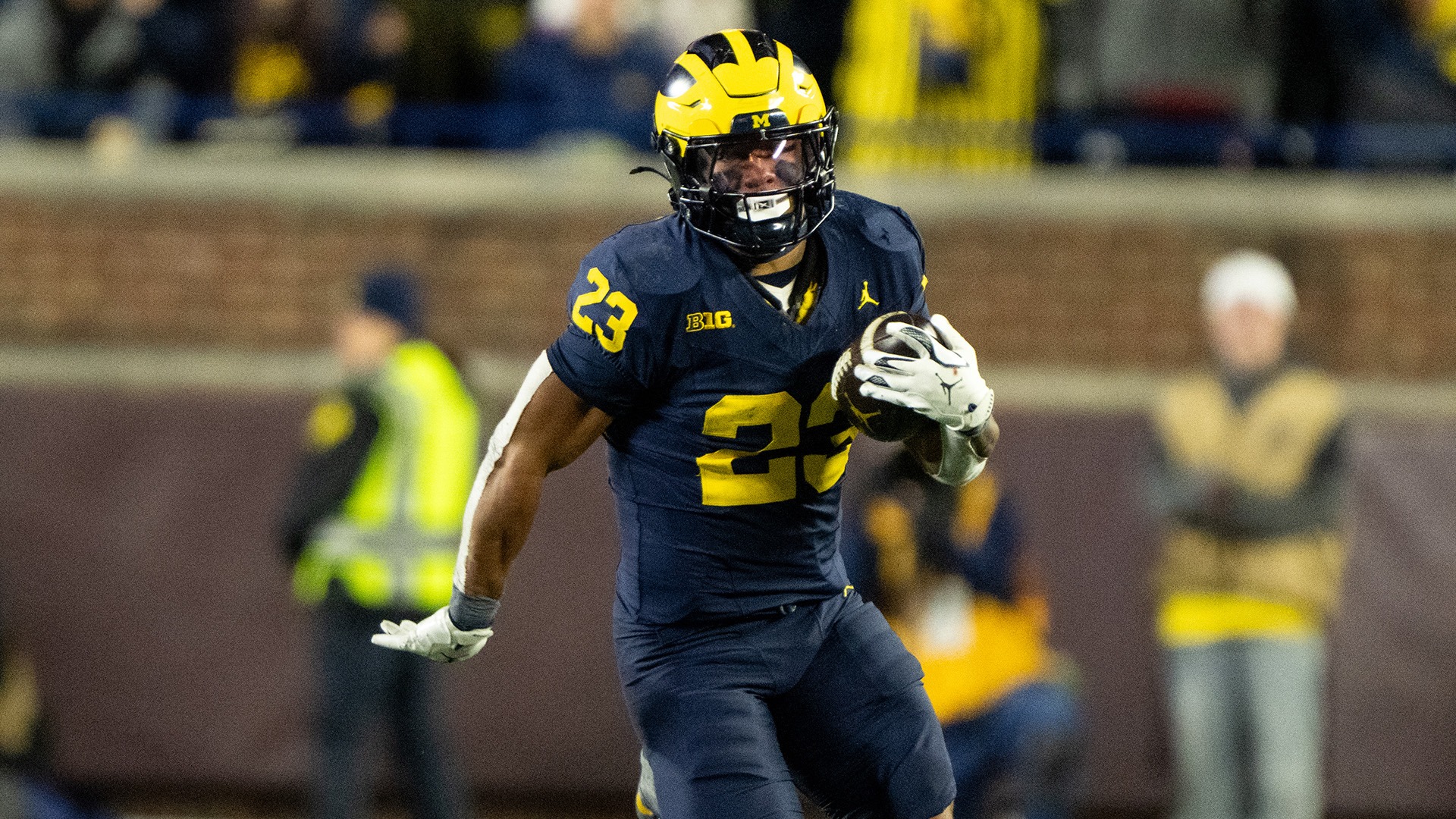
Bryson Kuzdzal carried 9 times for 46 yards and succeeded on 5, the best rate of any Michigan back. Four of the 5 came on the 15-play drive that reached the Oregon 3. A sixth Kuzdzal carry, on third-and-5 at the Michigan 48 midway through the fourth quarter, gained the 6 yards Michigan needed before Bear Alexander forced a fumble that Oregon recovered. It counts here as a failure, because Oregon got the ball.
That split is the whole game in miniature. Michigan ran for 215 yards, its second 200-yard rushing day of the season, and on a down-by-down basis it ran no better than it has all year.
The runs were the runs#
Counting every run play, quarterback runs and scrambles included and sacks and a kneel-down left out, Michigan ran 36 times at Oregon and 14 of them succeeded. That is 39%.
Through its first nine games Michigan had run 301 times by the same count and succeeded on 118. That is also 39%.
The rate moves from game to game, as rates on 30 or 40 carries will: 26% of runs succeeded against Oklahoma, 48% against UTEP and against Penn State, 32% against Michigan State. At Oregon it landed exactly on the season figure. Take away the one long run and Michigan's other 35 runs gained 158 yards, 4.5 apiece, by the official play-by-play.
Hiter's season makes the same point at a smaller scale. Through nine games he had carried 92 times and succeeded on 29, 32%. Kuzdzal was at 11 of 30, 37%, and Jordan Marshall, who has carried 12 times in the three games since Indiana, at 35 of 88, 40%. Hiter has the most carries of the three and the lowest success rate. Oregon added a 70-yard run to that record without changing it.
None of this makes the run game bad. A 39% success rate on runs is a functional college offense. But it is the same functional offense that ran for 57 yards against Indiana and 54 against Michigan State, and the 215 does not say Michigan found something new in Eugene.
What Harding changed#
Michigan relieved offensive coordinator Jason Beck of his duties on November 8 and named Jim Harding, its offensive line coach, interim coordinator for the rest of the regular season, per the program's announcement. Oregon was the first game without Beck.
The run-pass mix is where Harding's first game is easiest to read. On first and second down Michigan ran on 27 of 43 snaps at Oregon, 63%. In Beck's last game, against Michigan State, it ran on 16 of 40, 40%, the only game all season under half. In the eight games before that it ran on 230 of 372 early downs, 62%.
So the first change under Harding was a return to what Michigan had done for eight games, after one game that broke from it. The runs on those early downs went fine by Michigan's standards: 11 of 27 succeeded, 41%, against 35% across the first nine games.
Four early-down dropbacks in 16 kept Michigan on schedule#
The early-down passing went the other way.
Michigan dropped back 16 times on first or second down at Oregon, sacks included. Four of those dropbacks succeeded, 25%. That is the lowest rate Michigan has posted in any game this season. The previous low was 4 of 15 against Penn State, 27%, and across the first nine games it was 73 of 166, 44%.
All 4 early-down completions succeeded. The other 12 dropbacks were 9 incompletions and 3 sacks.
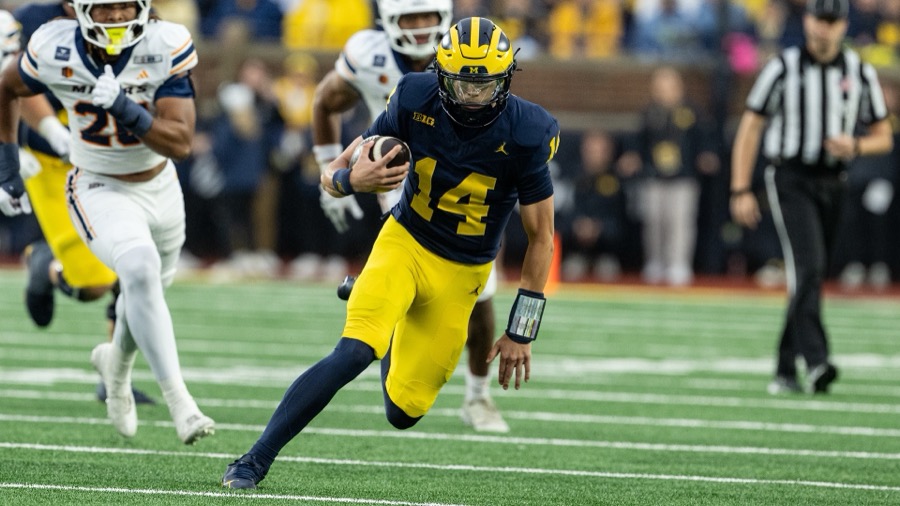
Neither quarterback solved it. Tommy Carr was 2 for 9 on early-down dropbacks by this measure and Bryce Underwood 2 for 7. Sixteen dropbacks between them is no basis for choosing one.
Where Michigan ended up on third down#
An offense that runs at its usual rate and fails on most of its early-down throws ends up a long way from the sticks, and Michigan did. Its 13 third downs at Oregon averaged 8.7 yards to go. Only Minnesota, at 9.9, and Michigan State, at 8.8, left it longer ones. Across the first nine games Michigan's 115 third downs averaged 6.5.
Seven of the 13 were 7 yards or longer. Three were 3 yards or shorter.
That last number matters more than it looks, because short third downs are the one situation in which this offense has been reliable. Through nine games Michigan ran 27 times on third down with 3 yards or fewer to go and converted 17. It threw 12 times in those spots and converted 5.
At Oregon it reached third-and-short 3 times in 13, 23%, against 39 of 115, 34%, through nine games. It ran all 3 and converted 2, both on Kuzdzal carries on the long third-quarter drive. The third was a fumbled exchange at the Michigan 9 in the second quarter, which Hiter recovered after a 5-yard loss.
Michigan went 4 for 13 on third down. Seven of the nine misses came at 5 yards or longer.
What one game says about the next one#
Not much, and the reasons are specific. It was one game and 60 Michigan plays, the first under a new coordinator. Two regular offensive linemen, Blake Frazier and Brady Norton, are not on Michigan's participation list, and receiver JJ Buchanan, who started, was not thrown to after the first quarter. The early-down passing number rests on 16 dropbacks.
What it does say is that Harding's offense, so far, looks like Michigan's offense from September and October: a run game that keeps it on schedule about four times in ten and needs the passing game to do the rest on first and second down. When the passing game does its share, Michigan gets to the short third downs it converts. When it does not, Michigan plays from third-and-8.
UCLA, at Michigan Stadium on Saturday, is 10-0 and beat Oregon 17-15, by CollegeFootballData's results. Its opponents have run for under 100 yards in 7 of its 10 games, and none has reached 150. Oregon ran for 73 against UCLA and 126 against Michigan.
The call here is that Michigan runs for fewer than 100 yards against UCLA, by the official box score. The case is the 39%. Even on a 215-yard day Michigan's runs succeeded at their usual rate, and UCLA has allowed 85 rushing yards a game. Michigan's own record argues the other side. It has run for 100 yards or more in 7 of its 10 games, including the 215 in Eugene, and Wisconsin (148) and San Diego State (144) both ran well past 100 against UCLA.
Sources: CollegeFootballData's 2026 game results, game team statistics and play-by-play for Michigan's ten regular-season games and UCLA's ten, read November 16, 2026; Michigan Athletics' official box score and play-by-play, Michigan at Oregon, and postgame notes, both dated November 14, 2026; Michigan Athletics release, "Whittingham Announces Change to Offensive Coaching Staff," November 8, 2026.