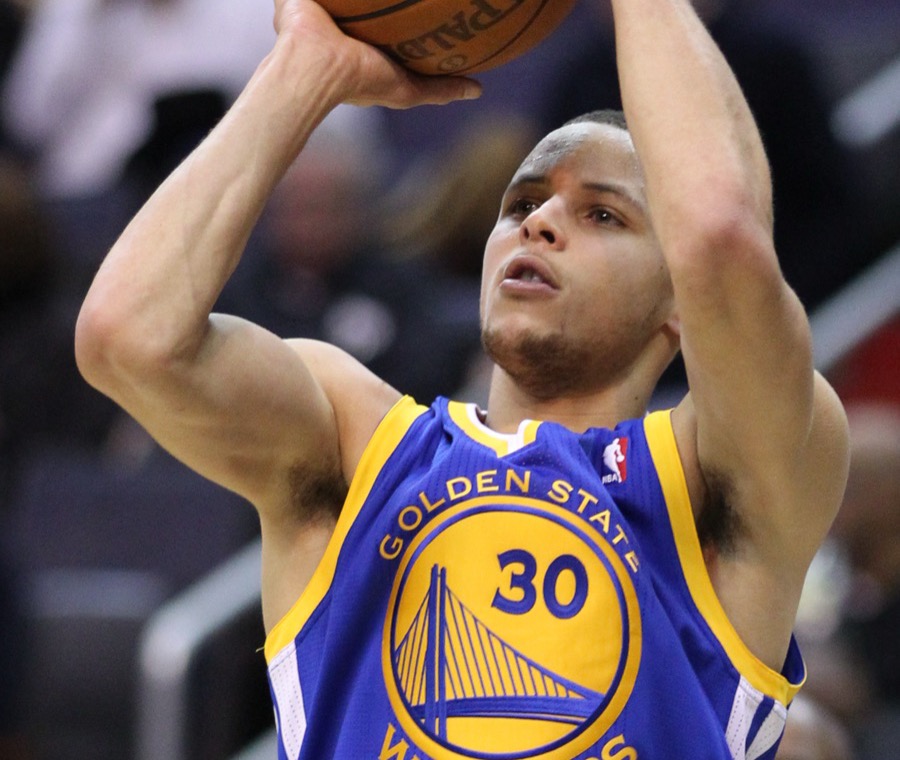
What would a Brandin Podziemski extension cost Golden State's 2027 room?
His cap hold is $17 million. The nearest comparable rookie extensions of the last two years price a season like his at about $23.5 million, and the deadline is October 19.
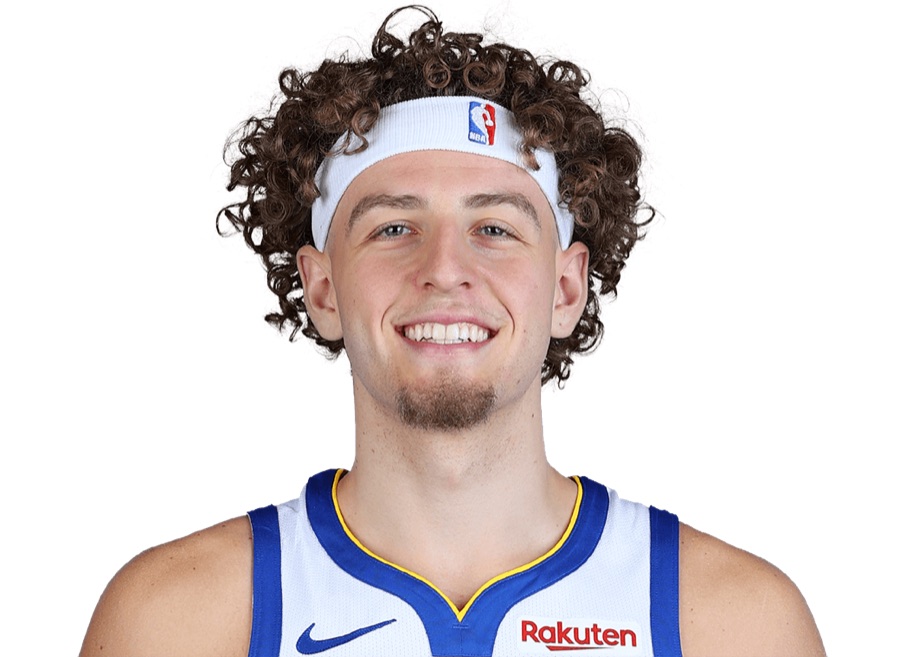
Every rookie-scale extension signed below the maximum in the last two years started at 9.8 percent of the salary cap or more. Brandin Podziemski's cap hold is 9.7 percent.
The two numbers frame the negotiation. Golden State projects to have between $38 million and $55 million in cap space next summer, by Bobby Marks's count at ESPN, and Marks puts it plainly: an extension above $17 million, the size of Podziemski's free-agent hold, costs the club flexibility. The league's latest projection for the 2027-28 cap is $176 million, which makes $17 million a 9.7 percent share. The deadline to sign is October 19, two days before the opener at the Lakers.
So the question is what the market says a season like Podziemski's costs. The measure here is share of the cap, because a dollar figure from 2025 means less every year the cap rises.
The nine#
Nine players drafted in 2022 and 2023 have signed rookie-scale extensions that are not maximum deals. Six signed by the 2025 deadline and start this season, against a cap of $164.961 million. Three signed this summer and start in 2027-28, against the $176 million projection. The four maximum deals (Paolo Banchero, Chet Holmgren, Jalen Williams, Victor Wembanyama) are left out, because a max is set by the rule and not by the player.
No non-max rookie extension of the last two years started below Podziemski's hold
First-year salary of each extension as a share of that season's salary cap. 2022 draft class against the 2026-27 cap of $164.961 million; 2023 class against the projected 2027-28 cap of $176 million. Box plus-minus (BPM) and value over replacement (VORP) are Basketball Reference's, from the season before the deal.
Start at the bottom bar and look up. The hold sits under all nine. Jović is the closest, and his deal starting at 9.8 percent would translate to about $17.3 million in 2027-28, so even the cheapest comparable clears the hold by a few hundred thousand dollars.
The production labels say the order is not a ranking of who played best. Keegan Murray posted a box plus-minus of -1.6 in his third season and got 14.6 percent. Dyson Daniels was at +1.5 and got 15.2. Draft slot, position and the club's cap sheet all sit inside these prices. With n = 9, there is no model worth fitting to them.
The four that look like him#
Podziemski's 2025-26: 82 games, 43 starts, 2,333 minutes, 13.8 points a game, 37.1 percent from three, a box plus-minus of +0.2 and 1.3 value over replacement. He played it at 22.
Four of the nine came off a third season within one point of his box plus-minus and within one point of his value over replacement: Jović (9.8 percent), Christian Braun (13.1), Jabari Smith Jr. (14.3) and Keyonte George (16.3). Their average is 13.4 percent. Against a $176 million cap, that is about $23.5 million in the first year of the deal.
That is about $6.5 million above the hold, carved out of a summer budget Marks puts at $38 million to $55 million.
The nearest single comparable is the most recent one. George was the 16th pick in 2023, three spots ahead of Podziemski, and posted +0.9 and 1.3 in fewer minutes. Utah signed him on September 18 for a first year of $28.7 million. If the 2023 class is its own market, that is the top of his comparables, at 16.3 percent.
The two anonymous agents the San Francisco Chronicle quoted in September framed his number at about $20 million a year. That is 11.4 percent of the projection, below eight of the nine and above only Jović.
Whose best case#
Golden State's best case is a deal that starts at or below $17 million, because a first-year salary under the hold adds to next summer's room rather than taking from it. None of the nine started that low. Podziemski's best case is George's share. The spread between those two is about $11.7 million in the first year alone.
What waiting has paid#
The alternative is restricted free agency in July 2027, where Golden State can match any offer. The 2022 class ran that experiment this summer. Of its first-round picks who played at least 1,000 minutes in their third season and did not extend, six signed multi-year contracts in 2026. Two more, Jeremy Sochan and Ochai Agbaji, signed one-year minimum deals. Their first-year shares of the 2026-27 cap ran from 4.7 percent (Bennedict Mathurin) to 24.3 percent (Jalen Duren). The six who extended a year earlier ran from 9.8 to 15.2.
| Path, 2022 first round | Players | Lowest share | Median | Highest share |
|---|---|---|---|---|
| Extended by October 2025 | 6 | 9.8% | 13.7% | 15.2% |
| Waited, signed in 2026 | 6 | 4.7% | 10.5% | 24.3% |
Non-max deals only. First-year salary over the 2026-27 cap.
Waiting widened the range in both directions. The two who beat every non-max extension were centers: Duren, an All-NBA and All-Star selection in his fourth season, and Walker Kessler. Tari Eason posted a +3.6 box plus-minus in his third season, the best third season by that measure of the twelve players in the table, then fell to -1.6 in his fourth and signed for a first-year share of 8.5 percent.
The biggest confound here is selection. Clubs extend the players they already want at that price, so the six who waited are not a random draw, and the table cannot say what waiting would pay Podziemski. What it does show is the shape of the bet. An extension prices season three. Restricted free agency prices season four, and season four has a wider spread.
The numbers say the extension costs more than $17 million. They do not say whether Golden State pays it by October 19 or waits for July. Check back on October 20.
The call: Podziemski's 2027-28 salary, on whichever contract he signs next, is $23.5 million or more. That is the comparables' number, and the market has to be right about him for it to land. The case against is real. The club has every reason to start below the hold, the agents' framing was $20 million, and if he waits, Eason's summer is on the table. An extension, an offer sheet Golden State matches, or a qualifying offer all count; the salary in the 2027-28 column decides it.
Sample: the nine rookie-scale extensions below the maximum signed by players from the 2022 and 2023 first rounds, through October 7, 2026. Four maximum deals excluded. Unit: first-year salary over the salary cap of the season the deal starts. The 2027-28 cap is the league's projection of $176 million, not a final figure, and every 2023-class share moves with it. Nearest comparables: within 1.0 of Podziemski's box plus-minus (+0.2) and 1.0 of his value over replacement (1.3), each measured in the season before the deal. Both are Basketball Reference's box-score estimates, not measurements of defense, and they are noisy for players under 2,000 minutes. Weakness: first-year salary ignores structure. Jović's and Smith's deals dip after year one; the others rise. Nine deals across two cap environments is a small market.
Sources: Basketball Reference: 2024-25 and 2025-26 advanced and per-game tables, all 30 team contract pages, the 2022 and 2023 draft pages, and the salary cap history. NBA.com, "Players who signed rookie extensions before 2025-26 deadline," October 20, 2025. Hoops Rumors (Luke Adams), October 5, 2026, on the four 2026 extensions and the October 19 deadline. Bobby Marks, ESPN, September 30, 2026, on the $17 million hold and the $38 million to $55 million range. NBC Sports, September 13, 2026, relaying Fred Katz on the $176 million projection. Luca Evans, San Francisco Chronicle, September 15, 2026, on the agents' framing.