Northwestern ran for 413 yards on Penn State. Was that the real Penn State?
Penn State is 16th of 18 Big Ten teams at stopping the run in conference games and 17th at running it. Most of the first number is one Friday night in Evanston. The second is all three games, and Michigan, which has run 40 or more times in three of its five, gets Penn State in Ann Arbor on Saturday.
Penn State's first three games looked like the team the preseason AP poll had ranked 18th. Against Marshall, Temple and Buffalo it ran the ball 120 times for 615 yards, 5.1 a carry, and held those three to 333 yards on 97 carries. It outscored them 127 to 22.
Then it played three Big Ten teams and lost to all of them, and the running game turned over on both sides of the ball. In conference games Penn State has run 89 times for 235 yards, 2.6 a carry, and given up 662 yards on 113 carries, 5.9 a carry. Among the 18 Big Ten teams, counting conference games only, the first figure is 17th, ahead of Washington alone. The second is 16th; Purdue has allowed about half a hundredth of a yard more a carry, and Rutgers a yard and a half more.
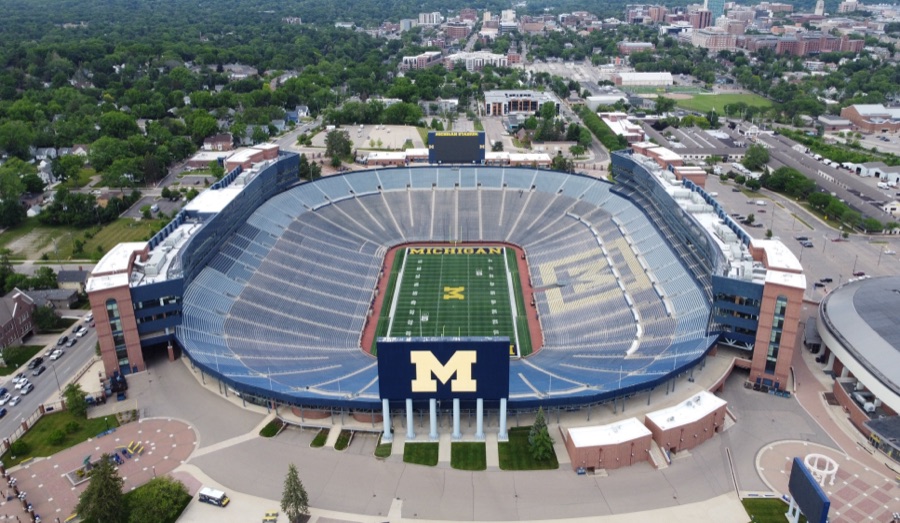
That is the team that comes to Michigan Stadium on Saturday at 3:30 p.m. Eastern, 12:30 Pacific, on CBS. Both numbers are about the line of scrimmage, and only one of them holds up when you take it apart.
The 413#
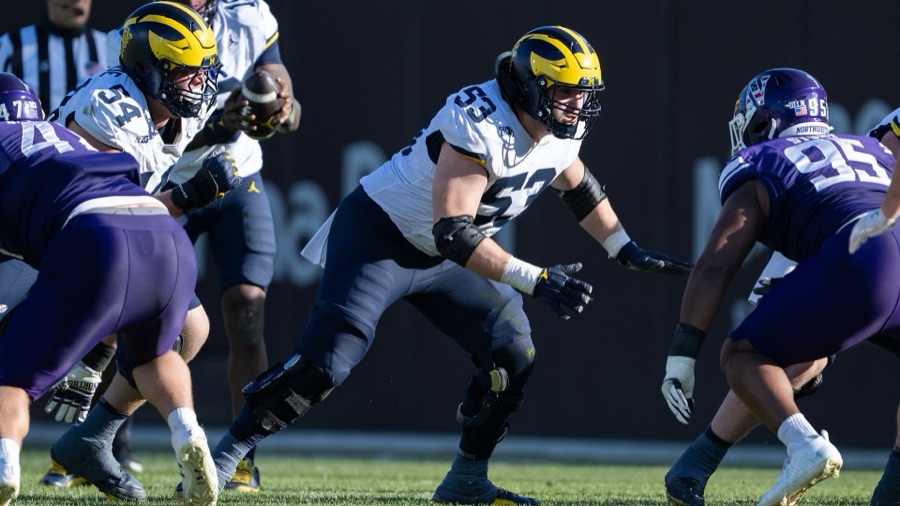
Most of the defensive figure is one game. On Friday night, October 2, in the first game at the new Ryan Field, Northwestern ran 55 times for 413 yards and won 34-13. Caleb Komolafe had 188 yards on 25 carries. Joseph Himon II had 162 on 10, with touchdown runs of 38 and 11 yards and a 47-yarder that set up another.
Nobody else has done that to a power-conference defense this season. In 322 team-games against a defense from the ACC, the Big Ten, the Big 12 or the SEC, by CollegeFootballData's box scores, Northwestern's 413 is the only rushing total of 400 yards or more. The next-highest is Louisville's 397 against Florida State, and the third is 369.
It was not Northwestern's normal either. A week earlier at Indiana, the same offense ran 27 times for 32 yards. Its best game against an FBS defense other than Penn State is 182 yards, against Colorado.
Take the 413 out and Penn State's conference run defense looks like this: Wisconsin ran 28 times for 120 yards, and USC ran 30 times for 129. That is 249 yards on 58 carries, 4.3 a carry, which would rank 12th in the conference instead of 16th. Ordinary, not good. USC beat Penn State on October 10 with Jayden Maiava, who threw for 301 yards and three touchdowns in the 31-23 win, and the AP had USC at nearly eight yards a play through three quarters. Wisconsin won 24-20 after Penn State had led by 17.
So one of the two numbers in that ranking is mostly a single night, and the evidence on either side of it says Penn State's run defense is a middling one that had a very bad Friday.
The other number#
Penn State's own running game has no single night to blame. It ran 36 times for 119 yards against Wisconsin, 22 for 48 at Northwestern and 31 for 68 against USC. College box scores count sacks as runs, and Penn State took five sacks in those three games, so the per-carry figure is a little worse than the runners have been. Take out every carry by quarterback Rocco Becht, sacks included, and everyone else on Penn State has 62 carries for 182 yards in Big Ten play, 2.9 a carry.
So the offense in Matt Campbell's first season at Penn State goes through Becht's arm. He threw 102 passes in the three conference games: 12 of 29 for 114 yards against Wisconsin, 26 of 41 for 243 and two interceptions at Northwestern, and 21 of 32 for 289 against USC. That last one was the game in which, by the AP's account, Campbell turned aggressive after two weeks of criticism for conservative calls, and Penn State converted three fourth downs on scoring drives.
Michigan's side of it#
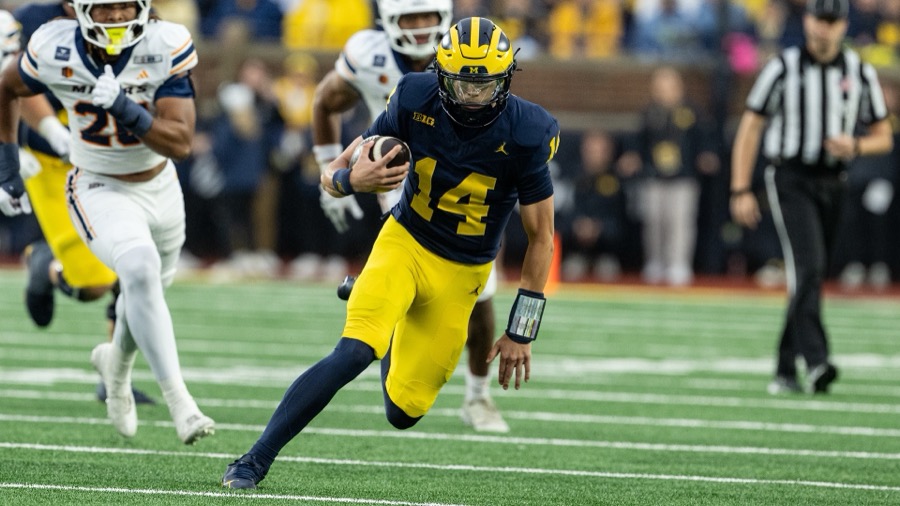
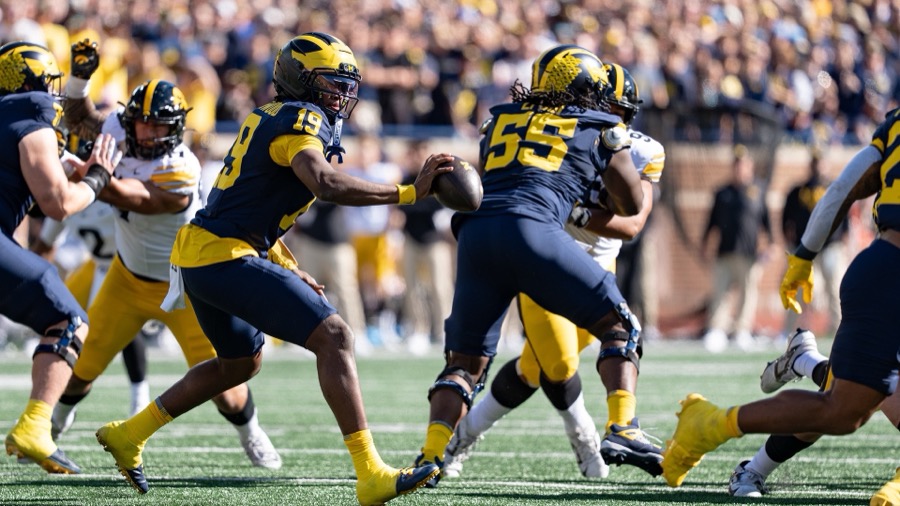
Michigan is a running team that has not run well in the Big Ten. It has carried 40 or more times in three of five games: 41 against Oklahoma, 42 against UTEP and 40 against Iowa. In two conference games it has 68 carries for 232 yards, 3.4 a carry and 12th of 18, and those 68 include four sacks of Bryce Underwood.
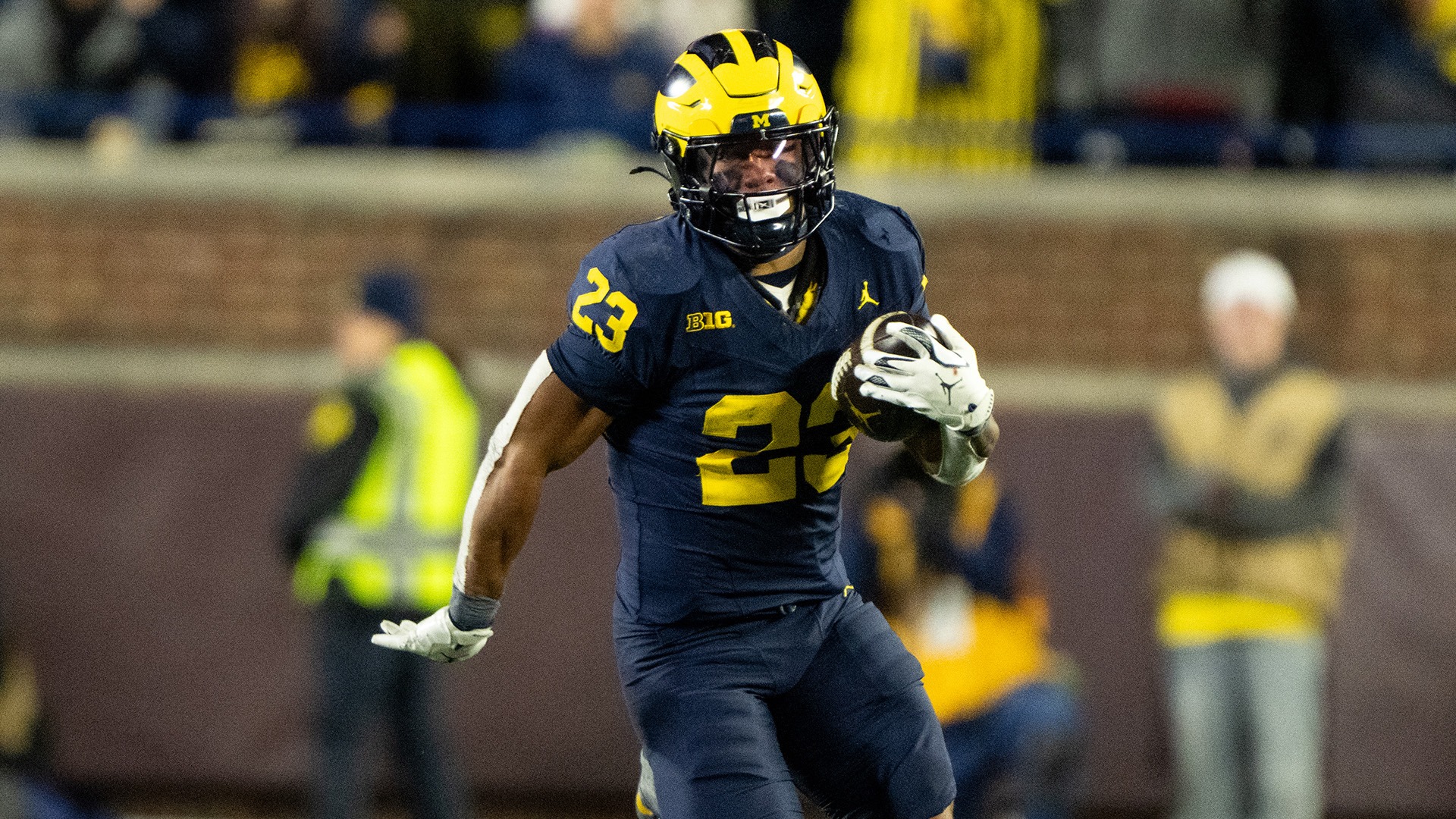
Split by the men carrying it, the two conference games are not one story. Jordan Marshall has 21 carries for 109 yards, 5.2 a carry. Savion Hiter has 22 for 62. Underwood has 24 for 56, sacks included. Marshall's share is the only line on that list that has worked against Big Ten defenses, and it is the smallest of the three.
The other half of the matchup runs Michigan's way. Michigan's defense has allowed 184 rushing yards on 64 carries in conference games, 2.9 a carry, fourth in the Big Ten. Iowa ran 24 times for 58 yards. Minnesota needed 40 carries for 126. Penn State's best rushing day in the conference is 119 yards, against Wisconsin, and it came on 36 carries.
Which leaves Saturday as a test of the defensive number, the one that might be a single game. If Penn State's run defense is the one Wisconsin and USC saw, a Michigan offense that has managed 3.4 a carry in the conference gets something close to what it has already been getting. If it is the one Northwestern saw, the team that turned the ball over three times at Minnesota gets a game in which it can carry the ball 40 times and throw when it chooses to rather than when it has to.
The call here is that Michigan runs for 150 yards or more on Saturday, even against the defense Wisconsin and USC saw. Those two carried about 30 times each. Michigan has carried 40 or more times in three of its five games, and 40 carries at the 4.3 a carry those two managed comes to about 172 yards. It fails the way the Minnesota game failed, with Michigan behind and the running game abandoned at 28 carries for 79 yards.
Sources: CollegeFootballData's 2026 team and player box scores for Michigan, Penn State and every FBS game through October 14, and its 2026 schedule results; Michigan Athletics' 2026 football schedule; the Associated Press game stories on Northwestern 34, Penn State 13 (October 2) and USC 31, Penn State 23 (October 10); the 2026 football rosters of Michigan, Penn State and Northwestern.