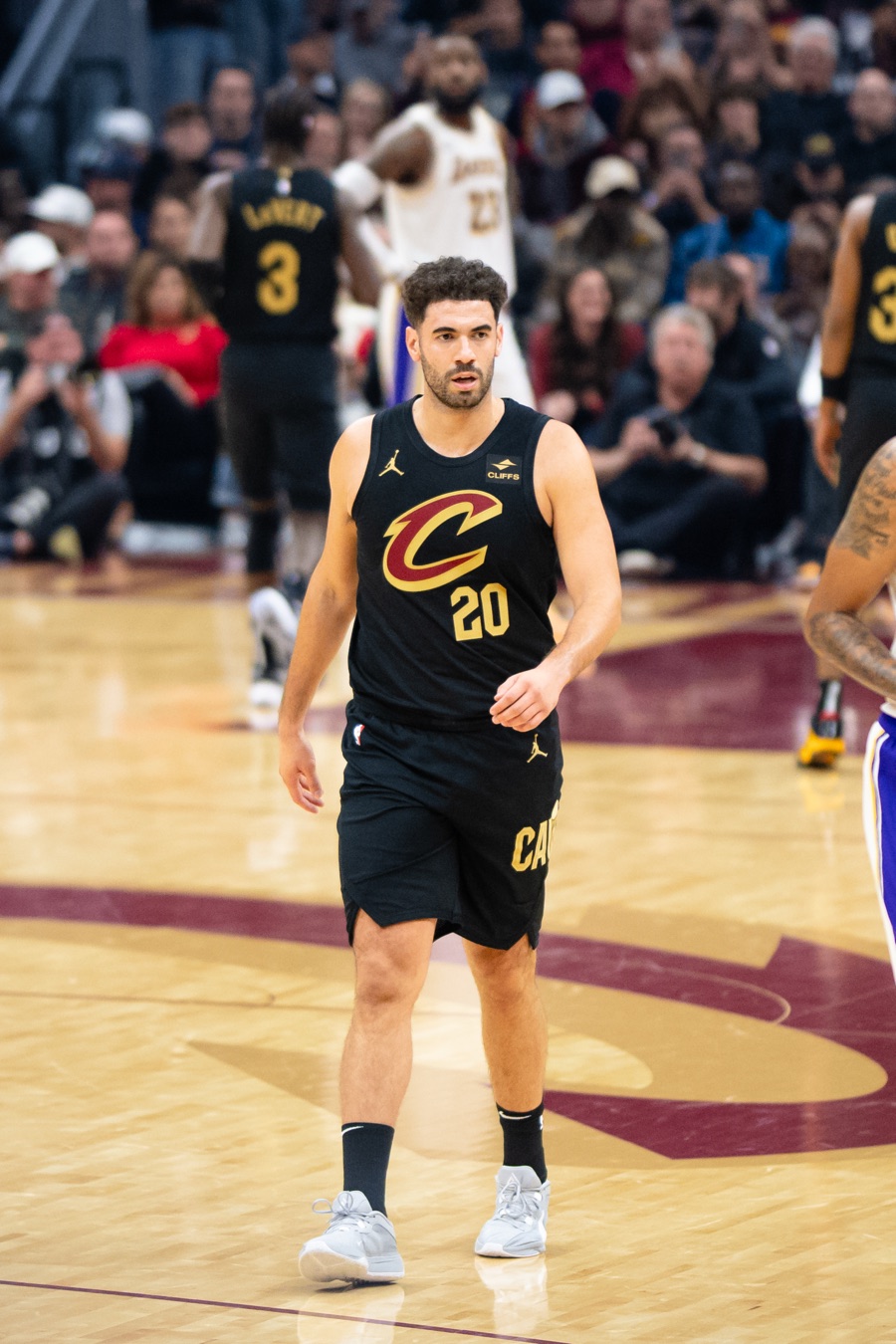
Klay Thompson Signed In Miami For More Than Twice What Golden State May Offer Anybody
Thompson's first year with the Heat is worth at least $5,600,000. The most Golden State may pay any player is $2,449,421, because De'Anthony Melton got the last exception the club could legally reach on July 31. The two contracts are one story told from either end.
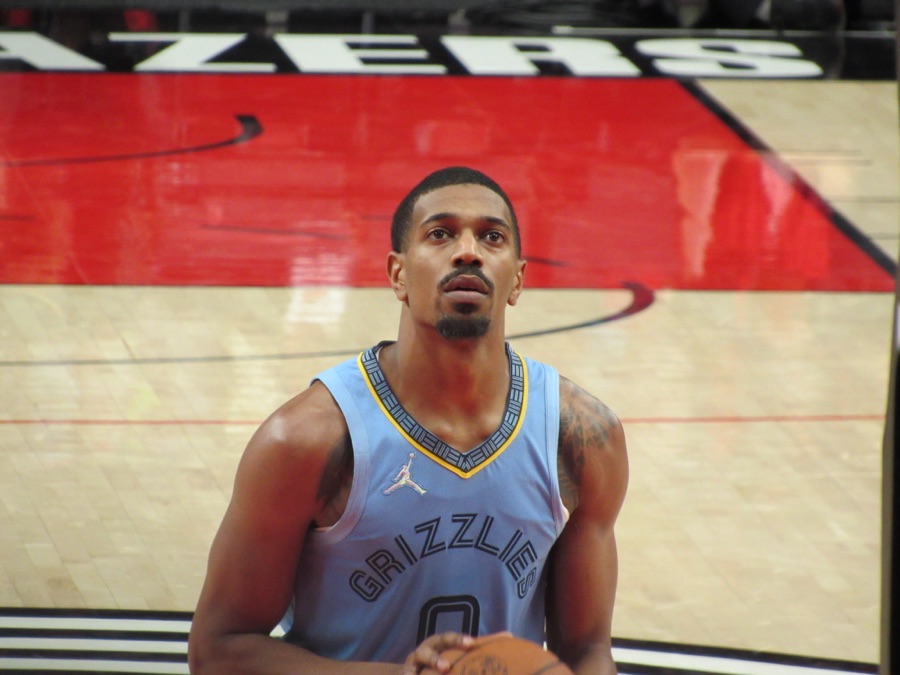
De'Anthony Melton re-signed in Golden State on July 31 for $6,064,000. Klay Thompson signed in Miami on Sunday night for at least $5,600,000.
Only one of those two clubs was allowed to write the second number. And the reason is the same reason the first one comes out at exactly $6,064,000 rather than at some round figure two sides shook hands on.
The reunion had a source, and then the same outlet closed it. Brett Siegel of ClutchPoints reported on August 14 that Golden State team sources would welcome Thompson back "with open arms" if he secured a buyout and reached free agency. On August 20 ClutchPoints published the opposite, that a reunion "could only happen if he were to become a free agent, and that's not by way of buyout," because "the Warriors cannot sign him due to the CBA rules." Thompson took the buyout the next day.
Melton's number is the size of an exception, not the result of a negotiation#
The taxpayer mid-level exception for 2026-27 is $6,064,000. Melton's 2026-27 salary is $6,064,000. The club did not arrive at that by haggling; it reached for the only tool it still had and handed over the whole of it.
The taxpayer mid-level is one payment rather than a running balance. There is no partial version and no remainder to carry, which is why Spotrac's exception table for the Warriors lists three rows and a taxpayer mid-level is not among them. There is nothing left to list.
Spending it carried a second consequence that is still binding in August. Using the taxpayer mid-level hard-caps a club at the second apron, which for 2026-27 is $221,686,000. Golden State sits at $216,439,590 against that ceiling, with $5,246,410 underneath it.
Miami had a bigger version of the same exception, and a piece of it still unspent#
The exception comes in two sizes and one number decides which a team may use. A club under the first apron gets the full non-taxpayer amount, $15,044,000, and may divide it across more than one signing. A club above the first apron is limited to the taxpayer portion.
Miami's total allocations are $198,573,457 against a first apron of $209,015,000, which is $10,441,543 of room beneath the line. It used $6,065,000 of the full exception on Tim Hardaway Jr. earlier in the summer and kept $8,979,000. Thompson was signed out of that remainder.
Golden State's allocations are $216,439,590 against the same $209,015,000, which is $7,424,590 on the wrong side of it. The Warriors' own page does show $15,044,000 of non-taxpayer mid-level in the available column. That column records an exception the league granted and the club has not spent. It is not a statement that spending it would be legal.
Two clubs, the same line, a thousand dollars between what each paid its veteran shooting guard, and only one of them still had money in the drawer afterwards.
What was left, and what Thompson went for#
What remains in Golden State's hands is the veteran minimum. The league reimburses part of a one-year minimum signed by a veteran of three or more years, so the charge against the team is fixed at $2,449,421 no matter what the player banks. Gary Payton II is the clean illustration on this roster: base salary $3,876,529, cap hit $2,449,421. Charles Bassey carries the same charge.
Thompson's first-year salary in Miami has been reported two ways and they have not converged.
| Reported by | Two-year total | First year |
|---|---|---|
| Shams Charania, ESPN, August 21 | $13,000,000 | |
| Spotrac, pending transaction, read August 24 | $6,341,463 | |
| Sam Amick and Darnell Mayberry, The Athletic, August 23 | $11,500,000 | |
| Ira Winderman, South Florida Sun-Sentinel, August 23 | $5,600,000 |
The four figures are two pairs rather than four guesses. A standard five percent raise on $6,341,463 produces a two-year total of $13,000,000, and the same raise on $5,600,000 produces $11,480,000. So there is an earlier reading, reported the day the agreement surfaced, and a later one reported after it was signed, and inside each the total and the first-year figure agree.
Golden State's ceiling does not care which is right. At $5,600,000 Thompson's first year is 2.3 times the largest charge the Warriors may write. At $6,341,463 it is 2.6 times.
The later pair is the one to back, and that is a call rather than a reading. Amick and Mayberry filed after the contract was signed rather than on the night it was agreed, and their number carries a term a derived figure would not invent, a 15 percent trade kicker. So when Miami's cap table stops listing Thompson as a pending transaction, his 2026-27 salary should read $5,600,000 rather than the $6,341,463 sitting in that row now. Betting against the cap sheet is uncomfortable, and the reason to do it here is that a pending row is the site's own arithmetic off a reported total, while a post-signing report is somebody reading the contract.
The wall holds even with the exception put back on the shelf#
There is a version of this where Melton is signed some other way and the taxpayer mid-level is still sitting there unspent. The outcome does not move.
Golden State is hard-capped at $221,686,000 with $5,246,410 of room. Thompson's first year comes in at $5,600,000 under the lower reading and $6,341,463 under the higher one. The lower figure alone overshoots the room by $353,590, the higher one by $1,095,053. A hard cap is not a tax line a club may choose to cross, so there is no signing at either number and no reduced version of it.
The rule that never had to be reached#
A fourth restriction sits behind all of this and it turned out to be surplus.
A team above either apron may not sign a player waived during the current season if his pre-waiver salary exceeded the non-taxpayer mid-level. Thompson's Dallas salary was $17,460,317, clearing the $15,044,000 threshold by $2,416,317, and Spotrac still carries that full figure as Dallas dead money against a roster now filled at 15 of 15.
ClutchPoints reported on August 20 that this is the thing that ends it, that Golden State "cannot sign him due to the CBA rules" once he is bought out. That report does not name which rule or address the timing, and the public explanations of this one describe an in-season buyout market without settling whether it reaches a player waived on August 21, ten weeks before anybody plays a game.
None of it had to be resolved. The price had already closed the door, and a restriction only decides an outcome when something on the other side of it was otherwise possible.
What is actually open#
Golden State carries 13 standard contracts against a limit of 15. The two jobs are real and the currency for them is $2,449,421 apiece. Marc Stein has reported interest in Brandon Williams and Georges Niang, Jake Fischer in Dalen Terry on a likely non-guaranteed camp deal, and Mike Dunleavy said on August 12 that he expects to carry 15 on opening night.
The call on those two jobs is that at least one of Williams, Niang and Terry is on the roster Golden State files on opening night. Three names against two openings is a comfortable ratio and the reasoning is mostly arithmetic. What would make it wrong is the ordinary thing: all three are men a club talks to in August, and clubs fill minimum spots in late September with somebody nobody has mentioned yet.
Those spots were never going to hold Klay Thompson. They were priced at the minimum on July 31, when the last exception this roster could reach went to a guard already in the building.
Sources: Spotrac 2026-27 cap tables for Golden State, Miami and Dallas, all three opened August 24, for every allocation, apron figure, exception row, cap hit, base salary, roster count and the Thompson dead-money line. Hoops Rumors, August 23, for the Charania, Amick and Mayberry terms and for Anthony Chiang of the Miami Herald confirming the signing was official. ESPN, August 23, for the two-year structure and the player option. Winderman's itemisation via Hoops Rumors. Stein, Fischer and Dunleavy's August 12 availability via Hoops Rumors and NBC Sports Bay Area. Brett Siegel, ClutchPoints, August 14, for the "open arms" sourcing on the Golden State half. Jackson Stone, ClutchPoints, August 20, 6:27 p.m. ET, for the report that a buyout is the route that forecloses a reunion; it does not name the rule it is invoking.