Coca-Cola, Meijer And Google Gemini Are Going Inside The Big House At An Undisclosed Price
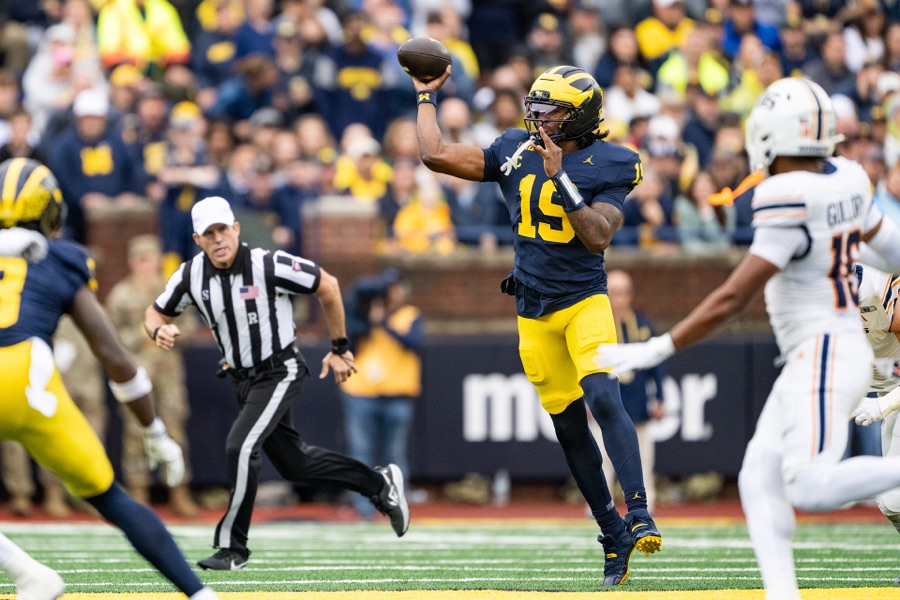
Michigan Athletics announced the Leaders and Best Champion Partners Program on Wednesday morning, putting advertising inside a stadium that has gone ninety-nine years without much of it. Coca-Cola, Meijer and Google Gemini are the first three. The release states the reason, which is paying the players. It does not state a price, and neither has anybody else.
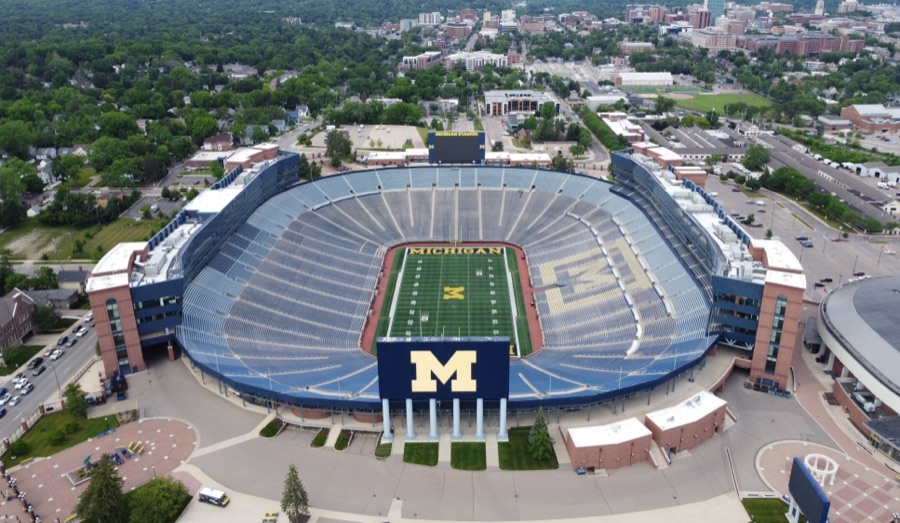
Michigan Stadium was paid for by selling something. In 1927 the university financed the construction with 3,000 bonds at $500 each, sank 72,000 seats into a hole in the ground, and opened on October 1 with a 33-0 win over Ohio Wesleyan. The building cost $950,000. Fielding Yost had hoped for somewhere between 100,000 and 150,000 and been talked down.
Three thousand bonds at $500 raises $1.5 million. The stadium cost $950,000. Whatever else Michigan has been in ninety-nine years, it has never been bad at this.
On Wednesday morning the department announced what it is selling now.
The release, written by Dave Ablauf, calls it the Leaders and Best Champion Partners Program, and it brings advertising inside Michigan Stadium. Three companies are in the first group. Coca-Cola becomes Michigan's exclusive beverage provider. Meijer, which has been a departmental partner for years, moves inside the bowl. The third is Google Gemini, which means that a stadium built the year Babe Ruth hit sixty home runs will carry signage for a chatbot.
The seller is Learfield's Michigan Sports Properties, which holds Michigan's multimedia rights and runs its sponsorships.
The building is not going from nothing to something, and Michigan's release is careful about it in a way worth slowing down for. The stadium has been "intentionally protected from extensive commercialization, with limited in-stadium branding historically restricted to select elements." Protected from extensive, restricted to select. What changed on Wednesday is the degree and the category, not the existence.
What the partners are buying arrives in the release under the word activations, which is a word built to hide furniture. Underneath it: on-field and stadium-based branding, scoreboard integrations, end zone placements, and digital and in-game sponsorship. Michigan published two renderings alongside the announcement, one of the field pads and one of the scoreboard, so the department is not pretending you will fail to notice. All signage is held to maize, blue or white.
One placement is worth naming on its own. 247Sports' account of the announcement has the three logos going on the scoreboard, on the foam pads near the field, and "even on a new version of Michigan's 2023 national championship banner." A banner is what a stadium hangs to say what it won. Selling space on it is a different act from selling the pads, and it is the sharpest available illustration of the department's own distinction between degree and existence.
Warde Manuel, the athletic director, addressed the obvious objection in the release before anybody could raise it. "This is not a departure from who we are, but an evolution," he said, and later, that any partner presence would be introduced "with care and purpose." He also gave the reason, and the reason is not decorative. The partners' investment, he said, "will help position Michigan to thrive in the evolving revenue-sharing and NIL landscape."
That is the House settlement, and it is the only part of this story with a published number attached.
Schools that opted in may pay their athletes directly, out of a pool that started at roughly $20.5 million per school for 2025-26. Clemson's own public explainer sets out how the ceiling is calculated: 22 percent of the average media, ticket and sponsorship revenue across the power-conference schools, recalculated periodically. (A 2026-27 figure of about $21.3 million has been reported, on a roughly four percent annual step. The settlement's own stated mechanism is a periodic recalculation rather than a fixed escalator, so the first-year number is the one used here.)
Read the formula again, because sponsorship revenue is inside it. Every dollar of stadium signage sold across the group lifts the average the cap is struck from, which lifts the amount every school in the group is permitted to pay. Michigan's advertising sits on both sides of that equation. It helps fund the bill and it helps set it.
What is not published is what Michigan got. No dollar figure appears in the release. No term, no annual value, no floor. Nothing has surfaced since Wednesday morning from Michigan, from Learfield, or from anyone writing about it. 247Sports, writing the story up the same day, ended in the same place: "It is unclear what compensation Michigan athletics will receive from its three partners." A program announced with its justification stated out loud and its price withheld is a fact about the announcement, and the honest move is to say so and stop there. The number is not available. Nobody who tells you what it is has it either.
The last item on the inventory is the one to mark. The program's elements can include, the release says, "an exploration of jersey patches and additional premium assets."
That is no longer hypothetical. The NCAA's Division I Cabinet approved commercial patches on January 23, effective August 1: up to two extra commercial logos on uniforms and apparel through the preseason and regular season, one on equipment, four square inches apiece, none in NCAA championships. Josh Whitman, the Illinois athletic director who chairs the Cabinet, said the vote reflected a commitment "to drive additional revenues and fully fund those benefits." The benefits are the payments to the athletes who would be wearing the patch.
LSU announced a jersey patch deal with Woodside Energy in February and called it first-of-its-kind. So the thing Michigan is exploring has been legal for nineteen days and done elsewhere for six months.
None of which makes the decision wrong. The money is real, the obligation it feeds is real, and a department that declined to sell this inventory for ninety-nine years while much of the sport sold theirs was making a choice with a cost. Michigan is sixteen days from hosting Western Michigan, and the maize-and-blue rule means most of the 107,601 will need a second look to find the ads at all.
Michigan told everybody what the bonds cost. It has not told anybody what the signage costs.
Sources. MGoBlue.com, "Michigan Athletics Launches Leaders and Best Champion Partners Program," by Dave Ablauf, published August 19, 2026 at 9:00 a.m. and read the following morning, for the program name and date, the three inaugural partners, Coca-Cola's status as exclusive beverage provider, the role of Learfield and its Michigan Sports Properties team, the full activation inventory including the jersey patch line, the maize, blue or white signage standard, the two published renderings, the "intentionally protected from extensive commercialization" sentence and every Warde Manuel quotation. MGoBlue.com's Michigan Stadium facility page for the 1927 construction, the sale of 3,000 bonds at $500 each, the $950,000 construction cost, the initial 72,000 capacity, Fielding Yost's hope for between 100,000 and 150,000, the below-ground construction, the October 1, 1927 opening against Ohio Wesleyan and the 107,601 capacity in place since 2015. MGoBlue.com's 2026 football schedule for Western Michigan on Saturday, September 5 in Ann Arbor at 7:30 p.m. NCAA.org, "DI Cabinet approves commercial patches for uniforms, equipment and apparel," January 23, 2026, for the rule change, the August 1 effective date, the allowance of up to two additional commercial logos on uniforms and apparel and one on equipment, the four-square-inch limit, the exclusion from NCAA championships and the Josh Whitman quotation. Clemson University Athletics' public House settlement and revenue-sharing FAQ for the approximately $20.5 million 2025-26 cap and for the formula setting it at 22 percent of average media, ticket and sponsorship revenue, recalculated periodically. Joe Cox, Sports Illustrated, December 5, 2025, for the reported 2026-27 figure of about $21.3 million and the roughly four percent annual step, which that account describes as a proposal, and which is the reason the first-year number is the one carried above. Ryan Young, Sports Illustrated, February 16, 2026, for LSU's jersey patch agreement with Woodside Energy and for LSU's own description of it as first-of-its-kind. Von Lozon, Maize n Brew, August 19, 2026, and Brandon Carr, All About Ann Arbor, August 20, 2026, both read for a dollar figure and neither carrying one. 247Sports' August 19 account, read at the morning edit on August 20, for the championship-banner placement and for its own statement that the compensation is unclear; the banner line is carried to that outlet rather than to the release, because the release was not re-opened at the edit and nothing here asserts what it does or does not contain. The Detroit News's August 19 account of the announcement returned HTTP 402 and was not opened, so nothing here rests on it. Nobody from this site attended or was briefed on anything described here.