Fourteen Trades Into July, One Top-100 Name Has Moved, And Not For A Rental
The Giants take an inventory of expiring contracts into Monday's deadline. The only market evidence available says expiring contracts are being paid in lottery tickets. And a buyer absorbs two and a half times as much salary for Robbie Ray as for Tyler Mahle, whose component numbers are nine hundredths of a run apart.
Fourteen trades have been completed across the major leagues this month. Exactly one of them returned a top-100 name, and it did not return one for a rental.
That deal was Boston sending left-hander Connelly Early, No. 56 on MLB Pipeline's preseason top 100, to Washington for Curtis Mead. Mead is an infielder with control years left on him. He is not an expiring contract and he was never on anybody's rental board.
Two things about Early belong in the open before the count leans on him. He is twenty-four, and the seventeen starts he has made this season are his first full year in a major league rotation, which makes him a top-100 name in the preseason sense and a working big-league starter in the present one. He has also been sidelined since early July with elbow inflammation. Both facts cut the same way. The one prospect-grade asset that changed hands this month changed hands at a discount, in something better read as a challenge trade between two young players than as a prospect package, and that weakens the control side of the split below rather than the rental side. The rental side is the one this column is about.
Everything else that moved in July went for something considerably smaller.
The criteria first, then the board#
A price sheet is only worth reading if it says what it is pricing against. This one prices against completed transactions in the same month, at the real return, from the league's own deal tracker. Not what a package should fetch. What packages have fetched.
First the rentals and the salvage moves, which is most of the month:
| Deal | Date | What came back |
|---|---|---|
| Lance McCullers Jr. and Colton Gordon, Houston to Milwaukee | Jul 15 | OF Jadyn Fielder, undrafted in 2024, hitting .233 at Class A |
| Aaron Civale, Athletics to Chicago | Jul 18 | RHP Aiden Moffett, undrafted in 2025, a 9.67 ERA in A-ball |
| Nate Pearson, Houston to Kansas City | Jul 22 | RHP Max Martin, a 10th-round pick in 2025 |
| Ron Marinaccio, San Diego to Pittsburgh | Jul 23 | International bonus pool money |
| Kameron Misner, Kansas City to Philadelphia | Jul 25 | Cash |
| José Urquidy, Pittsburgh to Chicago | Jul 26 | RHP Felix Doroteo, signed in 2025, pitching in the complex |
| Scott Blewett, St. Louis to Athletics | Jul 26 | Cash |
| Johnathan Rodríguez, Baltimore to Pittsburgh | Jul 27 | Cash |
Four of those eight returned no player at all.
Now the players with control years, which is where the actual prospects went:
| Deal | Date | What came back |
|---|---|---|
| Curtis Mead, Washington to Boston | Jul 25 | LHP Connelly Early, preseason top 100 |
| Seth Halvorsen, Colorado to Los Angeles | Jul 20 | OF Landyn Vidourek, the Dodgers' No. 25, and RHP Nick Frasso |
| Logan O'Hoppe and Chase Silseth, Angels to Texas | Jul 29 | SS Angel Arredondo, outside the Rangers' top 30 entering the season |
Three of the fourteen are not itemized above: two multi-player swaps on July 10 and a July 14 deal for a player to be named later. The names that moved in them are a seventh-round pick from 2023 and an eighth-rounder from 2025, so they do not change the count.
The split is the finding. Control bought a top-100 name this month. An expiring contract did not.
The limit on that, stated before anybody leans on it. Fourteen deals is a real sample of the bottom of this market and no sample at all of the top. Tarik Skubal, Freddy Peralta, Clay Holmes, Brady Singer and Eugenio Suárez were all still with their clubs on Thursday morning, and the premium inventory transacts in the last four days every year. So these fourteen deals establish a floor for what a rental returns. They do not establish a ceiling, and Luis Arraez is being shopped at the ceiling: third on MLB Trade Rumors' top 50 deadline candidates, tenth on ESPN's board at a 95 percent trade probability.
What a buyer actually takes on#
Ray costs a buyer two and a half times what Mahle does, and their FIPs are nine hundredths apart
All three are expiring contracts. Bar length is the money a buyer takes on from August 3 to the end of the regular season, derived as 30 percent of each 2026 salary, since the deadline falls about 70 percent of the way through the schedule. Sample is in the left column and the headline performance number is at right. The two highlighted rows are the rental starters.
Look at the top row against the third. Two expiring starters who will pitch September games for somebody else, and one of them costs $4.5 million more.
The derivation is worth checking rather than trusting. Thirty percent of Ray's $25 million is $7.5 million, and MLB Trade Rumors, working independently, has his remaining salary at roughly $7.4 million. Thirty percent of Mahle's $10 million is $3.0 million, the figure Andrew Baggarly reported at The Athletic this week. The method lands on two outside numbers, which is the only reason to print it.
The two rental starters are the same pitcher#
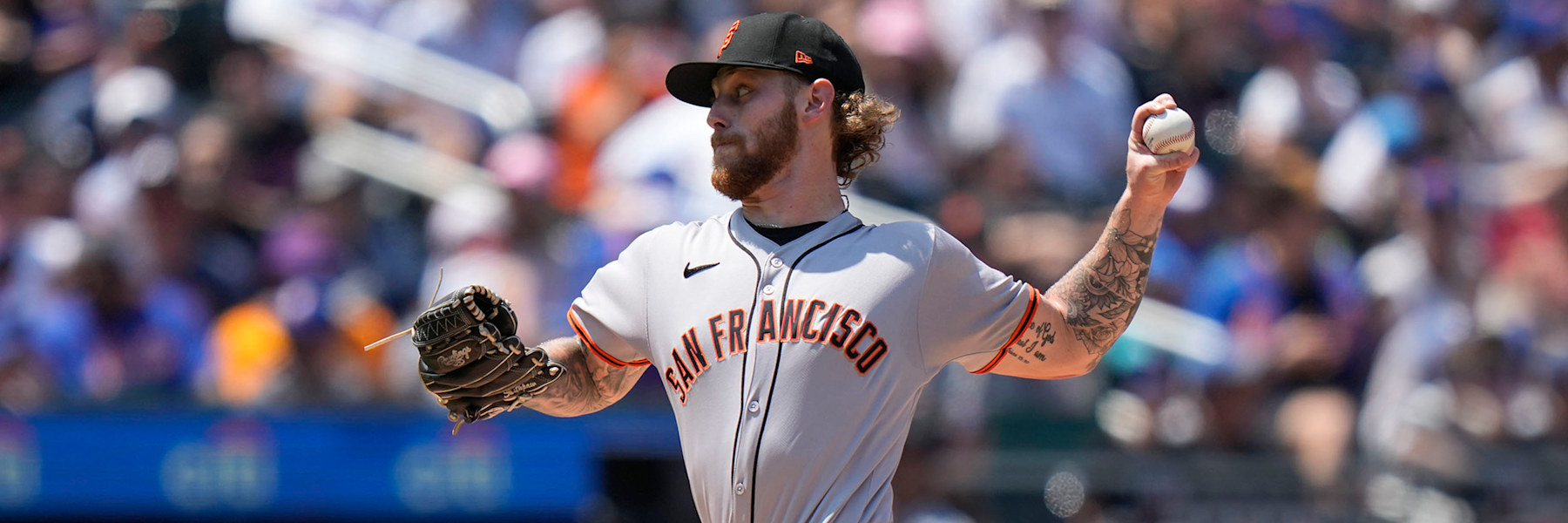
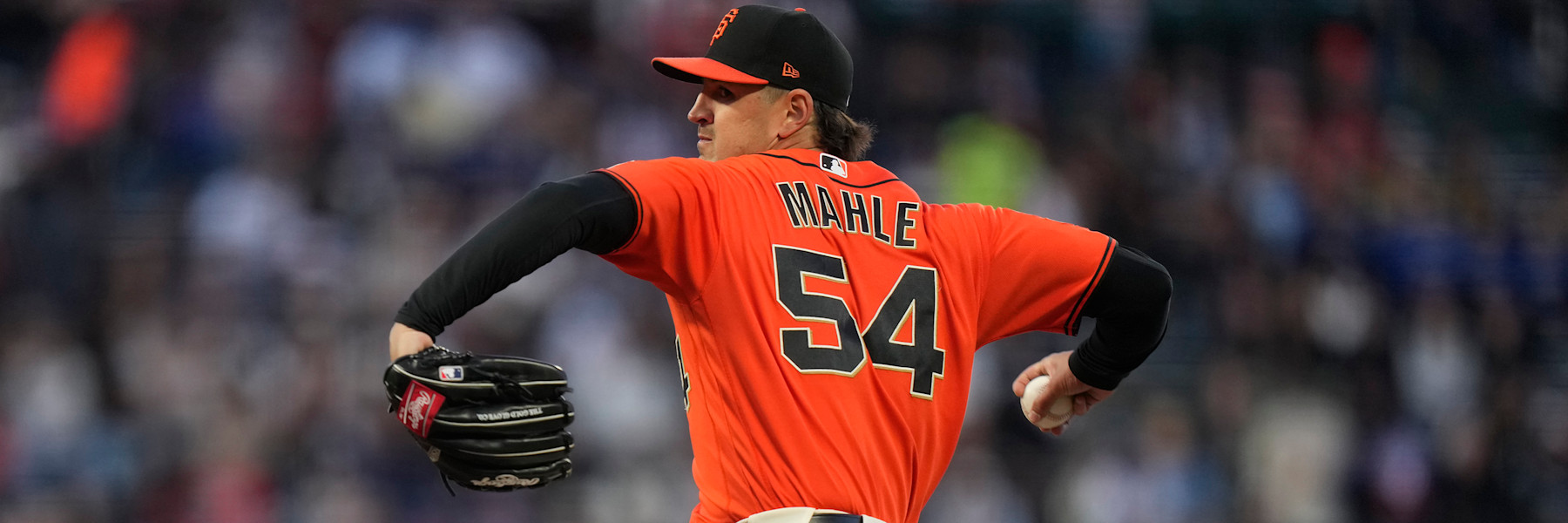
Ray has a 3.16 ERA. Mahle has a 4.96 ERA. That is a gap of 1.80 runs, and it is the entire basis on which the market has separated them: Ray is tenth on the MLB Trade Rumors board and Mahle is twenty-sixth.
Their Fielding Independent Pitching numbers are 4.51 and 4.42.
FIP estimates what a pitcher's ERA would be with his defense and his sequencing stripped out, leaving strikeouts, walks, hit batsmen and home runs. Nine hundredths of a run separates them. Underneath, Mahle is better in both directions: 8.1 strikeouts per nine innings against Ray's 7.8, and 3.5 walks per nine against Ray's 4.3. FanGraphs has them level at 0.8 wins above replacement.
Now the sample sizes, since they decide how much of this to believe. Ray has thrown 116.2 innings across 20 starts, Mahle 89.0 across 17. Both are well past the point where strikeout and walk rates mean something, and both are short of the point where one season's gap between ERA and FIP says more about the pitcher than about the innings behind him. Strongly indicated rather than proven. I would bank the direction of the convergence well before the magnitude.
The confound is defense. Ray and Mahle have thrown in front of the same fielders all year, which is what makes the comparison clean, and it also means neither man's ERA travels with him.
Two names came off the board this week, and one of them raises the price on a third#
Casey Schmitt tore the meniscus in his left knee on July 27 and went on the injured list the next day, hitting .271 with 21 home runs in 98 games on a pre-arbitration contract. Nobody sells a player at that price, so his value here is what his absence does to somebody else. Schmitt was going to take second base once Arraez was moved. Trading Arraez now costs more than it did Sunday, because the replacement no longer exists.
Harrison Bader has played 15 games. He has been out since May 30 with plantar fasciitis in his left foot, the foot got worse in a scooter accident on the night of July 25, and no MRI result was public as of Thursday morning. Fifteen games is the number that prices him, and it prices him at nothing.
The no-trade wall runs opposite to the speculation#
| Player | Signed through | No-trade protection |
|---|---|---|
| Matt Chapman | 2030 | Full |
| Willy Adames | 2031 | Full |
| Rafael Devers | 2033 | None |
Chapman and Adames can each veto any deal outright. Devers, the largest contract on the roster, cannot. Much of the coverage this week has it backwards, and a contract carrying negative surplus value plus an absolute player veto is immovable in a way that a merely expensive contract is not.
Jung Hoo Lee, where two things that look contradictory are both true. Bob Nightengale of USA Today reported that Buster Posey and his staff have decided Lee will not be available, which puts him with Logan Webb as the two players this front office will not move. ESPN separately has Lee eighteenth on its deadline board at a 40 percent trade probability. Both can hold at once: one is a report of a club's decision, the other an estimate of interest, and a team can decline to sell a player other teams want. What does not exist this morning is a named report that the Giants have made him available.
The three calls this desk already has on the board, before Monday grades them#
Stated on July 26, in the words they were filed in, and two of the three resolve at 6 p.m. Eastern on Monday.
Neither Willy Adames nor Matt Chapman is traded by the August 3 deadline. The reasoning was the no-trade clauses above plus production below league average. It has not moved, and nothing this week has moved it.
Luis Arraez is traded, and the headline piece coming back is not a consensus top-100 prospect. The first half was close to a freebie when it was filed, and everything above has made the second half easier rather than harder, which is worth saying out loud rather than quietly enjoying. If a top-100 name comes back Monday, the call is a miss and the market read behind it was wrong.
Robbie Ray finishes 2026 with a season ERA above 4.00. This one has moved against the desk. He was at 3.34 on July 26 and he is at 3.16 now, having thrown six scoreless innings since, so he needs to be worse from here than he was on the day the call was made for it to land. The FIP argument is unchanged and the ERA is going the wrong way. Both are true at once.
And one new call. From August 1 through the end of the regular season, Mahle posts a lower ERA than Ray. It follows from the components rather than the results, a stranger with two box scores can score it, and if a trade sends the two to different defenses, that confound is mine to have accepted in advance.
Trade returns and dates are the league's official 2026 deadline tracker, cross-checked against Yahoo Sports' tracker, both read July 30. Prospect standing is MLB Pipeline and each club's organizational list at the date of the deal. Giants stat lines are ESPN team pages read July 30, reflecting games through July 29; FIP, xFIP and WAR are FanGraphs, same date, and are model estimates rather than measured results. Money owed after August 3 is derived as 30 percent of the 2026 salary and validated against two independently reported figures. Known weaknesses: fourteen completed deals is a sample of the low end of this market only, none of the premium inventory has moved yet, and a single season's gap between a pitcher's ERA and his FIP is suggestive rather than decisive at these innings totals.
This piece stated that Harrison Bader "has played 15 games." He had played 30, with a .170/.198/.358 line, and had been out since May 30, so the figure was already final when the piece ran and could not have moved after it. The house's own injury record carried 30 throughout. Doubling the sample does not rescue the season the piece describes, and the point it supports, that Bader is not a trade asset, is unchanged.
DS
Sources: MLB.com deal tracker, Yahoo Sports, ESPN, FanGraphs, MLB Trade Rumors, MLB Pipeline, Baseball America, Andrew Baggarly (The Athletic), Bob Nightengale (USA Today), NBC Sports Bay Area.