Golden State's First 44 Games Paid Both Prices Of Curry's Own Bar, 39 Wins And 42
Curry defined meaningful basketball himself in April, and the definition converts to a win total. It carries two of them. Across five full seasons the last team into the Western Conference play-in has won a median of 39 games, and the cheapest ticket into an actual first-round series was 36. Golden State finished 37-45, and the 44 games it played before Jimmy Butler tore an ACL were a 47-win pace.
The median price of a Western Conference play-in berth, across the five full seasons the tournament has existed, is 39 wins.
Golden State won 37 last season and got in anyway, because the eleventh-best team in the West won 26. That gap is not something a front office gets to plan around.
The bar is not mine to set#
The phrase does not need a threshold invented for it. Curry defined it himself, at a practice in Los Angeles on April 14, the day before a 9-vs-10 elimination game against the Clippers, and he was specific.
It was, he said, "a way for us to, with the core of me, Draymond, Steve, when Klay [Thompson] was here, it was just an idea of trying to keep it together and still be competitive and still try to chase championships." Applied to the elimination game in front of him: "an opportunity for us to keep our season alive and give ourselves a chance to get into a playoff series." (Kenzo Fukuda, ClutchPoints, published April 15, with an independent transcription of the same availability at NBC Sports Bay Area.)
That sentence carries two prices and they are not the same number. Reading one is be alive in April, which operationally means finishing tenth or better in the West and playing in the tournament. Reading two is the prize he actually named, a first-round series.
Here is what each has cost, in the West, in the five full-length seasons the current play-in format has run. The 2020-21 season is excluded because it was 72 games and its win totals are not comparable.
| Season | Last team into the play-in | Worst record to reach a first-round series |
|---|---|---|
| 2021-22 | San Antonio, 34-48 | New Orleans, 36-46 |
| 2022-23 | Oklahoma City, 40-42 | Minnesota, 42-40 |
| 2023-24 | Golden State, 46-36 | LA Lakers, 47-35 |
| 2024-25 | Dallas, 39-43 | Memphis and Golden State, 48-34 |
| 2025-26 | Golden State, 37-45 | Portland, 42-40 |
Entry has cost a median of 39 wins and a mean of 39.2. A series has cost a median of 42 and a mean of 43.0. The spread on both is enormous, which is the first thing worth saying about them: 34 wins was enough to enter in 2022 and 46 was not enough to escape the tournament in 2024. Five observations is five observations.
Golden State sits below both medians and set the entry price itself last April.
The Warriors have already played at that price, for 44 games#
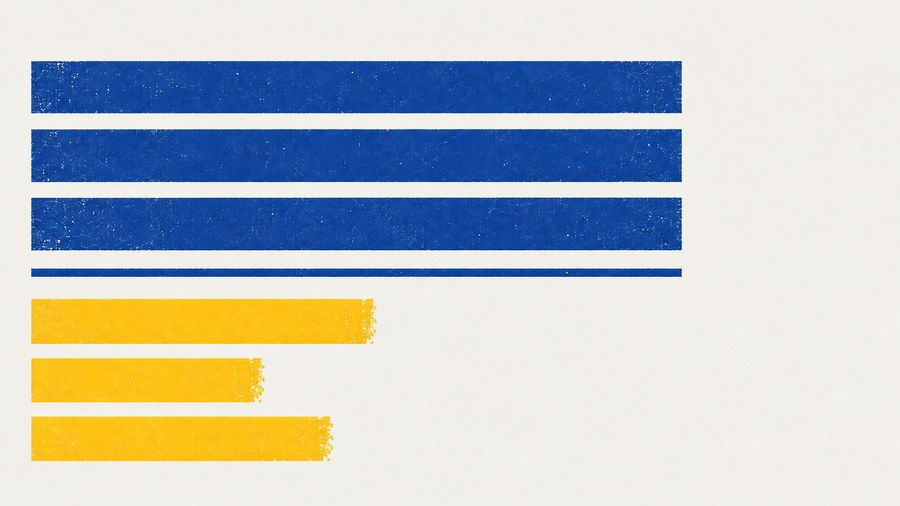
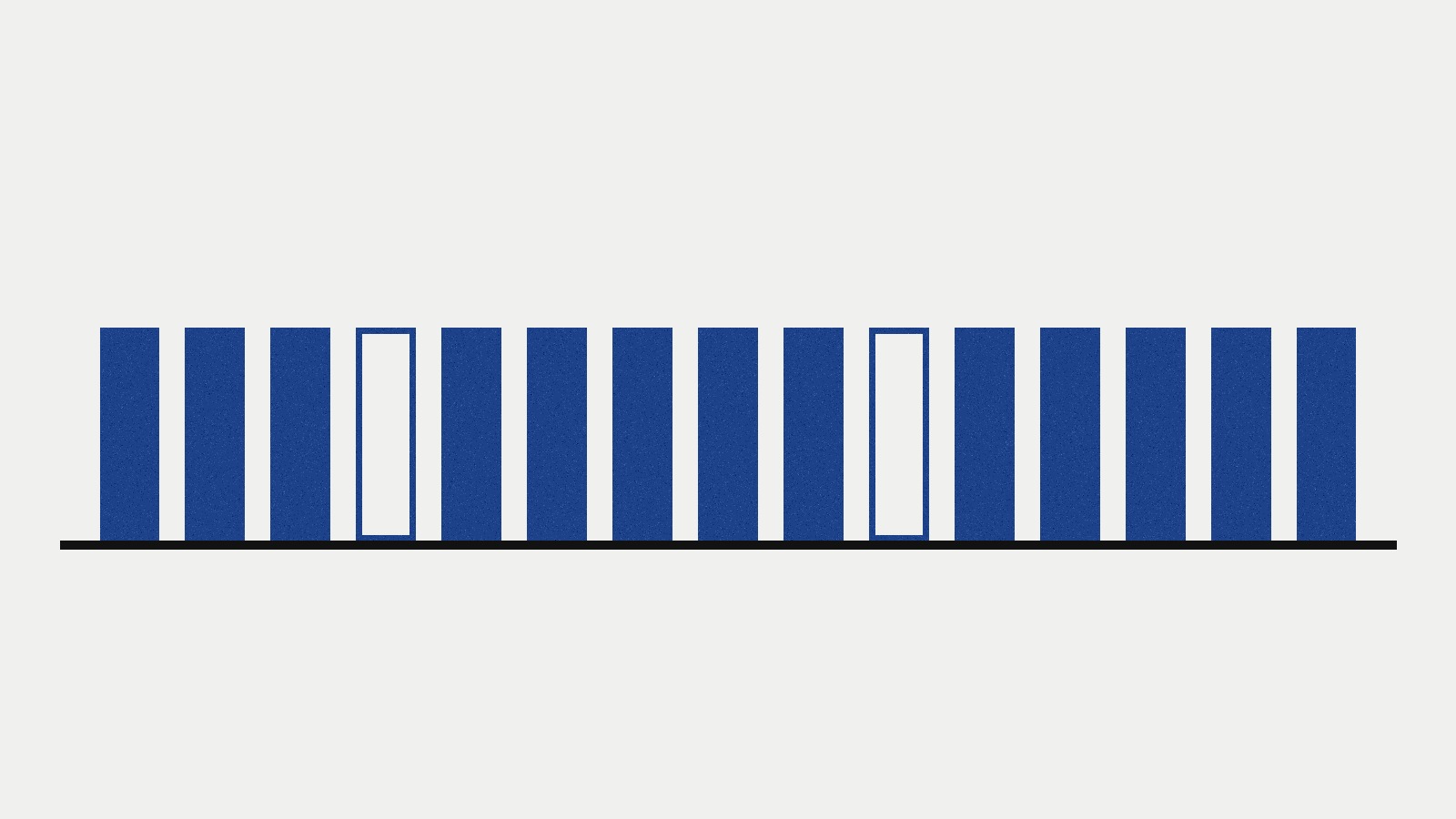
Golden State's first 44 games paid both prices of Curry's bar and its last 38 paid neither
Wins per 82 games. The two price lines are the five-season medians from the table above and are measured results. The three Golden State rows are 2025-26: the full season is a counted record, the two segments are that record split at Jimmy Butler's ACL tear on January 19 and extrapolated to 82 games, which is arithmetic and not a projection.
Look at the entry price and the first-44-games bar. The thing Curry asked for was not out of this roster's range at any point last season; a team playing at its own first-44-game rate clears both prices with room, and 44 games is a long enough sample that the rate is allowed to be the roster rather than the weather.
Then look at the bar under it. The same group, minus Butler, played at 26 wins.
Joe Lacob supplied those splits himself on Tim Kawakami's TK Show on August 12, reported by Kevin Topley and Dylan Grausz at NBC Sports Bay Area and relayed by Hoops Rumors: 25-19 before Butler tore an ACL on January 19, and 9-18 in the games Curry missed with a late-season knee condition. The full-season record is 37-45. Those two splits are cut on two different knives and they do not add to it: 25-19 is everything before one date, and 9-18 is a set of games scattered around a different absence.
Which absence did it, and the honest answer#
The 9-18 covers 27 games. Curry missed 39. Those are not the same set, and the record in the other 12 has not been reported, so nobody outside the building can subtract one from the other.
Worse for anyone wanting a clean answer: Butler's window and Curry's window overlap. The Butler tear is January 19 and the knee stretch is described as late-season, which puts most of both inside the same 38 games. The data cannot separate them. You can read the collapse as a Butler effect or a Curry effect and the published record supports either, which is a real finding rather than a dodge, because it means every projection you will read this autumn is picking one and not telling you.
What is not in dispute is that neither segment is next season's team. The 25-19 stretch was played with Butler and with Moses Moody, who ruptured a patellar tendon on March 23 and has no return date. Butler will not be available on opening night, and the club's own nearest comparable, De'Anthony Melton's return at exactly twelve months, puts him in February. The version of this roster that clears Curry's bar is not the version that opens on October 21.
The other half of the question, which is the shot#
Curry becomes eligible on August 29 for an extension of up to two years and $136.7 million, on top of the fully guaranteed $62,587,158 he is owed for 2026-27 (Anthony Slater, ESPN, August 11). Two more years covers 2027-28 and 2028-29, which are his age-39 and age-40 seasons on the reference convention that dates a season by a player's age on February 1. He is 38 now and turns 39 on March 14, 2027.
So: is he still good enough to be worth those years? Here is his own record, which beats any comparable set I could build.
| Season | Age | G | TS% | eFG% | 3P% | 3PA | Usage | BPM |
|---|---|---|---|---|---|---|---|---|
| 2021-22 | 33 | 64 | .601 | .554 | .380 | 750 | 30.8 | 5.8 |
| 2022-23 | 34 | 56 | .656 | .614 | .427 | 639 | 31.0 | 7.5 |
| 2023-24 | 35 | 74 | .616 | .573 | .408 | 876 | 31.3 | 5.2 |
| 2024-25 | 36 | 70 | .618 | .572 | .397 | 784 | 29.8 | 6.3 |
| 2025-26 | 37 | 43 | .637 | .587 | .393 | 484 | 32.5 | 5.4 |
The efficiency did not go anywhere. His true shooting last season was the second best of the five, his effective field goal percentage the second best of the five, and he did it carrying the highest usage of the five at 32.5 percent. Box plus-minus fell from 6.3 to 5.4, which is the one rate here that moved the wrong way, and it is also the noisiest thing in the table. What actually collapsed was the denominator: 43 games.
The three-point shot is drifting, and it is drifting slowly. Over his last three seasons he has shot .400 from three on 2,144 attempts against a career mark of .422. That is a large enough sample to believe a two-point decline is real. Season to season it is not: at 484 attempts the standard error on .393 is about 2.2 points, so last season and the one before it are indistinguishable from each other and both are indistinguishable from .410.
I did not build a comparable set of guards who played at a starter's level at 39, because that list is selected on the outcome it is being used to predict. Every name on it is a name that did not break down at 38, which is the entire question.
Two games are not a sample either. He went for 35 against the Clippers on a Wednesday and 4-of-16 in Phoenix on the Friday, and a column that reads those as a trajectory is reading tea leaves with a decimal point.
Called Shots#
Three, and they are filed against a ledger that already carries a house call that Golden State misses the play-in entirely. I am arguing with one of them in public and saying so.
One: Golden State finishes 2026-27 with fewer than 39 wins. That is the median entry price. This roster did not pay it last season, and it opens without Butler and without Moody. Falsified at 39 wins or more.
Two: Curry has not signed an extension when the Warriors open the season on October 21. The eligibility window opens August 29 and runs 53 days into that date. There is a live house call that he signs a one-year extension rather than the reported two-year maximum; if this row is right, that one is wrong. This is a timing call rather than a term call. The most informative variable for both sides, whether the knee holds across a full season, is unknown until the season is played, and neither party has to decide before it is.
Three: Curry shoots below .400 from three in the 2026-27 regular season. He has been under .400 in two of the last three years, and the direction across 2,144 attempts is down.
Revisit all three on April 18, 2027, except the second, which settles on October 22, 2026.
Standings and Curry's season lines are Basketball-Reference, read August 20. The cutline table takes the tenth-place team in the Western Conference as the last club into the play-in and the worst regular-season record among the eight Western clubs that reached a first-round series as the price of a series. 2020-21 is excluded because it was a 72-game season. The two pace figures split 37-45 at January 19 and extrapolate each segment to 82 games; that is division, not a projection, and it inherits everything the segments do not control for, including schedule strength and who else was hurt. The 9-18 and 25-19 splits are Lacob's, not mine, and the 9-18 is scoped to one knee condition rather than to all 39 of Curry's absences. Known weakness: five seasons is five observations, and the entry price ranged from 34 to 46 across them.
Western Conference standings for 2021-22 through 2025-26, Curry's per-game, totals and advanced tables, and the play-in and playoff fields: Basketball-Reference. 2026-27 salary and roster count: Spotrac's Golden State cap table, read August 20, showing Curry at a $62,587,158 cap hit, fully guaranteed. Extension eligibility on August 29 and the two-year, $136.7 million maximum: Anthony Slater, ESPN, August 11, corroborated on the date and the salary by Arthur Hill at Hoops Rumors on August 12, relaying Dylan Grausz of NBC Sports Bay Area. Lacob's record splits and his "one year, two years" remark: Hill, Hoops Rumors, August 12, relaying Topley and Grausz off Kawakami's TK Show. Curry's April quotations: Kenzo Fukuda, ClutchPoints, April 15, from the Warriors' practice availability in Los Angeles on April 14, with the definition quote independently carried by NBC Sports Bay Area from the same session. Butler's ACL tear, surgery date and rehab comparable, and Moody's patellar rupture and surgery: Slater, ESPN, June 27 and August 11, and the club's announcement. Nobody from this site attended any of the availabilities quoted here.