The Giants Bought Four Shortstops. Only One Of Them Can Play Shortstop.
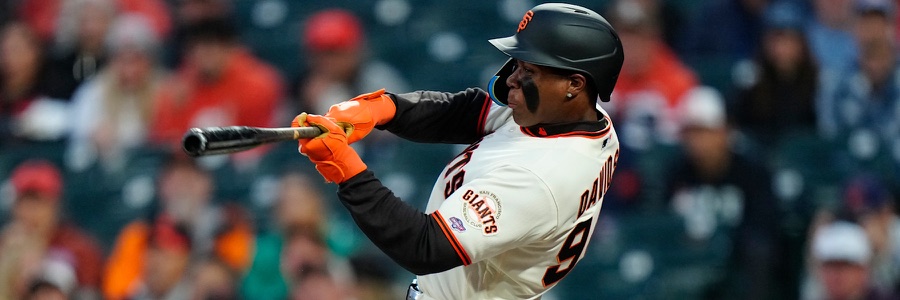
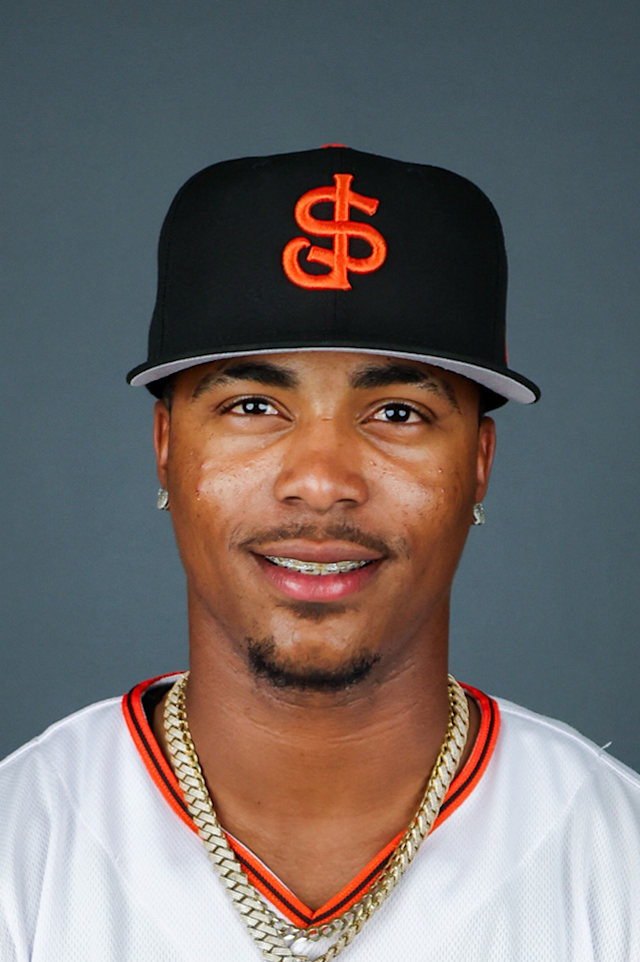
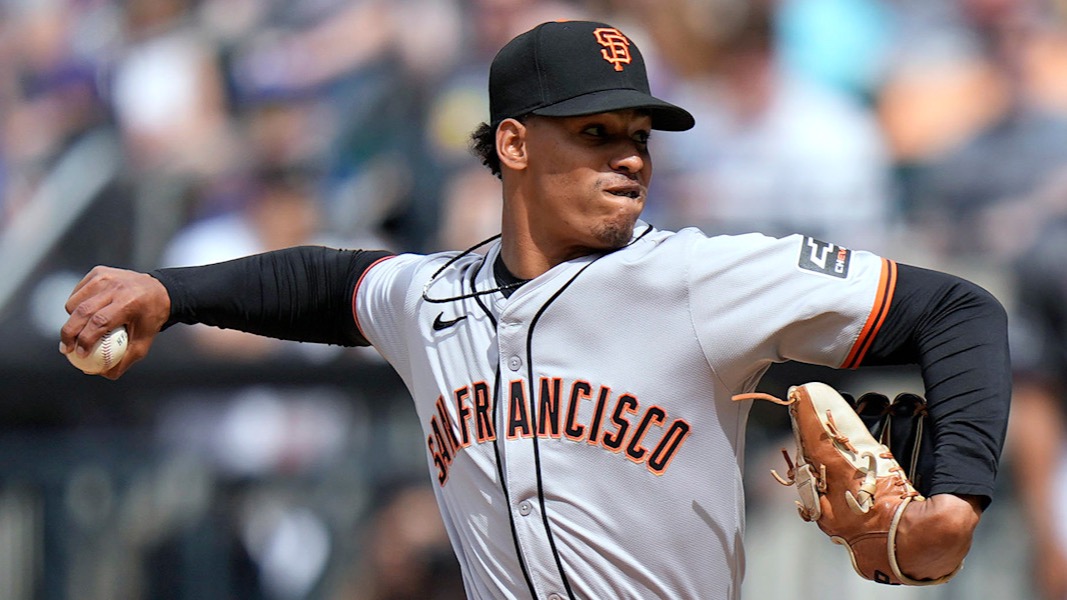
Josuar Gonzalez, Luis Hernández, Jhonny Level and Gavin Kilen are the best thing happening in this farm system. They are also stacked on top of each other at one position, and the only one arriving soon is the one you should be least excited about.
There is exactly one shortstop position at Oracle Park. It is a single unit of very desirable real estate, it comes with a long lease, and the San Francisco Giants currently hold four separate deposits on it.
Josuar Gonzalez. Luis Hernández. Jhonny Level. Gavin Kilen. Two teenagers signed out of Latin America eleven months apart, a 19-year-old Venezuelan who has already outgrown two levels this season, and a first-round college infielder who was the first draft pick Buster Posey ever made as a head of baseball operations. Between the three whose bonuses are public, the Giants have committed $13,245,000 to solving the same problem four different times.
This is not a criticism. Hoarding middle infielders is how good farm systems get built, because shortstop is the position that converts downward into everything else. You can move a shortstop to second, to third, to center field. You cannot move a first baseman to shortstop, no matter how nicely you ask him.
But it does create a specific and slightly perverse situation, and here it is: the only one of these four arriving in the next couple of years is comfortably the least exciting of them.
The gradient nobody puts on the prospect list#
Prospect rankings sort by ceiling. Rosters sort by arrival. Those two orders almost never match, and with this group they are nearly inverted.
MLB Pipeline has Gonzalez as the No. 1 prospect in the organization and the 15th-best in baseball, with Hernández right behind him at No. 2 in the org and 32nd overall. Level is fourth on that same list, though ESPN's Kiley McDaniel has him second. Kilen does not crack the top handful anywhere.
Now sort the same four men by when they are actually expected to play a major league game. FanGraphs has Kilen arriving in 2027, Level in 2030, Gonzalez in 2031 and Hernández in 2032. Pipeline is more optimistic on the two teenagers, and we will come back to exactly how much.
Read those two lists back to back and the shape of the next four years gets clearer. The Giants have one middle infielder close enough to matter to the current roster, and he is the one with the modest projection. The three with genuine star equity are all a minimum of three years out, and two of them are still teenagers who have played a combined one game above the complex level.
The good ones are the far ones
Years from now until each shortstop's projected major league arrival, per FanGraphs, with each player's Future Value grade at right. The only one close enough to help the current roster carries the lowest ceiling of the four.
So let us walk them in the order they will actually show up, which is the opposite of the order everyone ranks them in.
Gavin Kilen, arriving 2027#
Kilen is the adult in this group, and it shows in every direction, good and bad.
The Giants took him 13th overall in 2025 out of Tennessee and signed him for $5.25 million. He is 22, he is listed at 5-foot-10 and 187 pounds, he hits left-handed, and the entire scouting file is about one skill. "Elite bat to ball skills," Giants amateur scouting director Michael Holmes said at the time, pointing to a college strikeout rate around 10 percent and more walks than punchouts. At Tennessee he hit .357/.441/.671 with 15 home runs, 30 walks and 27 strikeouts.
The professional version has been exactly what the file promised. In 78 games at High-A Eugene he hit .282/.350/.462 with nine homers, a 13.8 percent strikeout rate and a 114 wRC+. Promoted to Double-A Richmond this month, he has kept going: .310/.353/.517 across his first eight games, with a 122 wRC+ and a strikeout rate that fell to 8.8 percent. He is near the minor league lead in doubles with 30.
That is the profile in one number, actually. Thirty doubles, nine homers. Kilen squares up everything and drives it into gaps rather than over walls. FanGraphs grades his future power at 45 on the 20-80 scale, below average, and puts a 45 FV on him overall, the lowest of these four.
Kilen is the safest bet on this list and the smallest one. A contact-first infielder with a plateauing power projection and a glove most evaluators think ends up at second base is a useful major leaguer, probably a regular. He is not the reason to care about this farm system. He is the reason the next two years will be survivable while the reasons to care finish growing up.
He is also, and this matters, the only one of the four who could plausibly help the 2027 Giants.
Jhonny Level, arriving 2030#
Level is the one being tested right now, which makes him the most informative of the group.
Signed out of Venezuela in the 2024 international period, he opened 2026 at Low-A San Jose and did something absurd to the California League: .325/.392/.576 with 10 home runs and 11 steals in 44 games, good for a 133 wRC+ and a .251 isolated power mark. Among the 64 Cal League hitters with at least 100 plate appearances, he ranked sixth in average, second in slugging, second in homers. He was one of the youngest players in the league. For a stretch he led every top-100 prospect in baseball in OPS.
Then the Giants promoted him to High-A Eugene in early June, and the league pushed back.
In 40 games there he is hitting .287/.335/.456. The isolated power fell from .251 to .170. The walk rate, never a strength, dropped from 7.8 percent to 5.4. The wRC+ went from 133 to 109. He is still 19 and still producing above the league average against pitchers who are mostly older than him, which is genuinely good. It is just no longer otherworldly.
That is not a red flag. That is what a promotion is supposed to do, and the fact that his strikeout rate barely moved (16.6 percent to 15.7) says the contact skill traveled even as the damage did not. But it is the first real evidence any of these four has produced about what happens when the competition catches up, and it is worth holding onto when you read the complex-league numbers below.
Defensively he is the most polished of the group right now. Five errors in over 407 innings at A-ball, a 60-grade arm from Pipeline, and enough actions that scouts compared him to Rafael Furcal and Brayan Rocchio as an amateur. FanGraphs already lists him as a second baseman, which tells you where the industry thinks this ends up, and also gives him the highest future hit grade of anyone here at 60.
Josuar Gonzalez, arriving 2029 (or 2031)#
Now we get to the part of the system worth rearranging your summer around.
Gonzalez signed in January 2025 for $2,997,500, the best position player available in that international class. He is an 18-year-old switch-hitter, 5-foot-10 and 178 pounds, and both public evaluators use the same word about his defense: instincts. Pipeline puts 60s on his glove, his arm and his overall grade, and a 65 on his run tool. FanGraphs projects his fielding to a 70, which is a Gold Glove number, and describes electric bat speed. The comps that come back are Francisco Lindor and José Reyes, which is exactly as unfair to an 18-year-old as it sounds.
The bat has cooperated so far. He hit .288/.404/.455 with 33 steals in the Dominican Summer League in 2025, then hit .343/.451/.515 in 30 Arizona Complex League games this year with a 140 wRC+, eight steals in ten tries, and more walks (19) than most of his league had patience for.
The honest asterisk is that he has barely been able to stay on the field. A hamstring problem showed up in spring training and never really left; he missed most of a month between May 23 and June 18 with a re-aggravation. Farm director Kyle Haines has publicly called the injuries disappointing for what they cost him in reps. Thirty games is not a season. It is a long weekend.
He was promoted to Low-A San Jose on Friday alongside Hernández and, in his first professional game in front of a paying crowd Saturday night, immediately produced the entire Josuar Gonzalez experience in five innings: a single at 109 mph off the bat, a stolen base, a walk, a diving catch of a knuckling line drive, two outs made on the bases trying to take an extra ninety feet, and then an early exit with a groin cramp. The team called it precautionary. Andrew Baggarly of The Athletic reported the initial read was that he avoided anything significant.
Luis Hernández, arriving whenever the current roster is finished#
Hernández is 17 years old. He turns 18 in December. He is, on talent, the most interesting player in this organization, and he is so far away that projecting him is closer to astrology than analysis.
The Giants traded for extra international pool money in January to sign him for $4,997,500, the largest bonus in the 2026 class. Then Randy Winn and Haines made the aggressive call: skip the Dominican Summer League entirely and start him stateside in Arizona. The justification was his track record against grown men. At 15, playing in the Venezuelan winter league against professionals, he hit .346 in 104 at-bats.
The complex league did not slow him down. In 54 ACL games he hit .298/.382/.535 with six home runs, 19 doubles and five triples, which works out to a .237 isolated power figure from a 17-year-old. Pipeline grades his hit tool at a future 60, the highest present-day confidence of anyone in this piece, and scouts consistently describe him as the higher-floor, more polished version of the same archetype Gonzalez represents.
In his San Jose debut he went 0-for-2 with a sacrifice fly and two walks, which undersells it considerably. He played third base, with Gonzalez at short, and made the play of the night: a ball threaded down the foul line, gloved deep in foul territory, and a 140-foot jump throw that reached first base without a bounce. Baggarly's assessment was that only a handful of major league third basemen could have made it. Manager Ydwin Villegas, translating for both teenagers afterward, called the footwork "unbelievable."
Then Gonzalez left with the cramp and Hernández slid over to shortstop, which is the whole article in one substitution.
The two-year argument#
Here is the thing nobody tells you about prospect timelines: the people who evaluate these players for a living do not agree on when they arrive, and the gap is not small.
| Player | FanGraphs FV | FanGraphs ETA | Pipeline ETA |
|---|---|---|---|
| Gavin Kilen | 45 | 2027 | not listed |
| Jhonny Level | 50 | 2030 | not listed |
| Josuar Gonzalez | 50 | 2031 | 2029 |
| Luis Hernández | 50 | 2032 | 2030 |
The two teenagers are the only ones with a public date from both shops, and both come back two full years apart. That is not a rounding difference, that is the difference between a prospect who overlaps with the current competitive window and one who arrives after it has closed and been rebuilt.
The gap exists because the two shops are answering slightly different questions. Pipeline's date tends to describe a reasonable path if development goes well. FanGraphs is pricing in the attrition rate for 17-year-olds in the complex, which is brutal and unsentimental and historically correct. Note also that FanGraphs puts the same 50 FV on all three teenagers despite wildly different profiles, which is its own quiet admission: at this distance, the error bars are wider than the differences.
My read, and it is a read rather than a report: the truth sits closer to FanGraphs on Hernández and closer to Pipeline on Gonzalez. Hernández has one professional season and it was in the complex. Gonzalez is a year older, is already at a full-season affiliate, and his limiting factor has been health rather than performance. Health is a real risk. It is a different and more fixable risk than "can he hit."
Somebody is moving to second#
The positional math resolves itself, because it always does, and usually earlier than anyone plans.
Level is the obvious candidate. FanGraphs already lists him there, he is the least physically projectable of the group at 5-foot-8, and the industry read is that the Giants would move him before they move any of the other three. Kilen is the other one: most evaluators had him at second base on draft day, and Holmes' insistence that they would develop him at shortstop is the kind of thing organizations say about first-round picks in July and quietly revise in a couple of years.
That leaves Gonzalez and Hernández, who spent Saturday night sharing a left side of the infield, one at short and one at third, trading places when a cramp intervened. If both hit, one of them plays third base, and the Giants will have solved a problem that most organizations would pay a great deal of money to have.
Anyway. The lease on that one unit of Oracle Park real estate does not come up for a while, and the tenants have staggered move-in dates ranging from next year to a date at which the current Giants roster will be almost entirely historical. Kilen shows up first and pays the rent on time. The interesting ones arrive last.
That is a strange way to build a farm system. It is also, if you squint, the correct one.
Gonzalez is not "already at a full-season affiliate" ahead of Hernández. Both teenagers were promoted to San Jose on the same day, as this piece reports three sections earlier, and Hernández is months into his first year of pro ball rather than a season removed from the complex. The real gap between them is an extra professional year, not an extra level. The argument survives; the reason given for it does not. I should have caught it before it ran.
CP
Statistics through July 25, 2026, from the MLB Stats API and FanGraphs. Scouting grades from MLB Pipeline and FanGraphs. Reporting on the San Jose debuts and the Gonzalez injury history from Andrew Baggarly at The Athletic; draft and signing details from McCovey Chronicles and the SF Standard.