The Patch Says Est. 1946. You Can Still Walk Into The Building It Means.
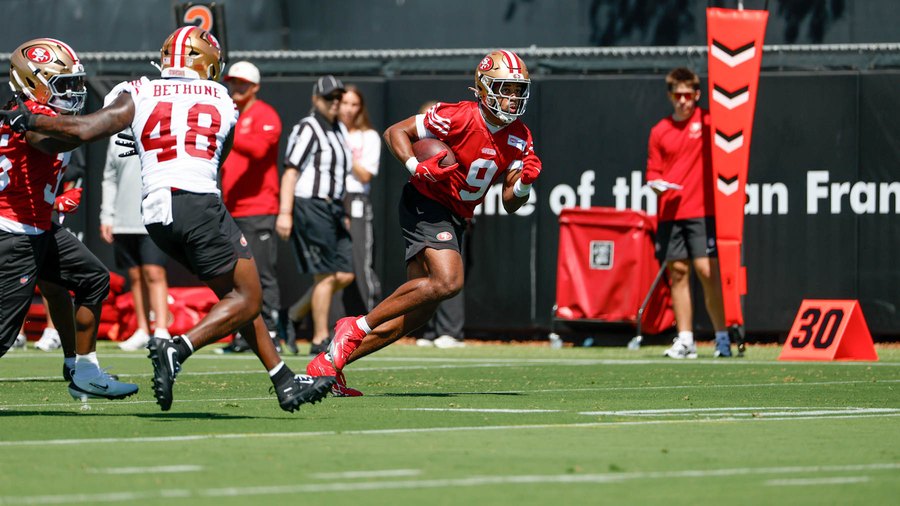
The 49ers will wear an eightieth-anniversary patch on the upper chest all season, in Santa Clara. Sixty-eight of those eighty seasons were played in San Francisco, and the first twenty-five of them happened in a Golden Gate Park stadium that is still standing and now seats ten thousand.
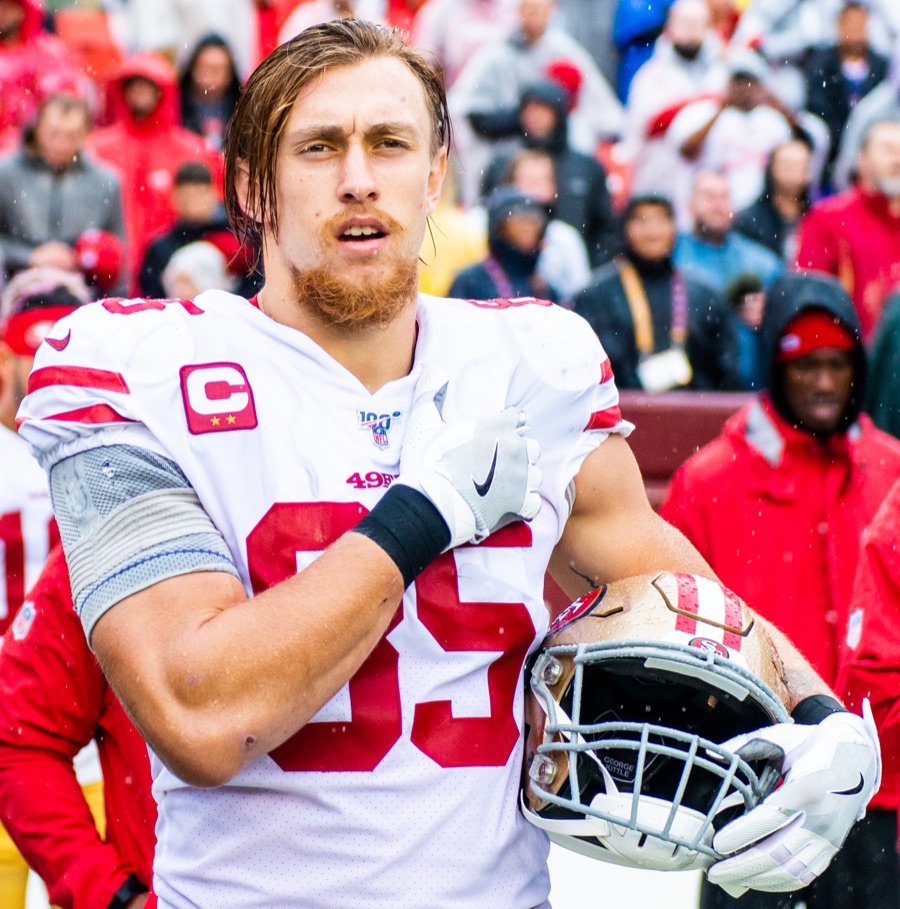
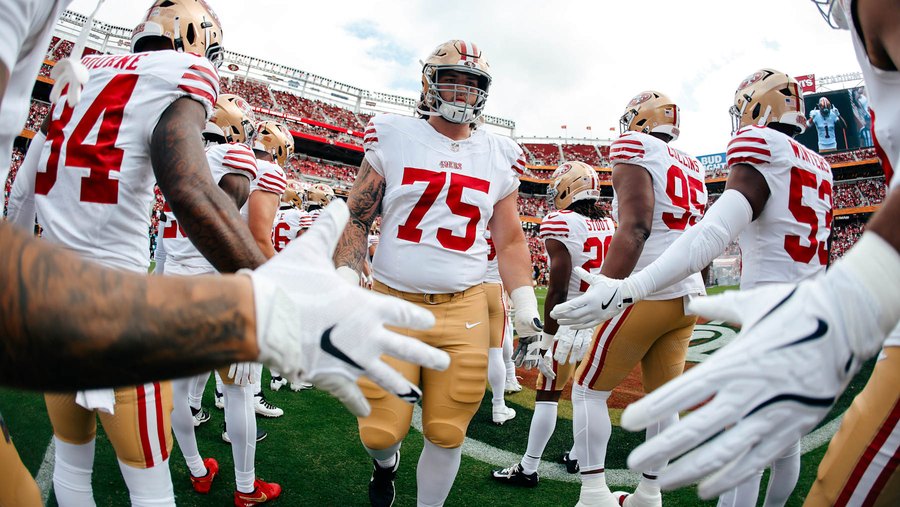
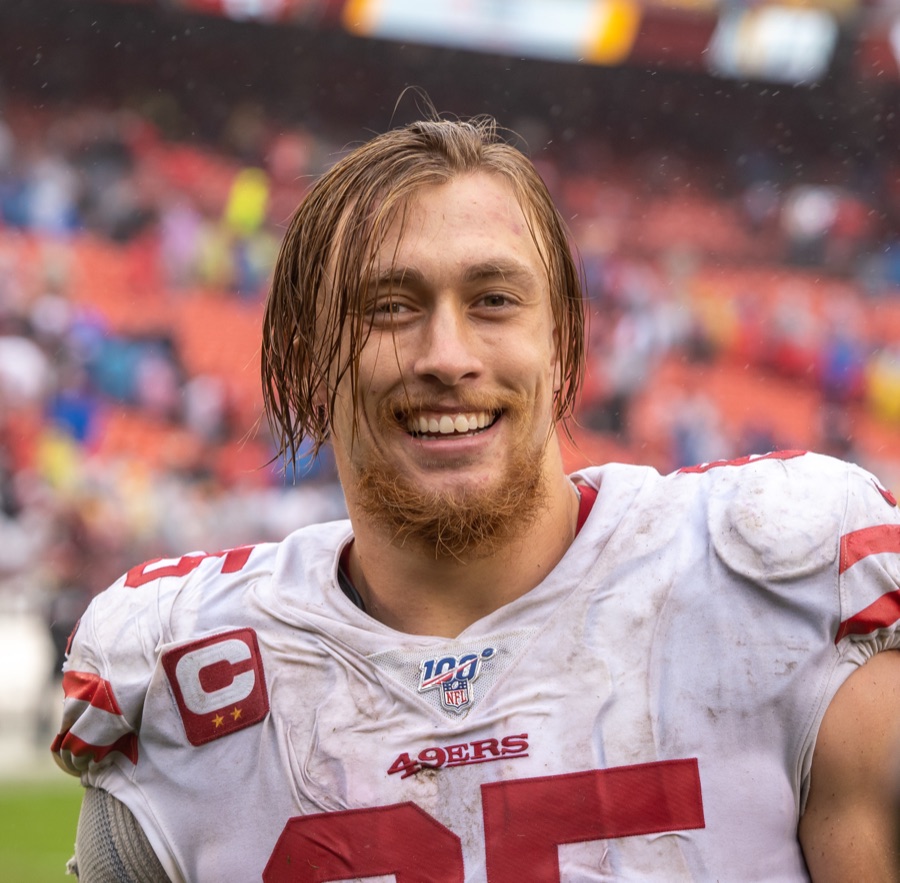
The patch goes on the upper chest of every 49ers jersey this season. It is a number 80, and beneath the number it says Est. 1946.
Both halves are accurate, and they are measuring different things. The year is a date. The number is a distance, and the distance is not the one most of the coverage has printed.
The 49ers have played eighty seasons. They finished the eightieth on January 17 in Seattle, losing 41-6 in the divisional round, which is the second-worst playoff defeat in the history of the franchise. The season that opens in September is the eighty-first.
So the 80 on the chest is not a count of seasons. It is an anniversary, and the team has been precise about this in its own words. The campaign it launched on April 9, narrated by Jerry Rice, is described by the club as a look at "80 years of San Francisco 49ers football." Years, not seasons. Several national outlets converted that into the eightieth season in franchise history, which is off by one.
The distinction sounds like bookkeeping. It is the whole subject. A season count measures football played. An anniversary measures distance from a beginning, which is why the year has to be on the patch at all, and a beginning is a thing that happened somewhere.
Where 1946 happened#
It happened at Kezar Stadium, in the southeastern corner of Golden Gate Park, where the 49ers played the first regular-season game in their history on September 8, 1946, and lost it 21-7 to the New York Yankees in front of 35,000 people.
Kezar was not a shrine. It was a municipal bowl that opened in 1925 and cost $300,000, of which $100,000 was a bequest from Mary Kezar's estate and the other $200,000 was appropriated by the city, and visiting players hated it. Art Donovan, a Hall of Famer, described the dressing rooms as inadequate, the tunnel to the field as long and dusty, and the turf as shredded by rain and overuse. Twenty-two people were arrested after the last NFL game played there, the 1970 NFC Championship, which was played on January 3, 1971.
The building is still there. It was torn down and rebuilt in 1989 and 1990 at a capacity of 10,000, against the 59,942 it held when the 49ers used it, and it is now the home of San Francisco City FC and the site of the city high school football championship every November.
The split#
The anniversary contains an arithmetic, and all of it is public.
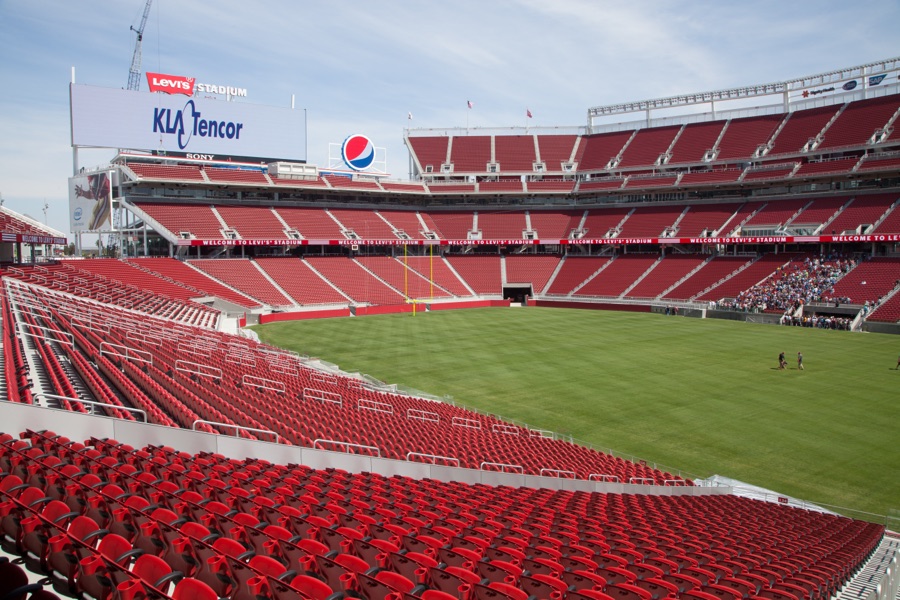
Kezar held the 49ers for twenty-five seasons, from 1946 through 1970. Candlestick Park held them for forty-three, from 1971 through 2013. Levi's Stadium has held them for twelve, from 2014 through last season. Twenty-five and forty-three and twelve is eighty, which is the number on the jersey.
Sixty-eight of the eighty seasons were played inside San Francisco. Twelve were played in Santa Clara, about forty miles south.
That is a fact and not yet a grievance, and it should not be made into one. Santa Clara is in the same region, the freeway runs both directions, and a large share of the people in the building on a Sunday are the same people who were in the other building. The move was also decided honestly, by the people entitled to decide it. Stadium proposals at Candlestick Point failed in 1997 and again in 2006, the team turned its attention south on November 9, 2006, and on June 8, 2010 the voters of Santa Clara approved the stadium 58 percent to 42, by 14,782 votes to 10,505, out of 25,287 cast.
Twenty-five thousand people voted on where the next stretch of those eighty years would be kept. Nobody rigged anything. That was the process working.
The argument#
A franchise's history is property, and a region's share of the same history is not. That asymmetry is the thing the patch is quietly asserting, and it should be stated plainly enough that a reader can throw it out.
The organization can prove its claim on 1946. It owns the name, the marks, the record book, the retired numbers, the right to put a year on a jersey and sell the jersey. The claim is registered, transferable and enforceable, and it goes wherever the corporation goes, which is how a year that happened in Golden Gate Park ends up embroidered on a shirt worn in Santa Clara with no contradiction anyone can sue over.
The region's claim on the same eighty years is real and rests on nothing legal at all. It is made of having watched. There is no instrument that records it, no registry it can be filed in, and no venue in which it could be enforced. It cannot be sold, which people usually say as though it were a consolation. It cannot be sold because there is nothing there to convey.
So the two claims are not strong and weak. They are documented and undocumented, and the documented one is the one that moves.
What the record book keeps#
Watch which facts survive a move intact and which do not.
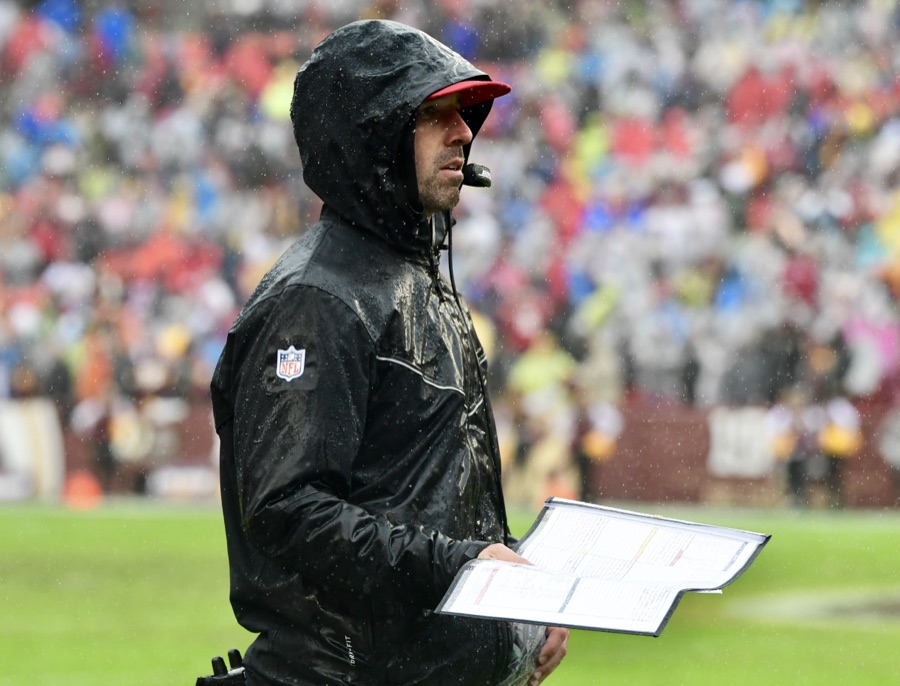
The ledger travels perfectly. Bill Walsh coached 166 games for this franchise, a record; Kyle Shanahan has coached 163 and stands to pass him in Week 4. Five Super Bowl wins and three losses. Twenty-two division titles. Jerry Rice's 80 is retired, which is why no player will wear the number that is on every jersey this year, and Rice is the voice on the anniversary film. None of that needed an address. It is all portable, and it is all still true.
What does not travel is everything measured by sitting there.
On January 4, 1987, the 49ers lost 49-3 to the Giants in a divisional playoff, the worst postseason defeat in the eighty years and the low point of Bill Walsh's eighth season. On January 17 this year they lost 41-6 at Seattle, the second-worst. Thirty-nine years apart, at the two ends of the modern era, and the record book holds both as scores.
The scores are the smallest part of what happened. Two generations of people in this region gave up a January afternoon to each of those games and got nothing back, which is a thing you can do eighty years of and finish with no receipt. The franchise's worst days are in its media guide because bad results are also property. The hours are not in anything.
The building is open#
The patch will be worn about forty miles from the place its year refers to.
There is no scandal in that. The name on the jersey has said San Francisco since 1946 and there is no rule that a football team owes its founding address anything, and Kezar itself, by every documented account, was a dump that its own visitors dreaded. Nobody is asking for it back.
But the year is on the chest, and the year has a location, and the location did not move or get demolished the way Candlestick did in 2015. It is a ten-thousand-seat stadium in Golden Gate Park with high school football in it every fall.
The franchise owns the number 80 and every claim that number makes. Anyone can walk into the place the number is counting from, in November, and watch a city high school championship on the field the count started on. Those two facts have nothing to do with each other, and only one of them requires anybody's permission.
Sources: patch design and the April 9, 2026 campaign launch via 49ers.com ("80 years of San Francisco 49ers football," narrated by Jerry Rice), 49ers Webzone and NBC Sports; season-by-season totals, the September 8, 1946 regular-season opener (21-7 to the New York Yankees at Kezar, 35,000, distinct from the September 1 exhibition against the Chicago Rockets), and the January 4, 1987 and January 17, 2026 playoff results and playoff-margin ranking, via the franchise season record and Pro Football Reference box scores; Kezar Stadium capacity, 1989-90 reconstruction, current tenants and Art Donovan's description, and Candlestick and Levi's Stadium tenure dates, via the venues' documented histories; Measure J's June 8, 2010 result (14,782 to 10,505, 25,287 cast) and the 1997 and 2006 failed Candlestick Point proposals via the Levi's Stadium record. Walsh at 166 games and Shanahan at 163 are through the 2025 season. This site has no access to the 49ers and spoke to no one; every quote above is published and dated.