In 1946 Los Angeles Charged The Rams A Price That Was Not Money
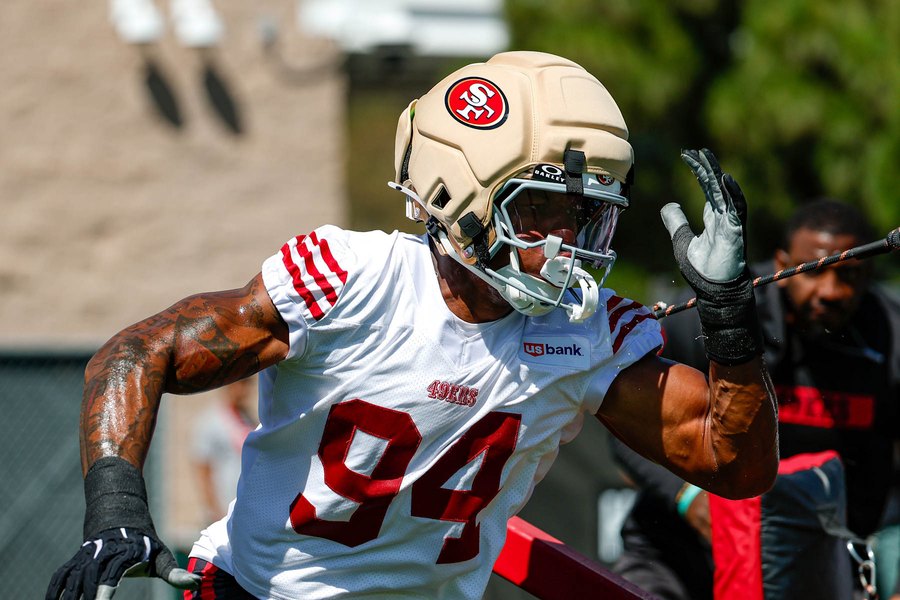
The Rams open the season Thursday against the 49ers at the Melbourne Cricket Ground, one of their nine home games this year and the only one they will not play at SoFi Stadium. Eighty years ago the same franchise had to ask a public commission for permission to use the Los Angeles Memorial Coliseum, and it left that meeting under a rule against segregation.
On January 26, 1946, the general manager of the reigning champions of the National Football League sat in a public meeting in Los Angeles and asked for dates.
His name was Charles Walsh and people called him Chili. His team had beaten Washington 15 to 14 for the league title six weeks earlier and had announced immediately afterward that it was leaving Cleveland for California. What it did not have was a stadium. The Los Angeles Memorial Coliseum had opened in 1923 and was controlled by a commission drawing its members from the Los Angeles County Board of Supervisors, the Los Angeles City Playground and Recreation Commission, and the Sixth Agricultural District of the State of California. USC played its home games there. So did UCLA. A new team from the All-America Football Conference wanted dates, and so did the Hollywood Bears of the Pacific Coast Professional Football League.
The Rams could not take the building. They had to ask for it, in public, in front of three governments, in a room anybody could walk into.
Somebody walked into it.
What the sports editors sent#
Los Angeles had three Black newspapers at the time, the Sentinel, the California Eagle and the Tribune, and their sports editors met and picked one man to speak. Halley Harding of the Tribune went to the commission meeting with a question and a threat behind it. The question was whether the Rams would sign a Black player. The threat was that a stadium supported by taxpayers could not host a segregated business, and that a court would be asked to say so.
The NFL had been all-white since the end of the 1933 season. Before that it had Fritz Pollard, who was also the league's first Black head coach, and it had Paul Robeson. After 1933 it had nobody, and it had stayed that way for twelve seasons.
Walsh made his request for playing dates. Harding then asked his question and named Kenny Washington while asking it. Walsh answered that Washington could try out with the Rams whenever he wanted, which was the kind of answer that costs a man nothing in a room and everything on a record.
Harding had planned for that answer. He got the commission to pass a resolution on the spot, banning racial discrimination by any professional team using the stadium. Leonard Roach, the chairman, and John Anson Ford, both of them county supervisors, pushed it through. The Rams signed Kenny Washington on March 21, 1946, fifty-four days after the meeting. Woody Strode signed on May 7.
Walsh and his brother Adam, who was to coach the team that season, had reason to think the tryout offer was safe, because Washington was under contract to the Hollywood Bears. Harding had already been to the Bears. They let him go.
The argument#
Nineteen forty-six gets remembered in Los Angeles as a civic virtue. The record shows something with a good deal less feeling in it.
What Los Angeles had was a deed. Three governments owned a stadium, a football team needed that stadium and had no alternative to it, and for one afternoon the people who held the title could name a condition that had nothing to do with rent. The condition held because the team could not walk away from the building. That is the mechanism, and affection for a franchise is not part of it anywhere.
Look at how the league finished the job. George Preston Marshall's Washington team was the last holdout, still all-white in 1962, twenty-nine years after the bar went up. Marshall did not relent because the market changed or because he was persuaded. He relented because the federal government threatened to cancel his lease at the federally owned stadium he was playing in, and he traded for Bobby Mitchell.
Twice in the history of professional football a club was made to open its roster against its own preference. Both times the party with standing was the party that owned the ground.
What it bought#
Kenny Washington had knee surgery soon after he signed. He played twenty-seven games across three seasons, behind Bob Waterfield at the position he wanted, in an offense he had not run before. On November 2, 1947, against the Chicago Cardinals, he ran ninety-two yards for a touchdown in a game the Rams lost, and it is still the longest run from scrimmage in the franchise's record book. Knee injuries ended his career after the 1948 season. He died in 1971.
Woody Strode caught four passes in ten games in 1946 and that was his NFL career. He played in Canada, then acted in films for four decades. He died in 1994.
Neither man had the career an ending would want for him, and that was never what the resolution was for. In 1939 the two of them and Jackie Robinson played for UCLA in a scoreless tie against USC in front of 103,303 people at the Coliseum. Seven years later the league that wanted to play in that same building would not employ either of them until the building's owners said it had to. Paul Younger followed in 1949, the first player from a historically Black college or university in the NFL, and he made four Pro Bowls and played on the 1951 team that beat Cleveland 24 to 17 for the NFL title.
San Francisco was in the room too, in a way#
The reason the NFL wanted Southern California in 1946 was that the All-America Football Conference was about to put teams in Los Angeles and San Francisco. One of those teams was the 49ers, who will be standing across from the Rams on Thursday.
They played that first season at Kezar Stadium in Golden Gate Park, a municipal bowl that cost $300,000, of which $100,000 was a gift from Mary Kezar's estate accepted by the Park Commission in 1922 and the other $200,000 was appropriated by the City and County of San Francisco. San Francisco owned its football stadium outright, the way Los Angeles owned its own. The 49ers signed Joe Perry, their first Black player, in 1948, their third season.
Two publicly owned stadiums and two new professional teams, and the difference between them was not civic character. In one city a man showed up at a meeting with a resolution ready.
Thursday#
The Rams have nine home games this season. Eight of them are at SoFi Stadium in Inglewood, a privately financed and privately owned building that opened in 2020 at a cost of $5.5 billion. The ninth is Thursday's, at the Melbourne Cricket Ground.
The MCG holds 100,024, sits on public parkland in Yarra Park and is owned by the Victorian government through the trust that bears the ground's name. It is the largest stadium in Australia and it was established in 1853, seventy years before the Coliseum. None of that gives Melbourne any say over the fixture. The Rams hold international marketing rights in Australia and New Zealand under the league's Global Markets Program, and Kevin Demoff, the club's president, said in February that the club was pleased to take its annual match-up with the 49ers to the MCG. Nobody in Los Angeles had to be asked.
Kickoff is 5:35 p.m. Pacific on Thursday, which is 10:35 on Friday morning in Melbourne. The game is on Netflix. The people who bought season tickets in Inglewood get eight dates instead of nine, and the two clubs will meet again at Levi's Stadium on December 13, which is in Santa Clara, about forty miles from the city on the front of the home jerseys.
Exposition Boulevard#
The Coliseum is still there. It is still owned by the state, the county and the city, and the commission that passed the resolution in 1946 still exists. In July 2013 it handed USC a ninety-eight-year master lease over the operation of the building.
The lease runs to 2111. A commission that once had a football team standing in front of it for a single afternoon has arranged its affairs so that the question can never be put to it again.
Kenny Washington's ninety-two yards are in the Rams' record book, where they have been since 1947, and where anyone can look them up. The resolution that put him on the field is not in any record book at all. It is in the minutes of a county meeting, and the reason it worked is that on that particular Saturday in January the team wanted something the public still had.
Sources: the January 26, 1946 Coliseum Commission meeting, the composition of the commission, Halley Harding's role and the resolution passed that day, Chili Walsh's answer, the March 21, 1946 signing of Kenny Washington, the 1933 disappearance of Black players from the NFL, the 1939 UCLA-USC tie and its 103,303 attendance, Washington's twenty-seven games and his ninety-two-yard run of November 2, 1947, Strode's four catches in ten games, Paul Younger's 1949 signing, and the 1962 federal lease threat that ended George Preston Marshall's holdout, via "Los Angeles and the Reintegration of the NFL" by Bob Timmermann, Senior Librarian, Los Angeles Public Library, published February 3, 2017 and updated January 28, 2020, which cites Gretchen Atwood's "Lost Champions" and the library's historical Los Angeles Times and Los Angeles Sentinel databases. Woody Strode's May 7, 1946 signing date and the players' post-career details via profootballhistory.com. Joe Perry as the 49ers' first Black player, in 1948, via the African American Registry. Kezar Stadium's $300,000 cost, the Park Commission's 1922 acceptance of the $100,000 Kezar bequest, the $200,000 city appropriation, the May 2, 1925 dedication and the stadium's ownership by the City and County of San Francisco, via the stadium's documented construction record. The Rams' designation as home team, their Australia and New Zealand marketing rights and Kevin Demoff's quotation via therams.com, February 5, 2026; the September 10 date and the 5:35 p.m. Pacific and 10:35 a.m. Friday Melbourne kickoff times via 49ers.com, March 25, 2026; the nine home games, the eight SoFi dates, the Netflix broadcast and the December 13 rematch at Levi's Stadium counted off the NFL's own 2026 Rams team schedule. SoFi Stadium's private financing, $5.5 billion cost, Inglewood location and ownership, the Coliseum's 1923 opening and its ownership by the State of California's Sixth District Agricultural Association, Los Angeles County and the City of Los Angeles, the July 2013 ninety-eight-year USC master lease, and the Melbourne Cricket Ground's 100,024 capacity, 1853 establishment, Yarra Park site and Victorian government ownership through the MCG Trust, via those venues' documented records.